
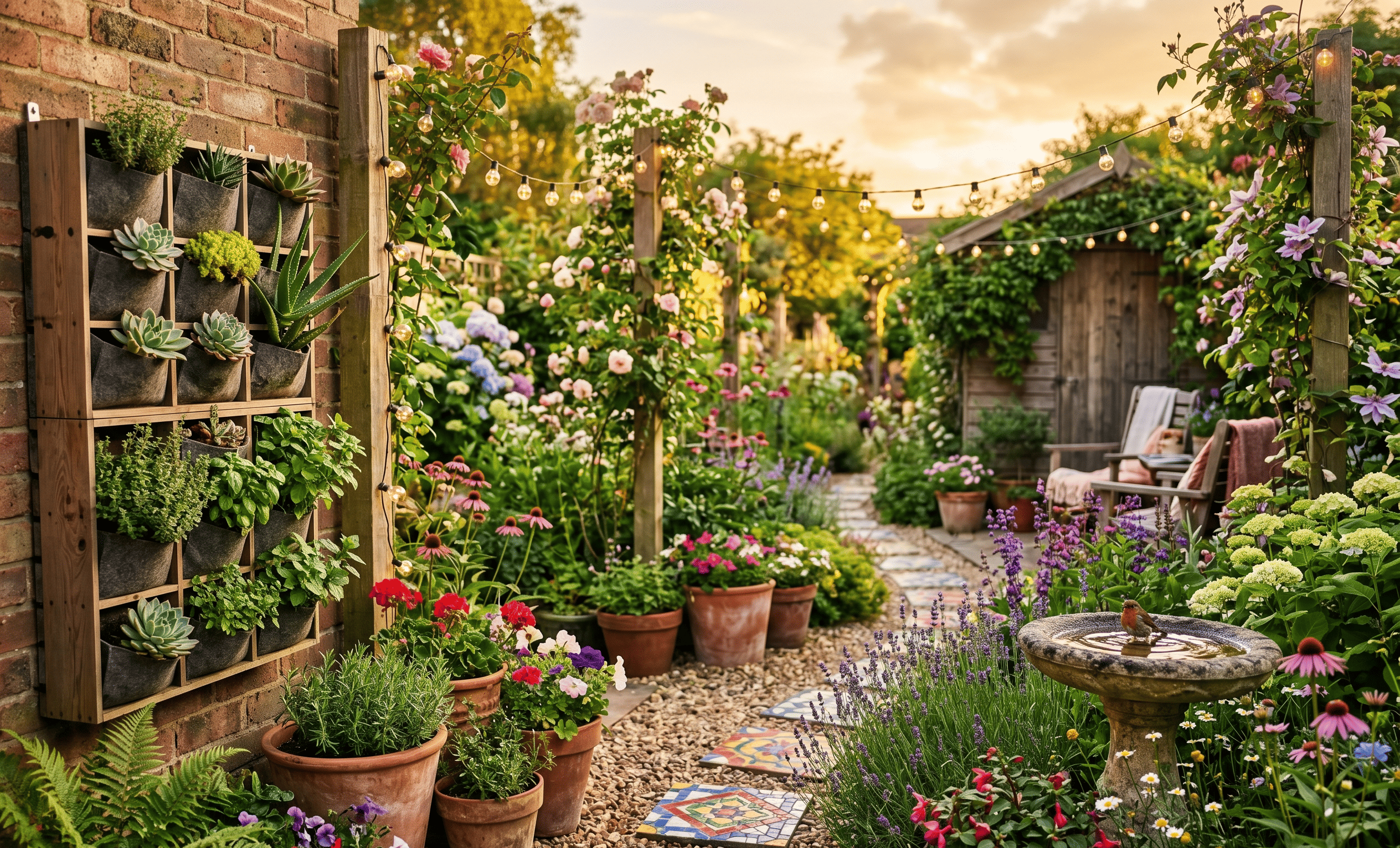
🌿 The Garden Disaster That Started Everything
Three summers ago, I spent nearly $800 decorating my backyard with stuff I found on sale at big-box stores — plastic flamingos, a fake rock water feature that sounded like a dying dishwasher, and neon-colored pots that faded within six weeks. By August, the whole thing looked like a garage sale had moved outdoors permanently.
My neighbor, who has the kind of garden that makes strangers slow their cars down to look, stopped by one afternoon. She looked at my arrangement and said, very kindly, ‘You’ve got a lot going on out here.’ Which, in gardening circles, is basically a polite way of saying it’s chaos.
That embarrassing summer sent me on a two-year obsession with garden decor — what actually holds up, what trends fade faster than cut flowers in July heat, and what the garden decor ideas 2026 experts are actually excited about. I tested things. I made more mistakes. I found things that genuinely transformed small and large spaces alike.
This article is everything I’ve learned — plus the best garden decor ideas for 2026 that are showing up in real gardens (not just on Pinterest boards that no one ever actually builds).
🌱 Why Garden Decor Ideas 2026 Feel Different
There’s a distinct shift happening in 2026 garden aesthetics. After years of the minimalist ‘Japandi-outdoor’ look, people are swinging back toward personality. Color is back. Texture is back. But — and this is important — it’s being done with intention now, not the chaotic ‘throw everything at the wall’ approach I used to take.
A few forces are shaping garden decor ideas in 2026:
- Sustainability is non-negotiable — buyers want decor that weathers seasons, not one-season plastic.
- Solar and low-energy lighting has gotten genuinely beautiful — no more ugly plastic solar mushrooms.
- The ‘rewilding’ trend meets curated design — messy naturalistic planting with intentional focal points.
- Upcycling is mainstream — turning old furniture, pipes, and containers into garden art.
- Biophilic design principles have jumped from interior spaces to backyards.
The Royal Horticultural Society (RHS) has noted a significant uptick in garden visits and home gardening participation since 2024, and designers are responding with ideas that work at every budget level. Whether you have a tiny balcony or half an acre, the 2026 decor trends have something genuinely useful.
The 17 Best Garden Decor Ideas 2026
Idea #1 — Solar-Powered Art Installations
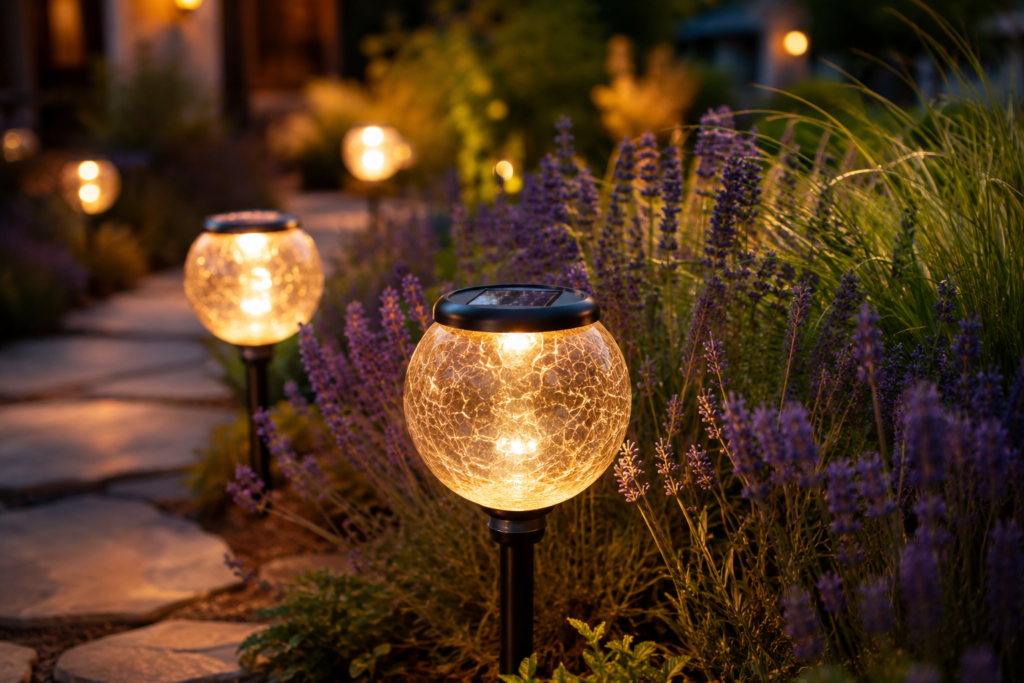
Solar lighting has undergone a complete glow-up (sorry, had to). The cheap plastic sticks of the early 2020s have been replaced with genuinely architectural pieces — think hand-blown glass orbs, copper spiral sculptures with integrated solar cells, and LED filament lanterns with a warm Edison-bulb quality.
I replaced my old solar stake lights with a set of frosted glass globe clusters from a small artisan shop, and the difference was staggering. They charge all day and give you four to six hours of warm, dimmable light after sunset — enough to make an evening in the garden feel magical rather than like a parking lot.
What to Look For in 2026
- IP65 or higher waterproofing rating
- Warm white (2700K–3000K) color temperature — cool white looks clinical outdoors
- At least 200mAh battery capacity for reliable dusk-to-dawn performance
- Materials: copper, frosted glass, wrought iron — avoid cheap chrome finishes
Pro tip: cluster three to five globe lights together at different heights rather than spacing them evenly in a row. Groupings always look more intentional than grids.
Idea #2 — Vertical Wall Planters
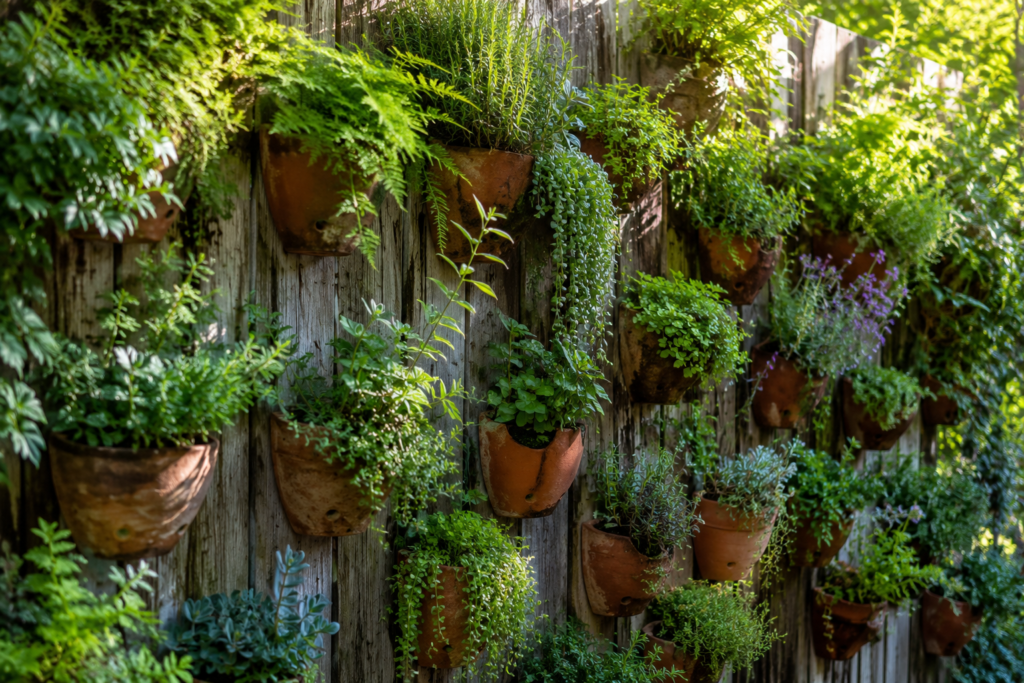
If there’s one trend I wish I’d started earlier, it’s vertical planting. I have a narrow side passage between my house and fence — about 4 feet wide — that I used to treat as dead space. Now it’s a full herb wall that actually produces the basil, thyme, and rosemary I use in the kitchen.
The 2026 version of vertical planters has moved past those plastic pocket organizers (they deteriorate fast and the fabric holds moisture badly). What’s working now:
- Powder-coated steel modular grid systems with ceramic or terracotta pots
- Reclaimed wood pallet frames with coir-lined wire baskets
- Copper pipe rail systems with hanging leather strap planters
The key mistake people make is planting things that are too thirsty. A vertical wall dries out about 40% faster than ground planting. Succulents, herbs, strawberries, and sedums all work brilliantly. Big leafy tropicals — don’t bother unless you have a drip irrigation system set up.
For reference, Gardeners’ World (gardenersworld.com) has excellent guides on vertical gardening systems if you want to go deeper on the plant selection side.
Idea #3 — Upcycled & Repurposed Decor
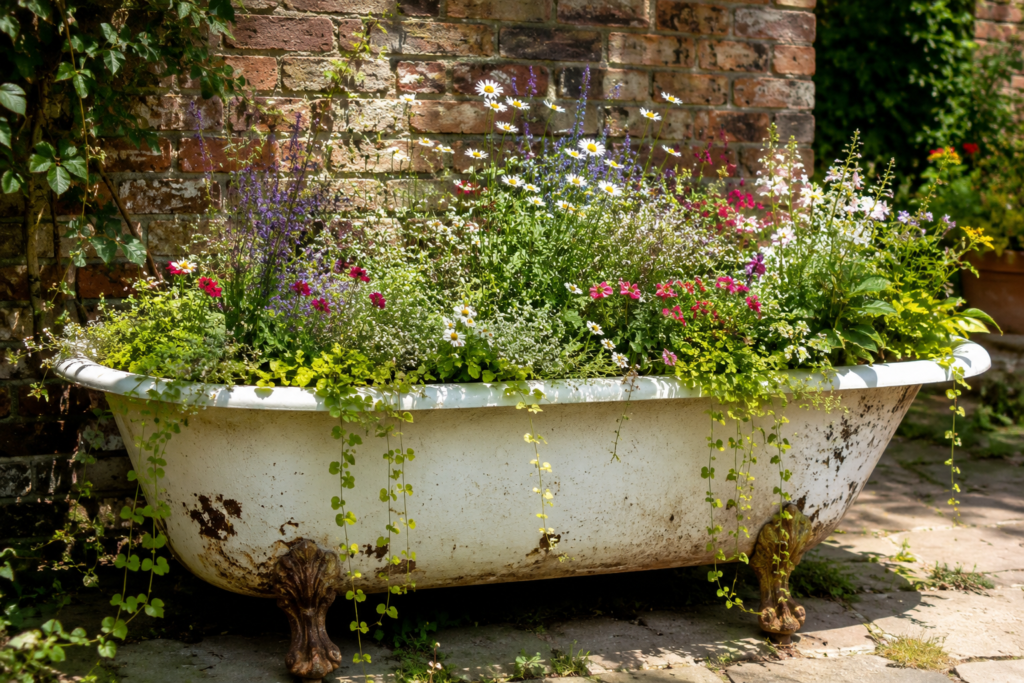
This one requires some creative thinking, but the results are so much more interesting than anything you can buy. Upcycled garden decor is one of the biggest garden decor ideas 2026 themes, largely because it’s sustainable, budget-friendly, and — done right — genuinely striking.
Some of the best repurposed planters I’ve seen or tried myself:
- Old colander strainers — built-in drainage, perfect for herbs on a bench
- Vintage enamel bathtubs filled with cottage garden flowers
- Wooden wine crates stacked asymmetrically as a tiered display
- Galvanized steel water troughs (from farm supply stores) as raised beds
- Broken terracotta pots deliberately cracked and planted to look like a cascading scene
The last one — the ‘fairy garden in a broken pot’ technique — sounds cheesy but executed well it’s genuinely impressive. Layer broken pot shards as steps, plant small specimens like thyme or baby tears, add a tiny figurine if you’re feeling adventurous.
One mistake: old car tyres as planters. I know they look fun in photos, but they leach chemicals into soil over time. Not worth it for edibles, and they get very hot in summer sun, cooking roots. Skip this one.
Idea #4 — Biophilic Water Features
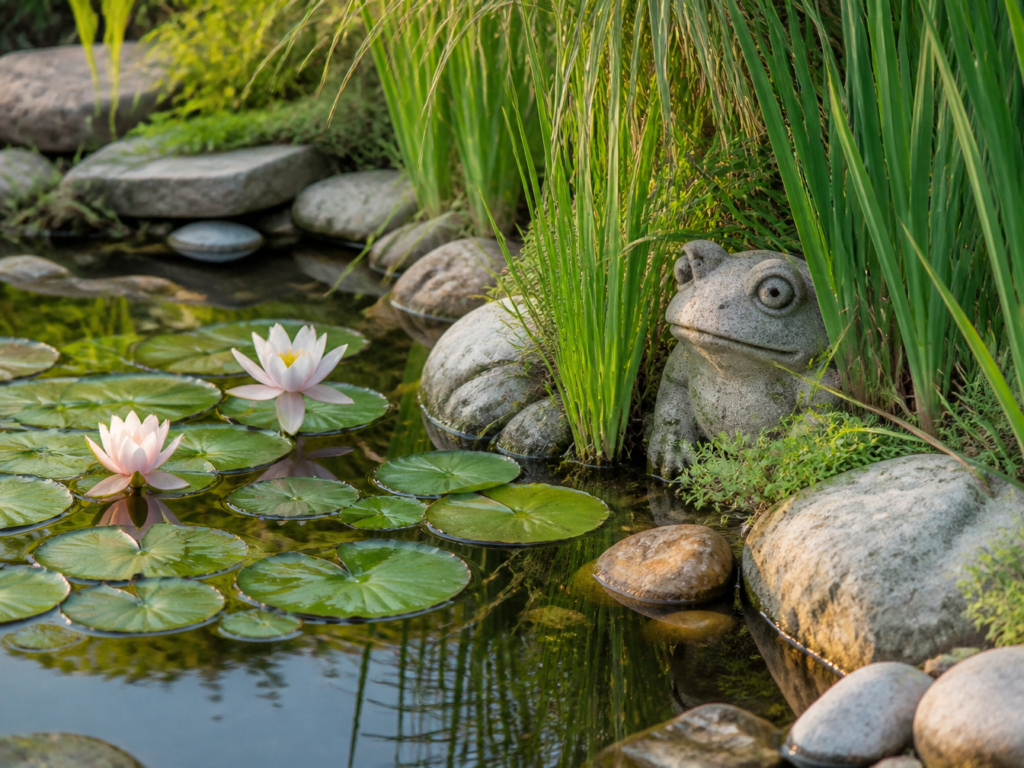
The formal stone fountain with cherubs spraying arcs of water? That aesthetic is over. What 2026 is about is naturalistic water — features that look like they could have appeared there on their own.
I installed a pre-formed pond liner about three years ago — just 6 feet by 4 feet — and it has become the single most rewarding garden investment I’ve made. Frogs appeared within two weeks. Birds visit daily. The sound of moving water (I added a small pump and rock waterfall) is genuinely calming.
For smaller spaces, consider:
- Half-barrel water gardens with a dwarf water lily and marginal plants
- Glazed ceramic bowls with a simple solar pump creating a gentle bubble
- Stacked slate ‘spill’ features where water trickles down layered stones
- Galvanized trough ponds — even 24 inches of water supports plants and insects
Key thing to get right: don’t use tap water if you can help it. Rainwater is better for plants and reduces algae. Also place any water feature in partial shade — full sun supercharges algae growth and you’ll spend your weekends cleaning it.
Idea #5 — Statement Terracotta Arrangements
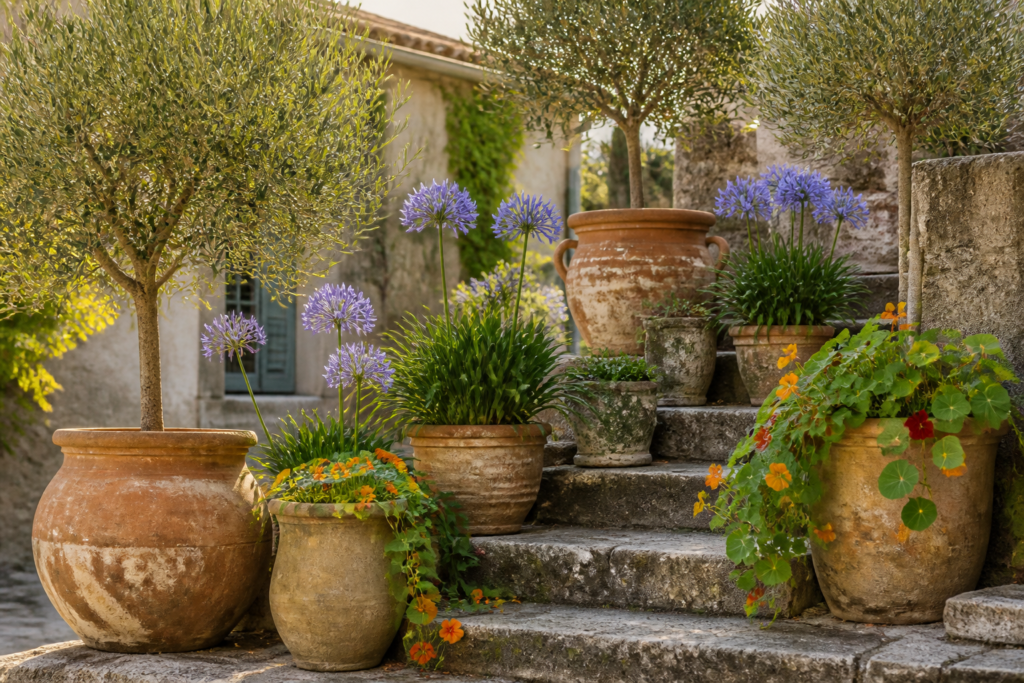
Terracotta never really goes away, but in 2026 it’s having a proper renaissance. The trick is treating it like furniture — grouping sizes deliberately, aging pots intentionally, and choosing plants that complement the warm orange clay tones.
I’ve been painting some of my pots with diluted white yogurt to accelerate the mossy, weathered look. Sounds strange but it genuinely works — within a few weeks you get that beautiful silvery-green patina that would otherwise take years to develop naturally.
The Golden Rule of Pot Groupings
Always group in odd numbers — three, five, or seven pots. Use three different sizes: one tall (30cm+), one medium, one small. Place the tallest at the back or off-center, never dead-center. This is the single biggest visual upgrade most people can make for almost zero cost.
Idea #6 — Textured Stone & Gravel Pathways
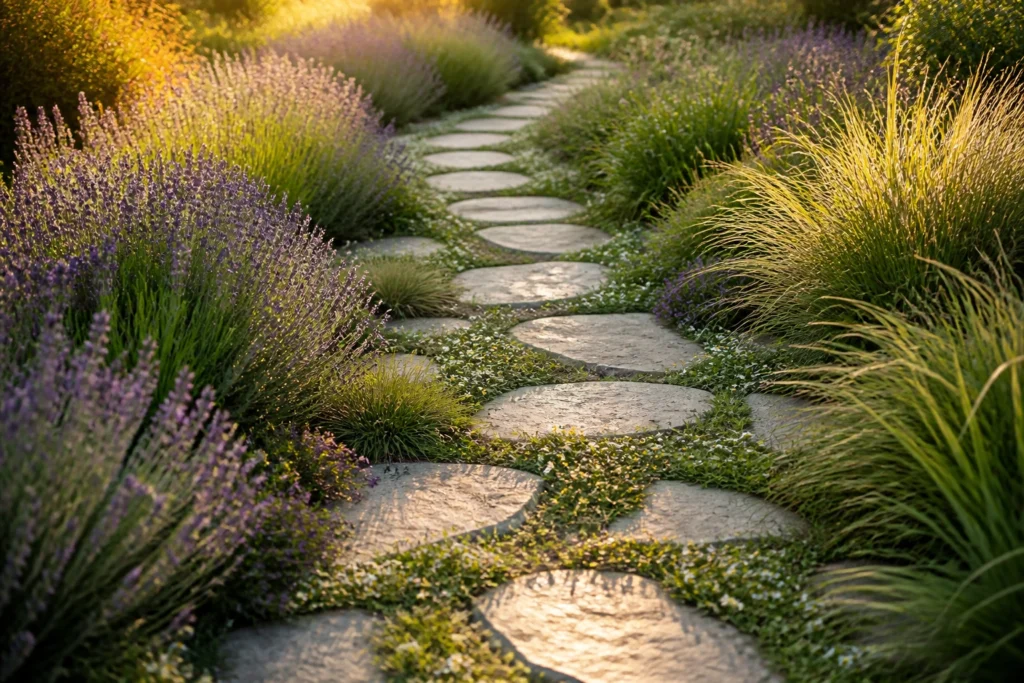
Paths are one of the most underrated elements of garden decor. A good path does three things: it guides movement, it creates visual lines that give the garden structure, and — if done well — it becomes a design feature in its own right.
The 2026 trend is away from uniform, perfectly laid slabs and toward what designers call ‘interrupted paths’ — stepping stones with plants growing between them. Creeping thyme, chamomile, and mind-your-own-business (Soleirolia) all work beautifully in the gaps and release fragrance when walked on.
For materials, the standout choices right now are:
- Reclaimed cobblestones — the patina is unbeatable
- Irregular slate set in a loose gravel bed
- Gabion edge borders filled with colored glass or white pebbles
- Exposed aggregate concrete with planted joints — a harder DIY but stunning result
Idea #7 — Cottage Core Meets Modernism
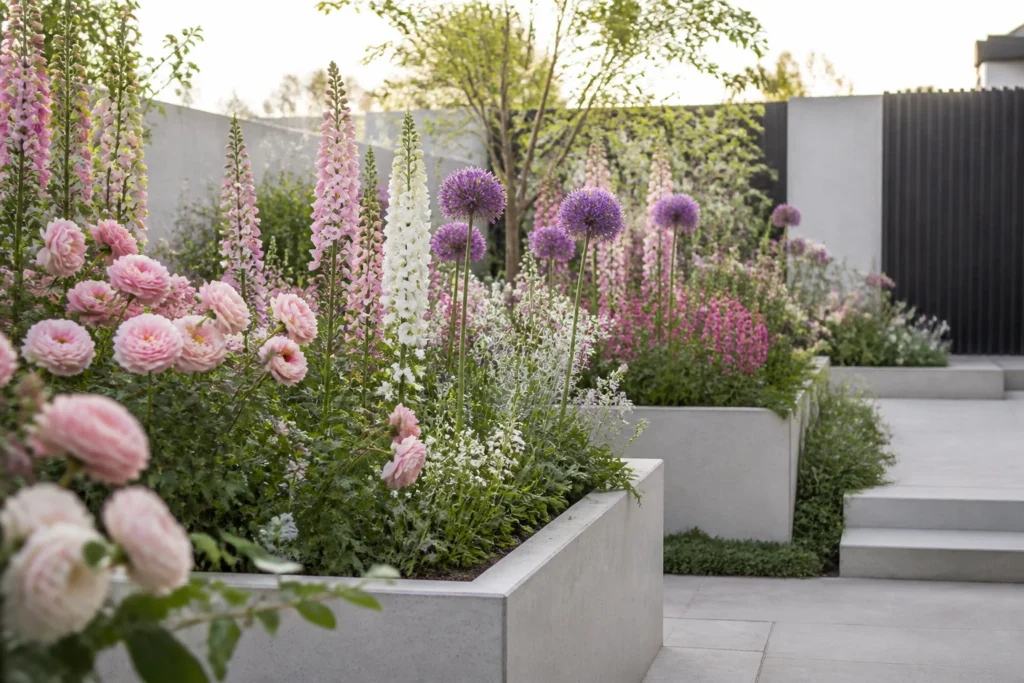
One of the most interesting garden decor ideas 2026 designers are playing with is the tension between structure and wildness. Concrete raised beds with overflowing cottage planting. Sleek metal edging containing a riot of foxgloves and roses. Grid trellis panels dripping with wisteria.
The key is that the architecture — the ‘bones’ of the garden — should be modern and geometric. But everything growing in and around that structure should be soft, romantic, slightly unruly. It’s the visual equivalent of a three-piece suit with untucked shirt. Deliberate casual.
Idea #8 — Edible Garden Decor
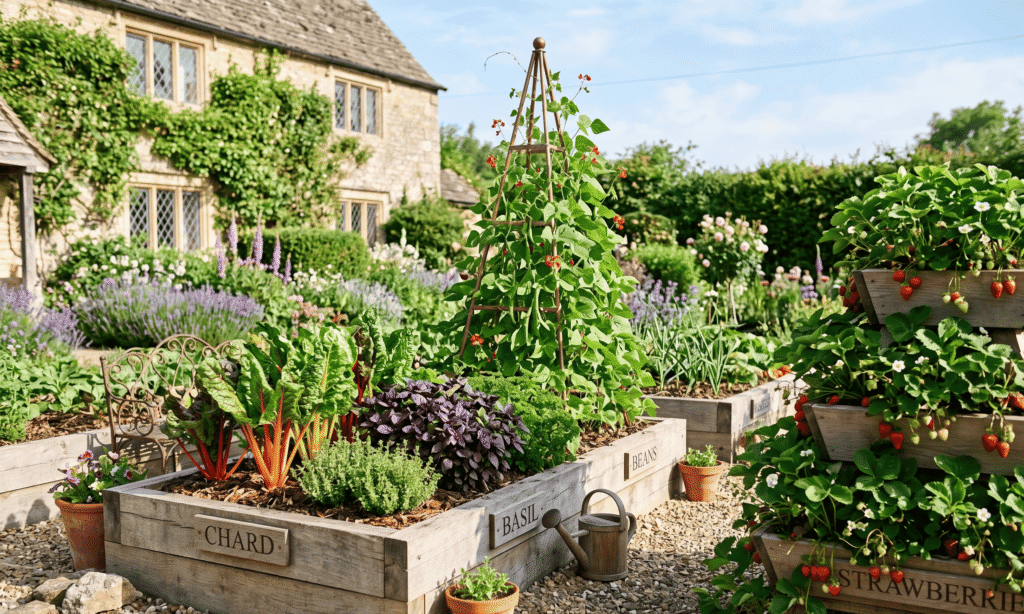
The idea that edible plants are somehow less ‘pretty’ than ornamentals is frankly outdated. Some of the most beautiful plants in my garden right now are rainbow chard (the stems glow like stained glass in late afternoon sun), climbing purple beans on a copper-colored trellis, and a standard-trained bay tree in a terracotta pot.
Designing an edible garden as a visual feature is one of the smartest garden decor ideas 2026 because you’re getting double value — it looks beautiful AND you eat from it. The Better Homes & Gardens edible garden design guides (bhg.com) are worth bookmarking for layout inspiration.
- Grow climbing vegetables on decorative obelisks rather than plain canes
- Use raised beds with good-looking timber or Corten steel edging
- Mix ornamental herbs (purple sage, variegated thyme) with edibles
- Train fruit trees as espaliers against walls — structural and productive
Idea #9 — Fire & Light Features
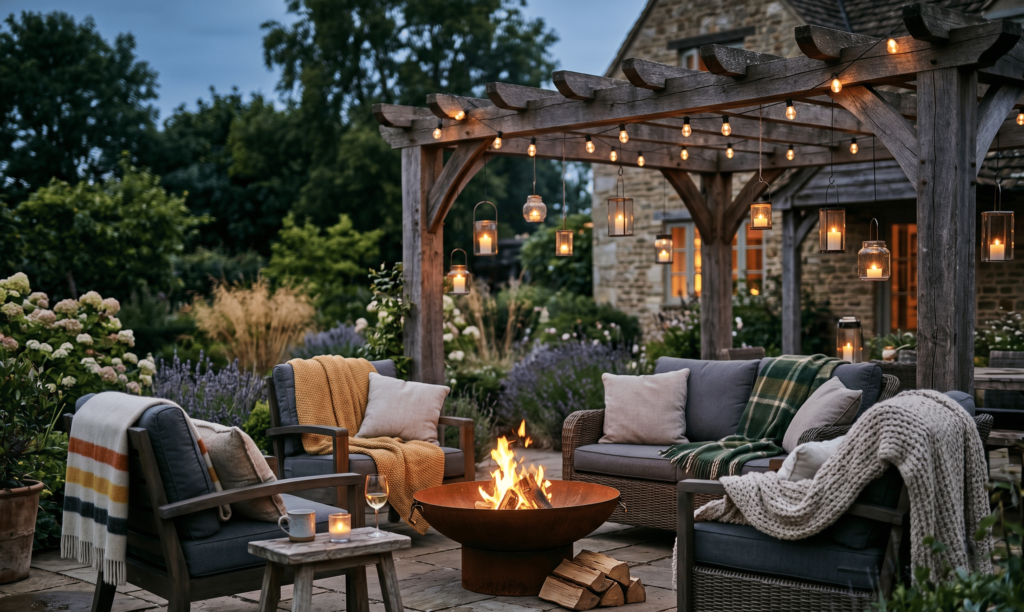
Post-pandemic, gardens became true outdoor living rooms, and that means lighting and fire have become genuinely important decor decisions. The 2026 approach layers three types of light: ambient (solar string lights, wall lanterns), task (path lighting, step lights), and accent (fire bowls, candle lanterns, uplighters on specimen plants).
Fire bowls have matured beyond the basic metal bowl. Look for:
- Concrete fire bowls — almost architectural in their simplicity
- Corten steel firepit tables that double as surfaces
- Bioethanol burners for smokeless use on balconies or in cities
For lighting that stays: copper or brass wall lanterns age beautifully and look better with every year. Avoid anything chrome or nickel outdoors — it shows fingerprints and weathers badly.
Idea #10 — Color-Blocked Planters
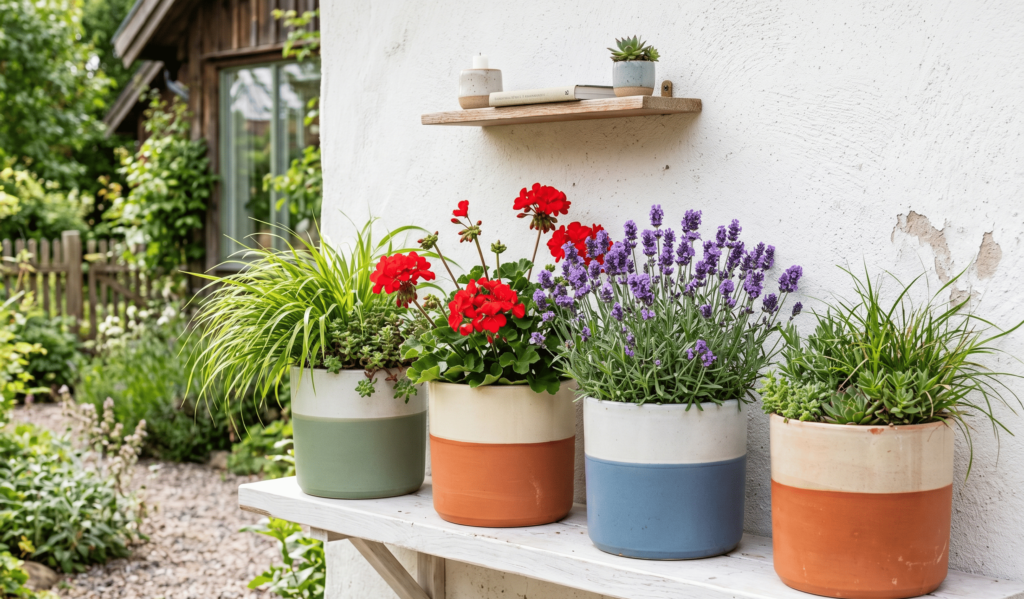
If you look at garden decor trends coming out of Scandinavian design studios right now, one thing jumps out: individual monochrome pots, each in a single matte color, each planted with one species. The deliberateness of it is striking compared to the usual mixed-pot approach.
This works especially well on patios, balconies, and against light-colored walls. Choose three colors that work together — sage, terracotta, and dusty blue is a combination showing up everywhere in 2026 garden decor. Paint old plastic or cement pots yourself with exterior matte paint for a fraction of the cost of buying new.
Idea #11 — Sculptural Native Plants
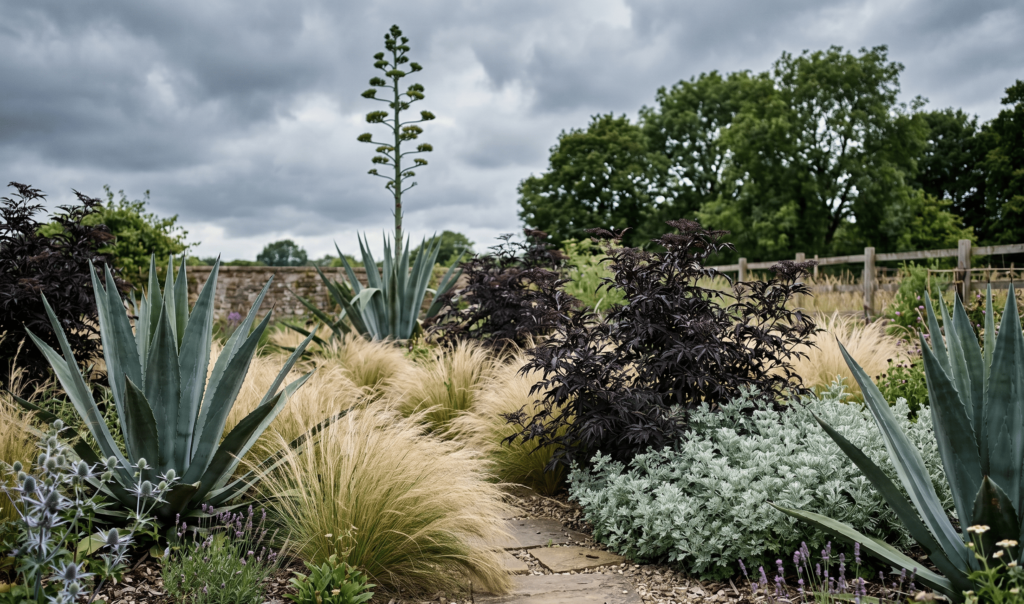
One of the most genuinely useful garden decor ideas 2026 is using plants themselves as the sculpture. Architectural specimens — ornamental grasses, agaves, banana plants, tree ferns — create focal points that require almost no additional decoration.
The rewilding movement has made native plants cool again, and rightly so. A well-placed stand of native grasses catching the low winter sun, or a snakeshead fritillary meadow in spring — these things are more beautiful than any ornament you could buy.
The RHS (rhs.org.uk) has excellent resources on native plant choices for different soil types and climate zones if you want to start here.
Idea #12 — DIY Mosaic Accents
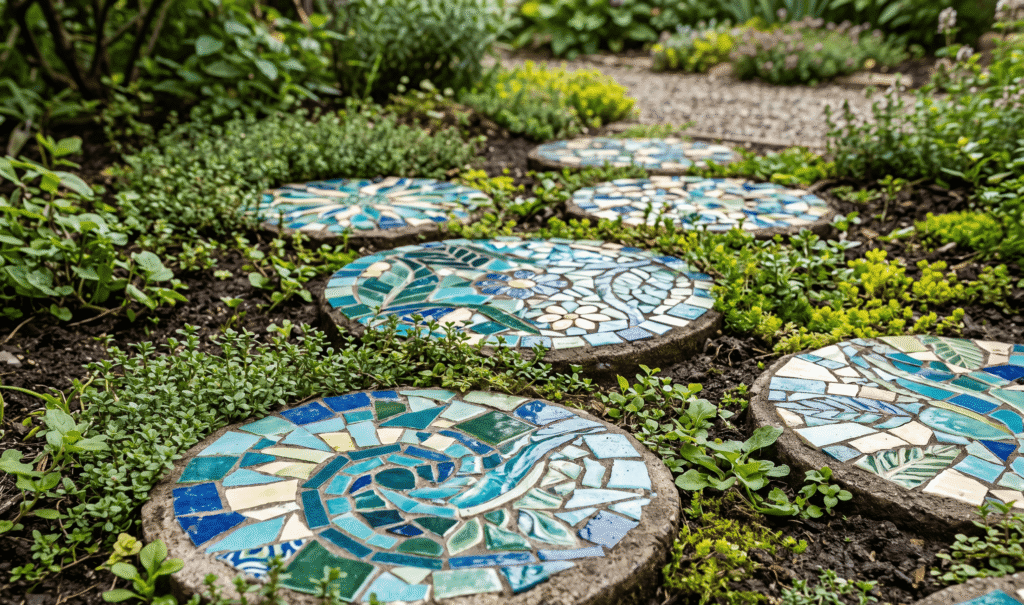
Mosaic is one of those crafts that looks incredibly difficult but is actually very forgiving for beginners. You can make a stepping stone from a concrete mold, tile adhesive, and broken old crockery in an afternoon. The fact that it’s handmade makes it genuinely unique — and nothing else in the world will look exactly like it.
What I’ve mosaicked in my garden: stepping stones, a plant pot, a bird bath, and the top of a small garden table. Each one took less than two hours including drying time. Grouting is the messy part — wear gloves.
Idea #13 — Hanging Basket Drama
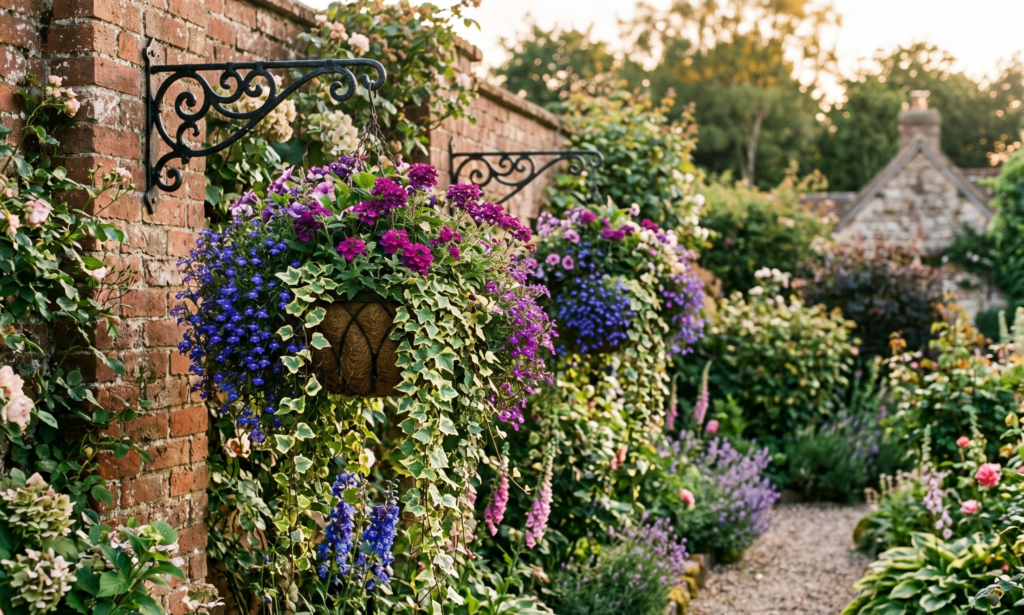
Hanging baskets have a reputation for being old-fashioned, but 2026 garden decor is reclaiming them — specifically, the XL dramatic version with proper trailing plants and a color story. The key difference from the usual is scale: go bigger than you think, and use high-quality compost mixed with water-retaining granules (they make an enormous difference in how often you need to water).
- Line baskets with coir fiber, not moss — lasts longer and holds moisture better
- Plant centrally AND around the sides through the basket for fullness
- Choose one thriller (tall spiky or striking plant), two fillers, two spillers
- Water every day in summer — a half-sized watering can, twice if hot
Idea #14 — Weather-Resistant Outdoor Rugs
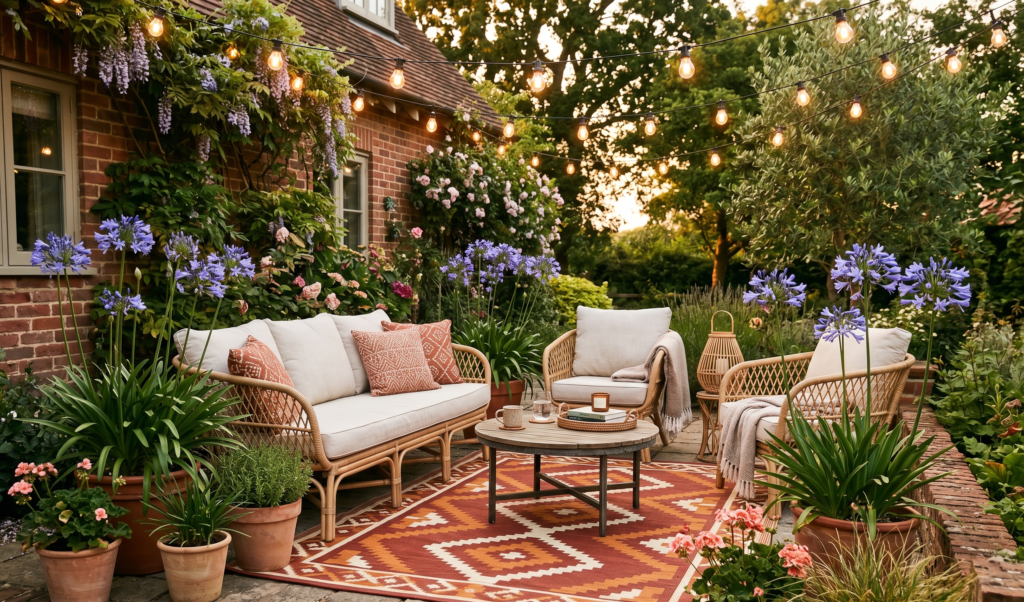
An outdoor rug is one of the fastest ways to elevate a patio from ‘functional space’ to ‘outdoor room.’ The key shift in 2026 is that the material quality has improved massively — polypropylene flatweave rugs that are UV-stable, mold-resistant, and can be left out through the seasons.
The mistake most people make: buying one too small. An outdoor rug should anchor the seating group, with all four legs of chairs sitting on the rug. If your rug only fits under the table, it’s too small. Size up, every time.
Idea #15 — Smart Garden Tech Aesthetic
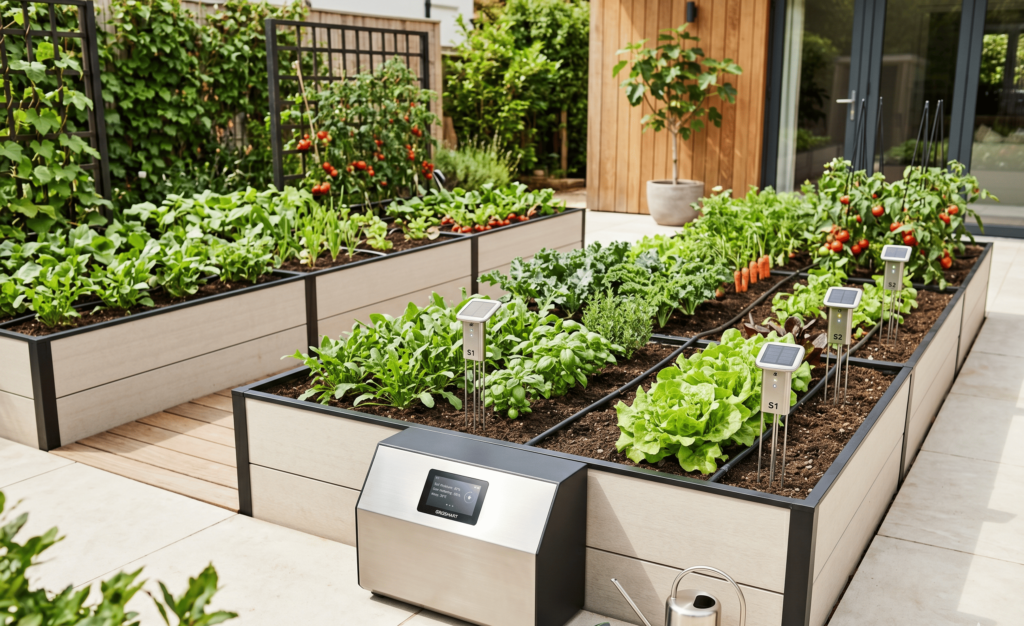
Garden tech has finally caught up aesthetically. Soil moisture sensors, automatic watering systems, and solar-powered weather stations are available in clean, minimal designs that actually look intentional rather than bolted-on.
I’ve been using the Gardena smart watering system for two seasons now, and beyond saving water, the app integration is genuinely useful. It connects to local weather data and skips watering cycles automatically if rain is forecast. One less thing to think about.
- Smart lighting systems (Philips Hue Outdoor, Innr) allow scene setting from your phone
- Soil sensors (Parrot Flower Power, Xiaomi Mi Plant) give real-time feedback on conditions
- Automatic composters (Lomi, Vitamix FoodCycler) turn kitchen waste to garden gold
Idea #16 — Bold Fence & Wall Transformations
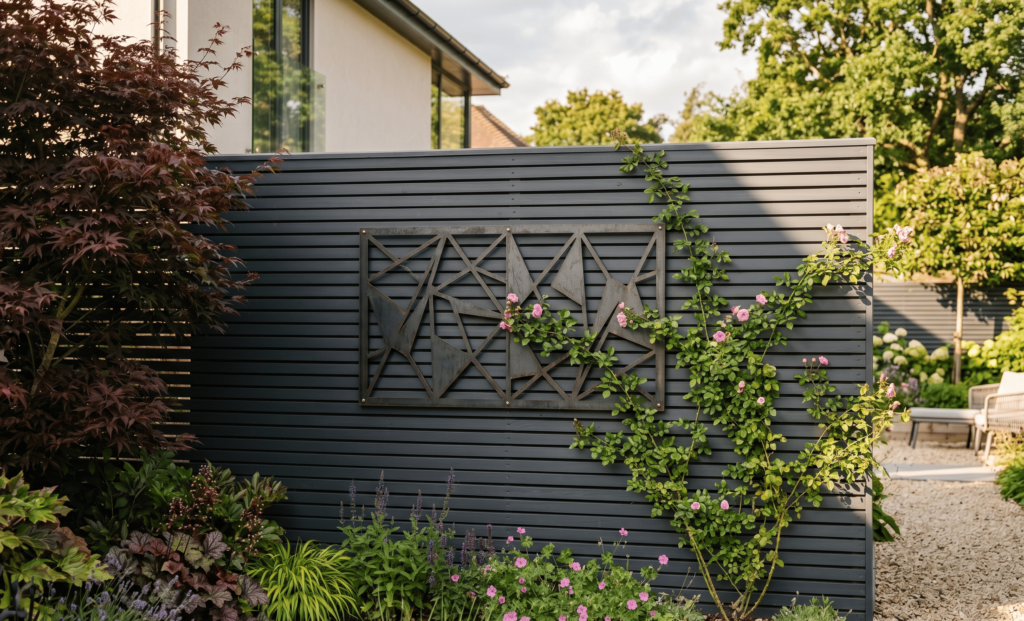
The fence or boundary wall is the largest vertical canvas in your garden, and most people completely ignore it. In 2026, the approach is to treat it as a feature wall in an outdoor room.
Painting fencing dark — deep charcoal, forest green, navy — is one of the best transformations you can make for minimal cost. It recedes visually, making plants in front pop, and gives the whole space a more sophisticated backdrop. I painted my old brown fence panels in Ronseal’s ‘Dark Oak’ shed and fence paint and it looked like a completely different garden.
Add to that:
- Wall-mounted metal art: abstract geometric pieces weather beautifully in Corten or powder-coated steel
- Mirror panels in weatherproof frames to bounce light in shady spots
- Horizontal batten screens made from larch or cedar for a contemporary look
Idea #17 — Cozy Corner Seating Vignettes
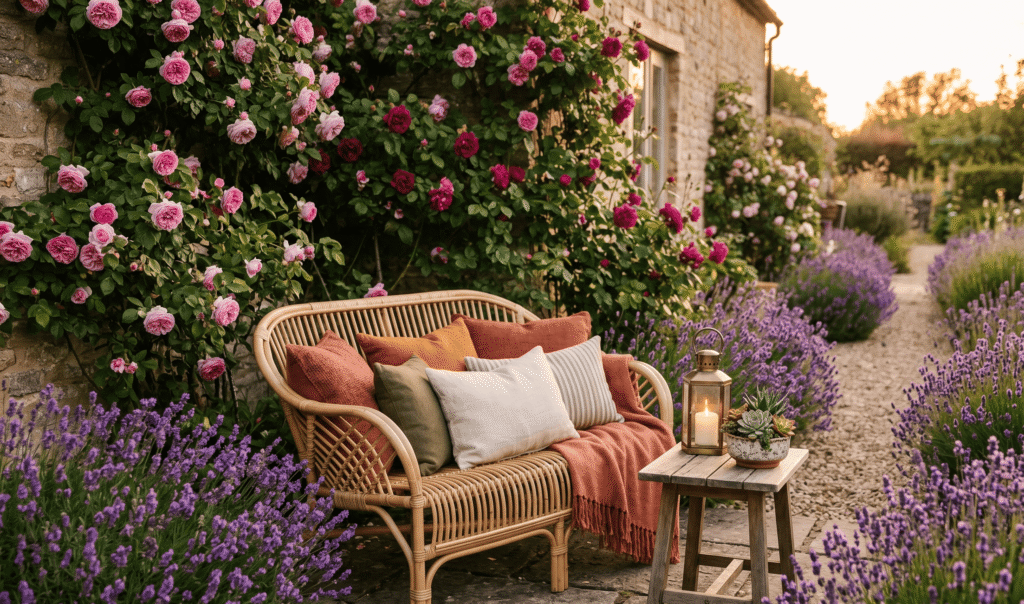
The most used part of any garden I’ve ever had is a tucked-away corner with a seat and something to look at. Not the main patio. Not the lawn. The corner where you feel slightly enclosed, where things are fragrant, where the light is good.
Creating a seating vignette doesn’t require much space — even 6 by 6 feet is enough. The elements that make it work:
- A curved or L-shaped seat that partly encloses you (not a standard square bench)
- Something fragrant nearby — lavender, roses, jasmine, herbs
- A focal point to look toward — a single beautiful plant, a water feature, a piece of art
- Lighting specifically for that corner — a lantern, a small solar spot, string lights above
- A small surface for a drink — even a stump or a flat stone works
This is the kind of place people actually use. The grand centerpiece garden rarely gets sat in. The cozy corner always does.
⚠️ Common Garden Decor Mistakes to Avoid in 2026
After years of trial, error, and occasionally wanting to bulldoze the whole thing, here are the mistakes I’d most want to save you from:
- Buying small. A small pot looks lost in a garden. A single small feature looks random. Scale up, always.
- Mixing too many materials. Plastic + wood + metal + ceramic + stone in one space looks chaotic. Pick two or three and stick to them.
- Ignoring the bones. The best planting in the world can’t fix a garden with no structural layout. Paths, borders, and levels come first.
- Cheap materials outdoors. What looks great in a store photo often doesn’t survive one winter. Invest in quality for hardscape items you can’t easily replace.
- Symmetry everywhere. Real gardens are asymmetric. Perfect symmetry looks artificial and formal unless that’s genuinely the style you’re going for.
- Following trends too rigidly. The best gardens have a personal vision, not just the top-10 trends executed perfectly. Let yourself experiment.
🌸 Final Thoughts
The garden decor ideas 2026 that are resonating most aren’t the ones that cost the most or look the most impressive on social media. They’re the ones that make you actually want to spend time outdoors — the cozy corner, the fragrant path, the water feature that brings frogs and birds, the veg patch that gives you dinner.
Start with one thing. Buy one terracotta pot of a size you’d normally think is too big. Put it somewhere it’ll be a focal point. See how it changes the way the whole space feels. Then add the next thing.
You don’t need an $800 disaster year like I had to figure this out. Most of the best garden transformations I’ve made cost under $50 and took an afternoon. The trick is knowing what to do — and hopefully this gives you a solid starting point.
Happy planting.
You May Also Like These Posts
→ Brilliant Small Home Office Ideas
→ Mid Century Modern Wall Art Ideas