
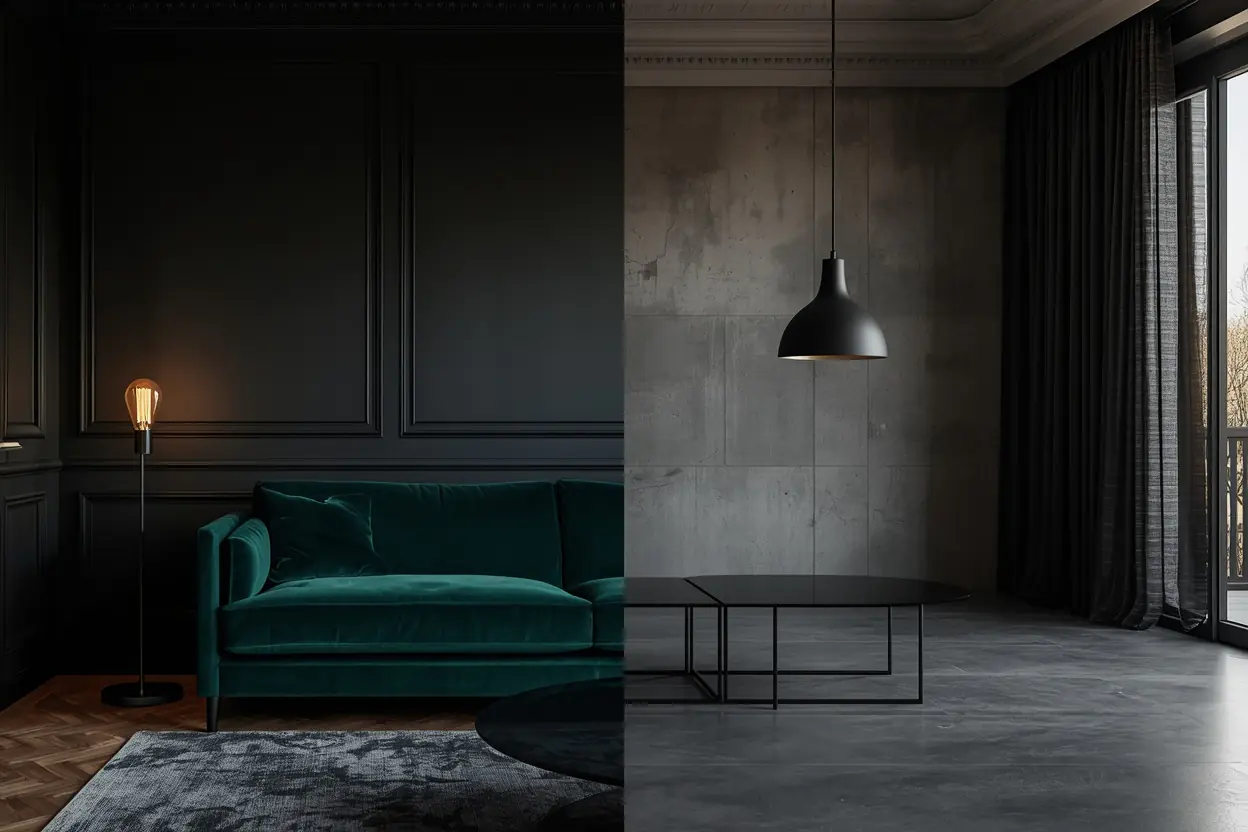
Why I Finally Went Dark (And Never Looked Back)
Let me be real with you. Three years ago I would have laughed at anyone who said painting their living room walls near-black was a good idea. I was the beige-and-grey person. Scandinavian minimalism, clean lines, white everything. Safe.
Then I moved into a north-facing apartment that got about two hours of actual sunlight a day. Every light, bright wall I painted just made the space look cold, flat, and honestly a little depressing. My living room looked like a waiting room. So one weekend — mostly out of frustration — I grabbed a tester pot of deep slate paint and slapped it on one wall.
I didn’t sleep that night. I was sitting in my living room at 1 AM, lamp on, and for the first time in months the room actually felt like somewhere I wanted to be. Cozy. Intentional. Like it had a personality. That was the moment I understood the dark living room aesthetic — and why, heading into 2026, it’s not just a Pinterest trend anymore. It’s a full design movement.
So if you’re here, either you’re already curious or you’re staring at your perfectly acceptable but completely soulless living room thinking “there has to be more to this.” There is. Let’s get into it.
The Number That Made Interior Designers Pay Attention
Here’s something wild: according to data tracked by Pinterest Predicts and Houzz’s annual design survey, searches for ‘dark interior living room’ and ‘moody home aesthetic’ grew by over 340% between 2022 and 2025. Over a third of homeowners who renovated their living rooms in 2025 incorporated at least one dramatically dark element — whether that was a feature wall, deep-toned furniture, or black architectural details.
That’s not a niche interest anymore. That’s a mainstream shift in how people think about their homes.
The psychology behind it is fascinating: after years of open-plan, all-white, Instagram-ready homes, people are craving spaces that feel like a genuine retreat. Dark rooms feel enclosed in a good way — protective, grounding, and deeply personal. Interior psychologists call this ‘cocooning,’ and it maps directly to why so many people are investing in their home environments post-pandemic.
The Post That Went Viral Overnight — And What It Teaches Us
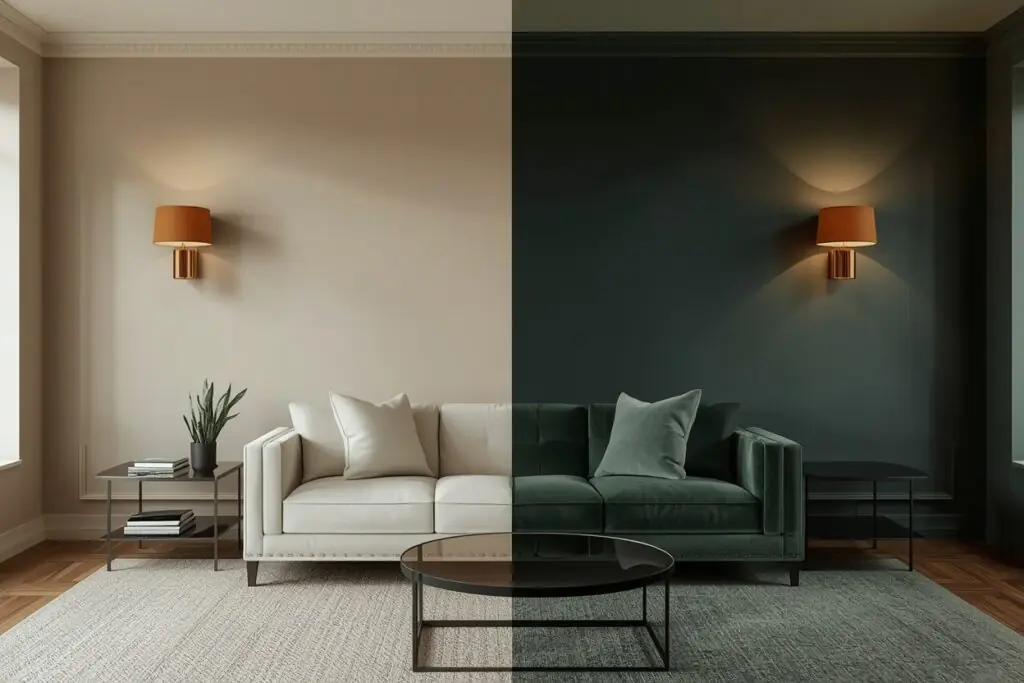
In late 2025, a designer in Melbourne posted a before/after of her client’s living room to Instagram Reels. Before: beige walls, white furniture, forgettable. After: deep charcoal walls, a forest green velvet sofa, amber sconces, and a smoked glass coffee table. No fancy camera — just her iPhone 13 in good light.
It hit 2.3 million views in 48 hours. The comments were a mix of ‘I need this immediately’ and ‘my husband will never agree to this but I’m doing it anyway.’ Sound familiar?
What made it work wasn’t any single element. It was the combination — the way the dark walls made the gold lamp pop, the way the green velvet looked richer against the dark background. Every element amplified the others. That’s the secret to the dark living room aesthetic that so many people miss when they try it at home.
15 Dark Living Room Aesthetic Ideas for 2026
Idea #1: Obsidian & Slate Feature Walls — The Non-Negotiable Starting Point
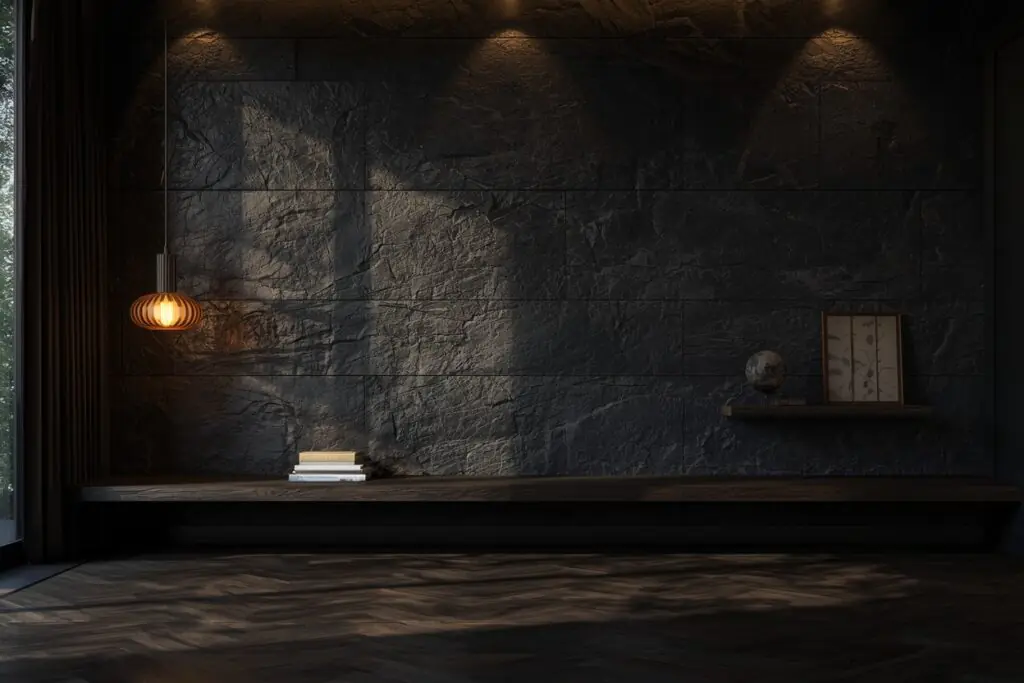
If there’s one element I’d call the foundation of the dark living room aesthetic in 2026, it’s a dramatic feature wall. And I’m not talking about a single coat of charcoal — I mean going properly dark. Think Benjamin Moore’s ‘Onyx,’ Farrow & Ball’s ‘Railings,’ or Sherwin-Williams ‘Tricorn Black.’
The key thing I learned (the hard way): dark walls need undertones. A flat black looks dead. Look for paints with blue, green, or purple undertones — they give the wall depth and shift subtly as the light changes throughout the day. In a north-facing room, blue undertones warm up rather than look cold.
Alternatively, you can skip paint entirely. Peel-and-stick slate or dark stone effect panels from brands like NovaBella or Aspect Tile let you create a textured feature wall for under £150. The texture adds enormous visual interest in a dark room.
- Best paint picks: Farrow & Ball ‘Railings’ (blue-black), Benjamin Moore ‘Onyx,’ Dulux ‘Midnight Storm’
- Budget option: Peel & stick textured dark panels — search Amazon or Wayfair for ‘dark stone feature wall panels’
- Pro tip: Paint the ceiling the same shade or one tone lighter — it makes the room feel intentional, not incomplete
Idea #2: Midnight Velvet Statement Sofa — The Room’s Dark Hero
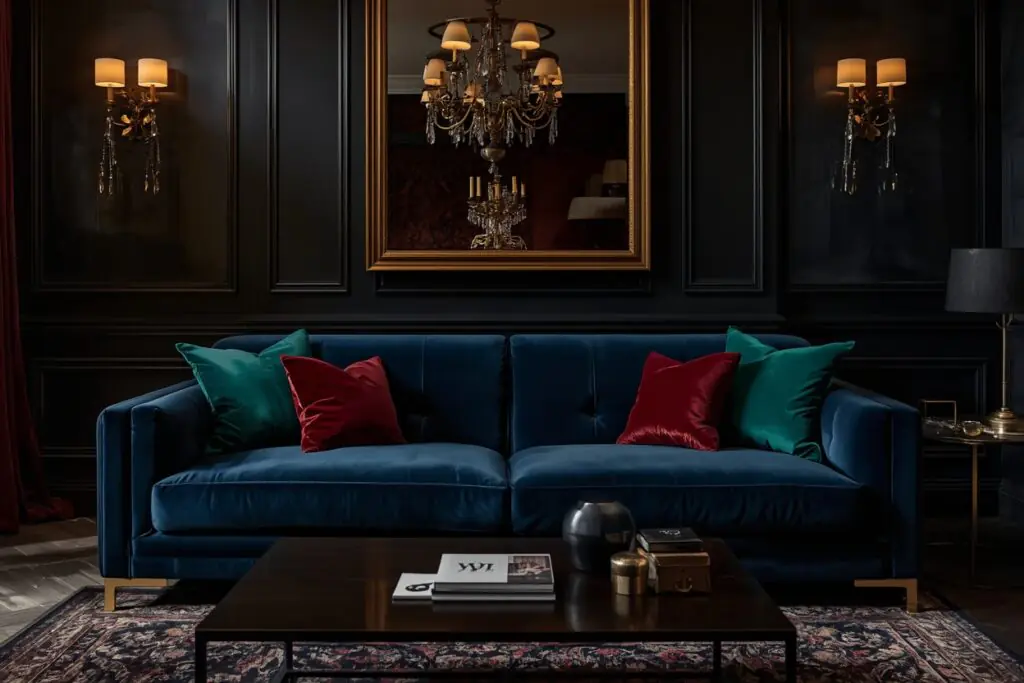
Here’s something that surprised me: velvet looks about three times as rich against a dark wall as it does against a white or cream one. The contrast is extraordinary. A midnight blue, deep plum, or forest green velvet sofa against an almost-black wall is genuinely jaw-dropping.
The sofa you pick matters though. Go for something with clean, structured lines — boxy arms, a low back, visible legs in brass or dark wood. Avoid overly casual silhouettes; the dark aesthetic needs furniture with a bit of intentionality.
Budget reality check: Designer velvet sofas (think Linen House or Soho Home) start at around £1,800. But I’ve sat on a £550 Wayfair velvet sofa that looked absolutely stunning in a dark room. The context of the room elevates cheaper furniture dramatically. That’s one of the hidden perks of this aesthetic.
Idea #3: Warm Amber & Edison Glow Lighting — This Is Your Secret Weapon
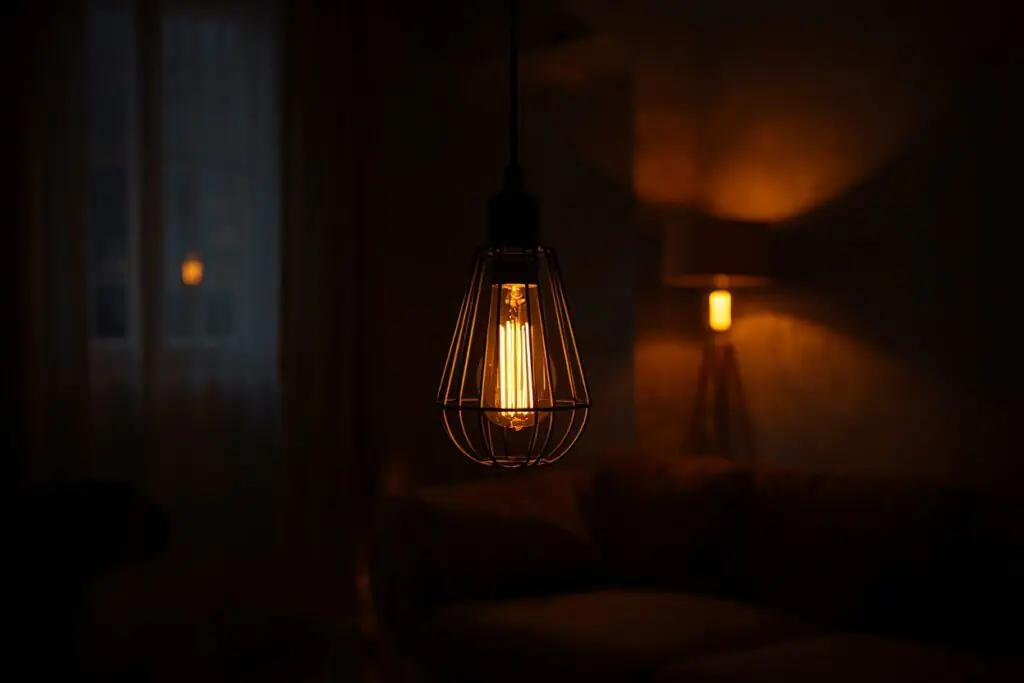
I cannot stress this enough: lighting is 80% of why a dark room looks incredible or depressing. Get it wrong and you’ve painted yourself into a cave. Get it right and you have the coziest, most inviting room on the block.
The rule I follow: warm white only. 2700K or below. Anything cooler (daylight bulbs, 4000K+) will make dark walls look flat and cold. Layer multiple light sources at different heights — a floor lamp, table lamps, wall sconces, maybe some LED strip lighting tucked behind furniture or under shelves.
Edison-style filament bulbs are having a proper moment in 2026, especially exposed in black metal cage pendants. Paired with a dimmer switch (seriously, get a dimmer), you can shift the room from daytime casual to full moody-dinner-party mode in seconds.
Smart bulbs like Philips Hue or IKEA Tradfri let you set scenes and automate the whole setup. I have mine on a schedule — they warm up automatically at 6 PM. It genuinely changed how I feel about coming home.
- Target: 2700K bulbs or below in every fixture
- Layer: floor lamp + 2 table lamps + at least one wall sconce minimum
- Add a dimmer switch — about £15–£30 and completely transformative
- Smart bulbs: Philips Hue (premium) or IKEA Tradfri (budget)
Idea #4: Dark Wood Floating Shelves — Practical Meets Dramatic
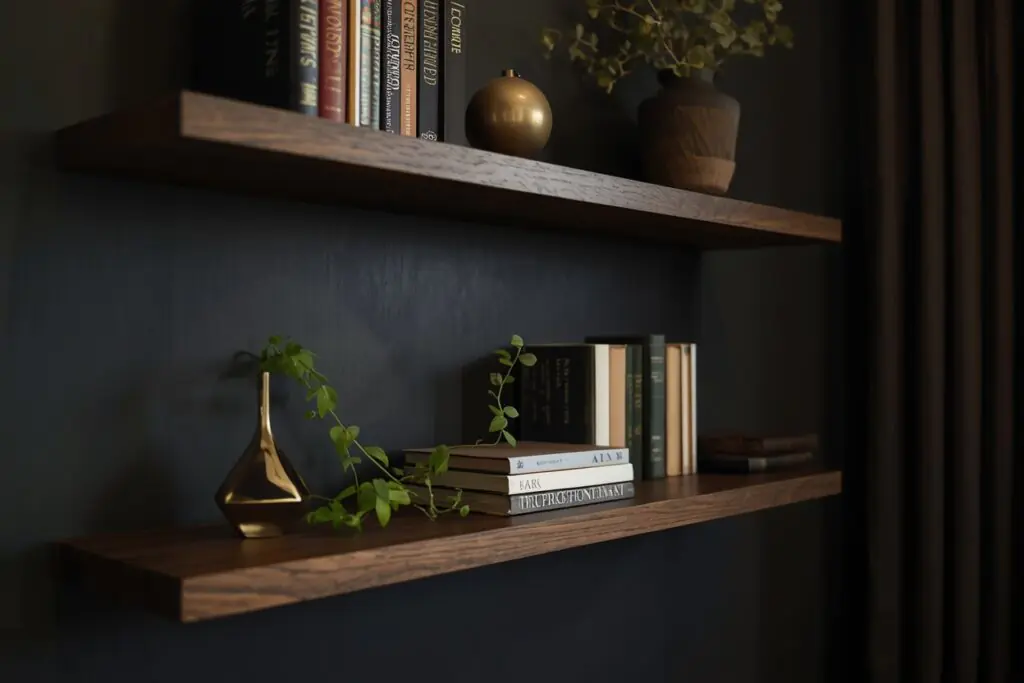
Floating shelves in a dark room are one of those ideas that looks complicated but is actually really accessible as a DIY project. The trick is going darker than you think you need to. Light or medium wood shelves in a dark room look awkward — like they’re apologizing for existing. Dark walnut, blackened oak, or even painted-black MDF shelves feel intentional and powerful.
What you put on them matters just as much. In a dark room, you want a mix of textures: a few books (spines facing out, ideally dark or muted tones), a small trailing plant like a pothos or string of pearls, and one or two metallic or ceramic objects that catch the lamp light. Avoid cluttering them — dark rooms need breathing space on shelves.
Idea #5: Oversized Dark Botanical Artwork — Moody Nature Meets High Drama
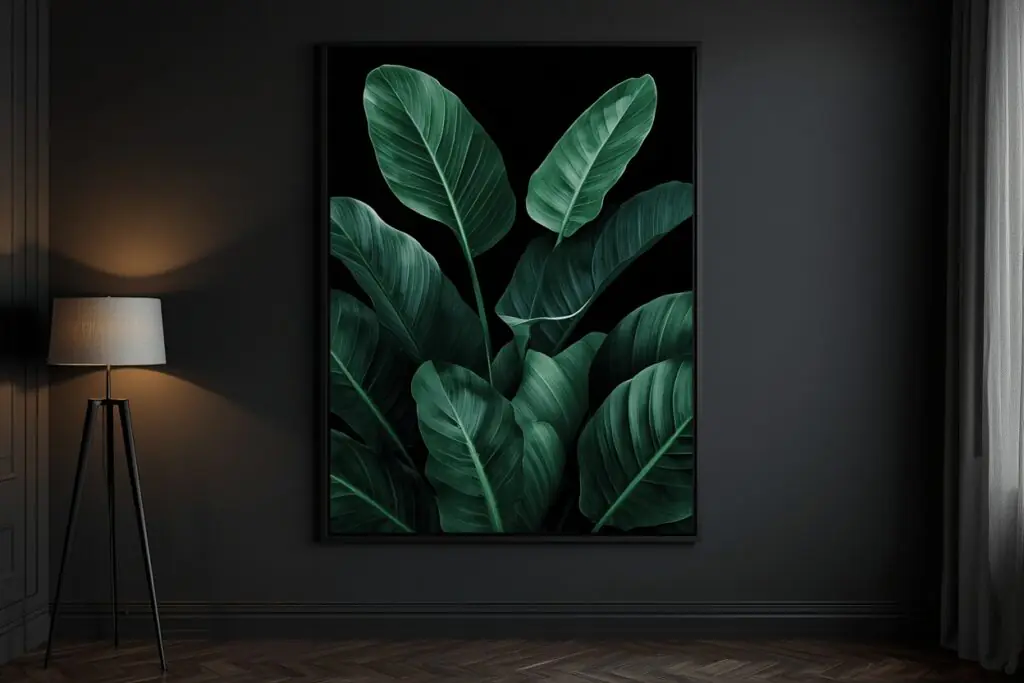
Botanical prints in dark, moody palettes are absolutely everywhere in 2026 interior design, and for good reason — they add an organic, living element that stops dark rooms feeling harsh or cold. Think oversized prints of tropical leaves in deep emerald and black, dark floral close-ups, or abstract botanical forms in charcoal and forest green.
The size matters enormously. A small print in a dark room gets lost. Go big — ideally a canvas or print that occupies at least a third of the wall it’s on. If your feature wall is dark, consider a piece in slightly lighter tones (dark sage, deep teal) so it separates from the wall. If your walls are medium dark, you can go even darker in the artwork.
Where to find them: Society6, Desenio, and Etsy all have excellent moody botanical prints for under £80, including large format. Frame in black or dark bronze for maximum impact.
Idea #6: Smoked Glass Coffee Table — Reflective Depth in a Dark Room
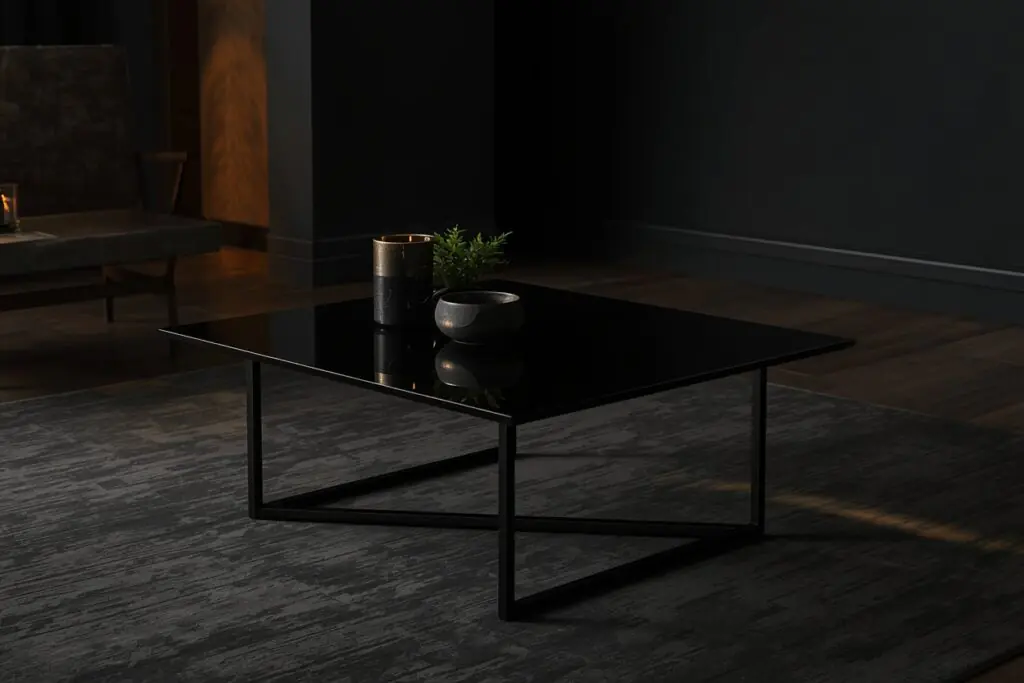
One of my favourite tricks in a dark room is using reflective surfaces strategically. A smoked or black glass coffee table does something magical — it reflects the light from your lamps upward, creating a gentle ambient glow that lifts the room without introducing any harshness.
The smoked glass aesthetic is one of the standout dark living room trends of 2026. It pairs brilliantly with dark walls because it reads as dark itself while still adding visual complexity. Look for tables with clean geometric frames in black metal or dark brass.
IKEA’s ‘VITTSJÖ’ range is a budget-friendly starting point. For something more premium, CB2 and West Elm both have excellent smoked glass options that photograph beautifully.
Idea #7: Moody Jewel-Tone Accent Wall — When Dark Meets Rich Colour
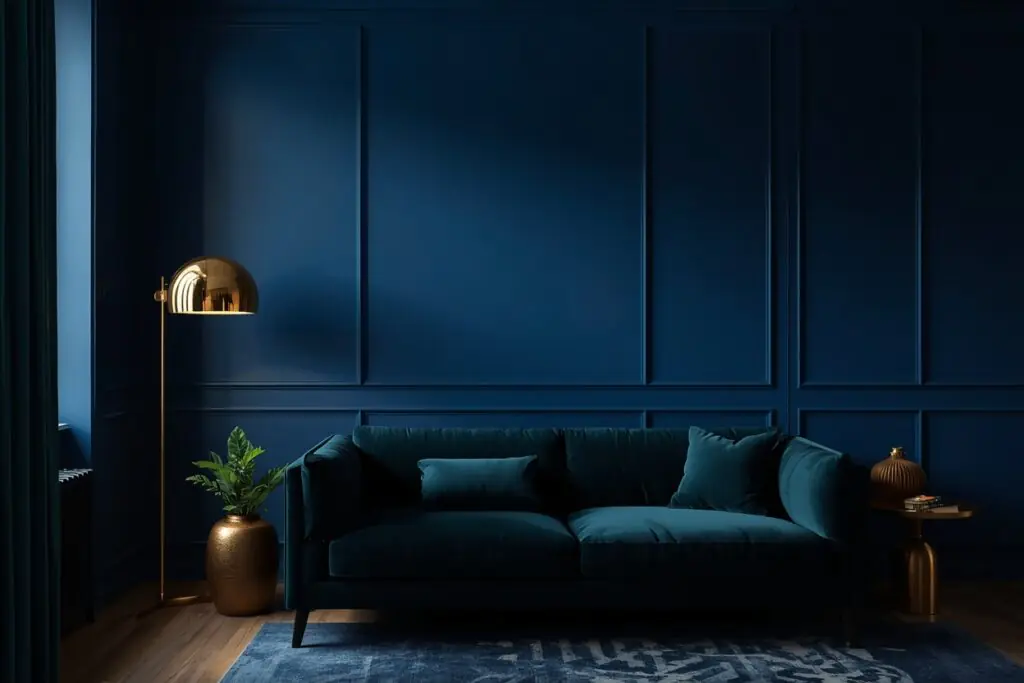
Not ready to go full black or charcoal? A jewel-tone accent wall is your gateway drug into the dark living room aesthetic. Deep sapphire blue, amethyst purple, garnet red, or hunter green — these colours are rich enough to create drama without the commitment of near-black.
The key is going deep enough. I see so many people pick a ‘navy blue’ that ends up looking like a denim shirt washed too many times. Go darker than you think, especially if your room gets limited natural light. Farrow & Ball’s ‘Hague Blue,’ Little Greene’s ‘Malachite,’ and Dulux’s ‘Plum Noir’ are my 2026 picks.
Idea #8: Black Metal Industrial Lighting — Structure Meets Shadow
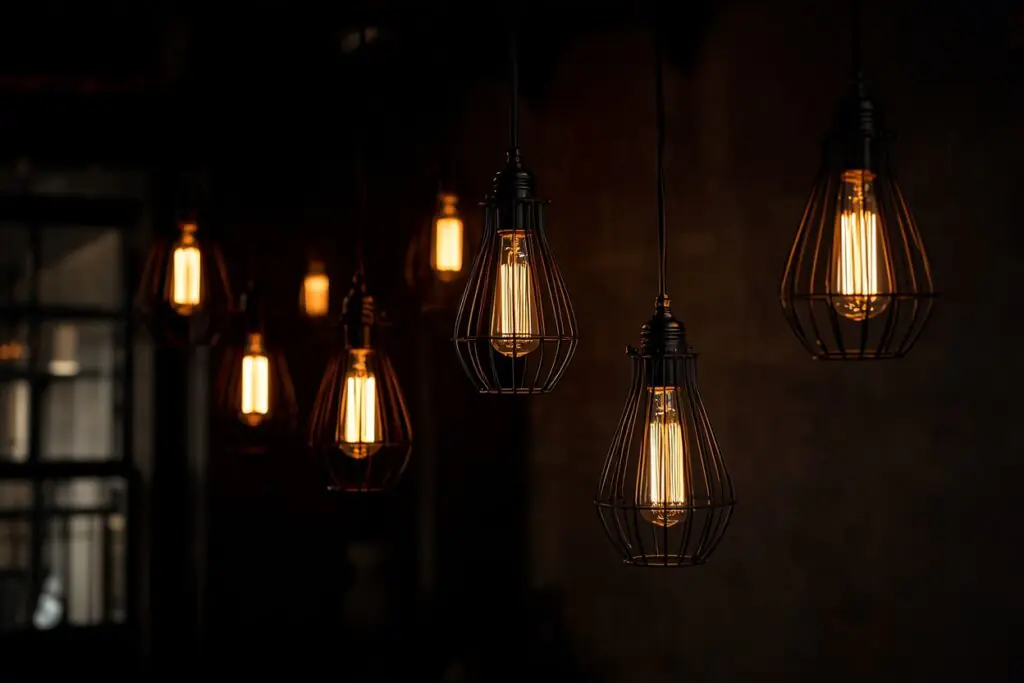
Black metal light fixtures — cage pendants, angular floor lamps, articulated wall sconces — are having an absolute moment in 2026 dark interiors. They contribute to the aesthetic even when they’re switched off, adding sculptural interest and an industrial-meets-moody energy.
The best part: black metal fixtures are some of the most affordable design upgrades you can make. A cage pendant from Amazon or H&M Home for £30–£60 looks genuinely expensive in the context of a well-put-together dark room.
Idea #9: Rich Layered Textiles & Throw Pillows — Texture Is Everything
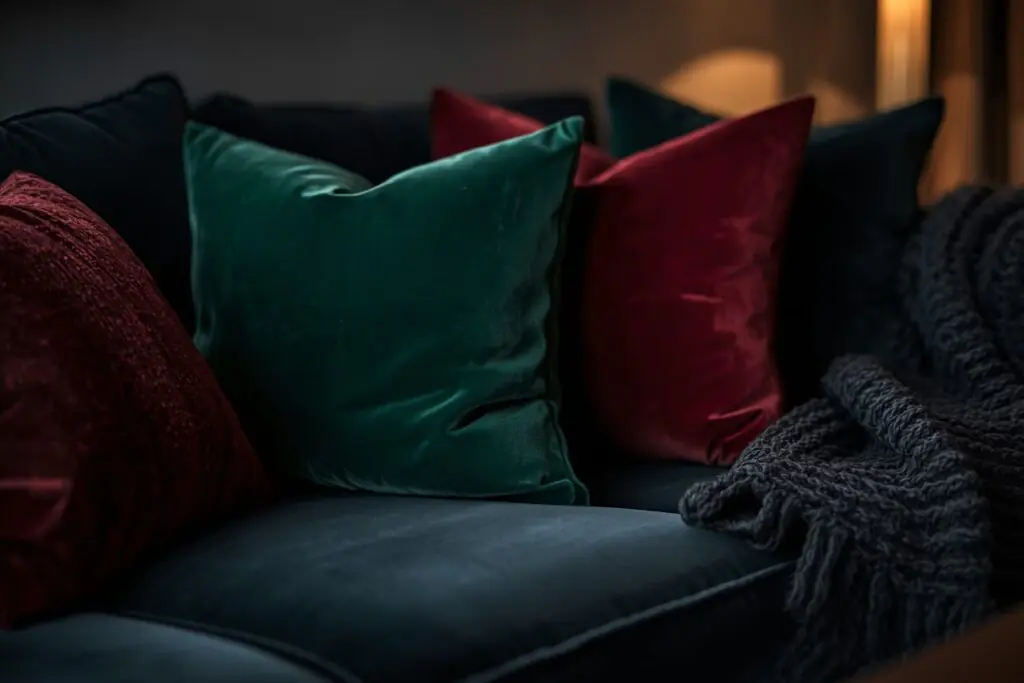
Here’s the thing about dark rooms: they can look stunning in photos but feel cold and sterile in real life if you forget about texture. The solution is layering textiles — and being genuinely generous with them.
Think chunky knit throws in charcoal or deep burgundy, velvet cushions in jewel tones, a large natural weave rug in dark caramel or espresso, and linen curtains in a tone slightly darker than your walls. Each texture catches light differently, adding incredible depth and warmth to a dark space.
My personal rule: minimum three throw pillows per sofa end in at least two different textures. Velvet and bouclé are the 2026 power couple for dark interiors.
Idea #10: Dark Gallery Wall — The Curated Collector Aesthetic
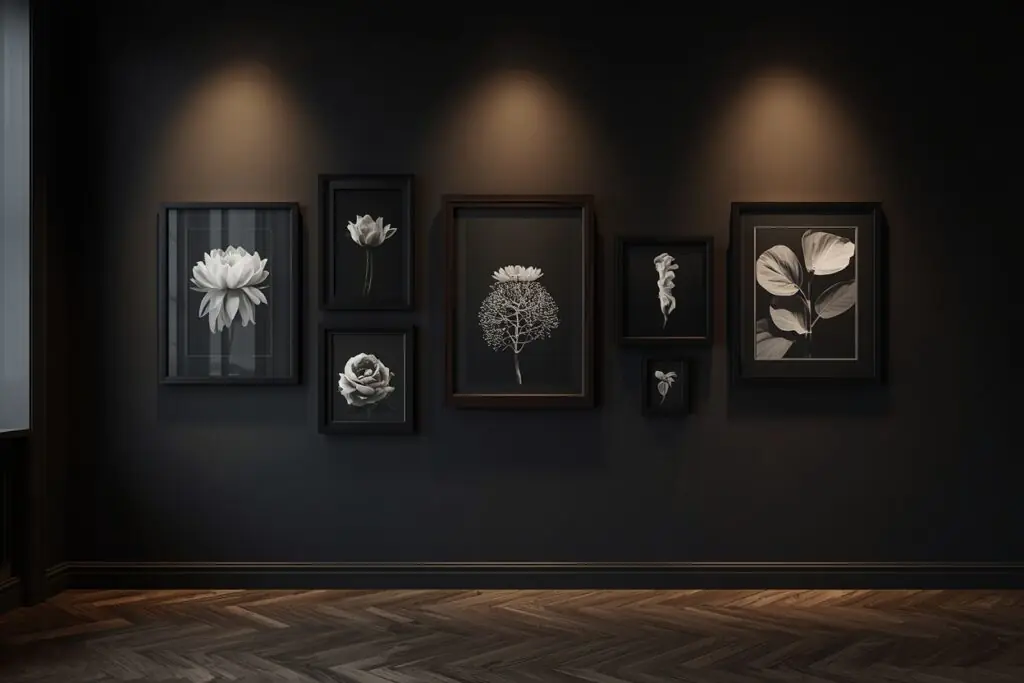
A dark gallery wall in a dark room sounds counterintuitive, but it works brilliantly when executed correctly. The key is contrast within the frames — lighter prints, illustrated pieces, or photographs on a very dark wall, all in consistently dark frames (black, dark bronze, or dark walnut).
The 2026 approach to gallery walls in dark rooms is more intentional and less maximalist than earlier trends. Fewer, larger pieces. Consistent frame style. Odd numbers. The frames themselves become part of the composition — bold, architectural, collected-feeling.
Idea #11: Live Edge Dark Wood Furniture — Nature’s Drama
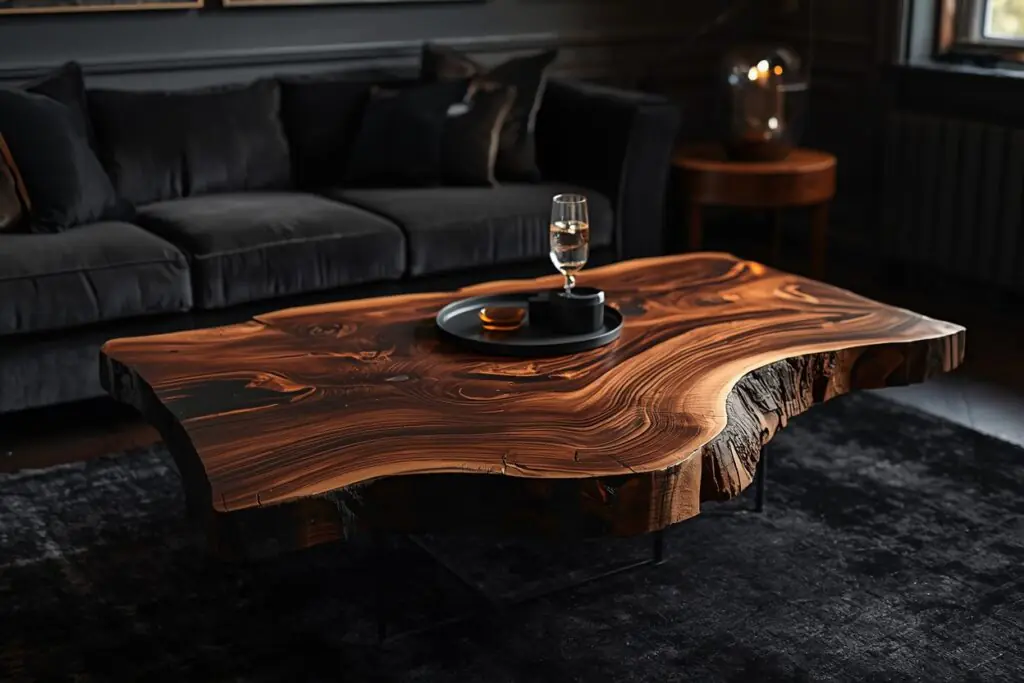
Live edge furniture — pieces where the natural, irregular edge of the wood slab is preserved — has been trending for a few years. In 2026, it’s specifically the dark wood versions that are driving the dark aesthetic forward. A live edge coffee table or console in deep walnut, ebonized oak, or even charred wood (Shou Sugi Ban technique) is an extraordinary centrepiece.
It brings an organic warmth that stops a dark room from feeling designed-to-within-an-inch-of-its-life. The irregularity of the natural edge adds life. Pair it with clean-lined furniture elsewhere for balance.
Idea #12: Deep Forest Green Ceiling — The Unexpected Bold Move
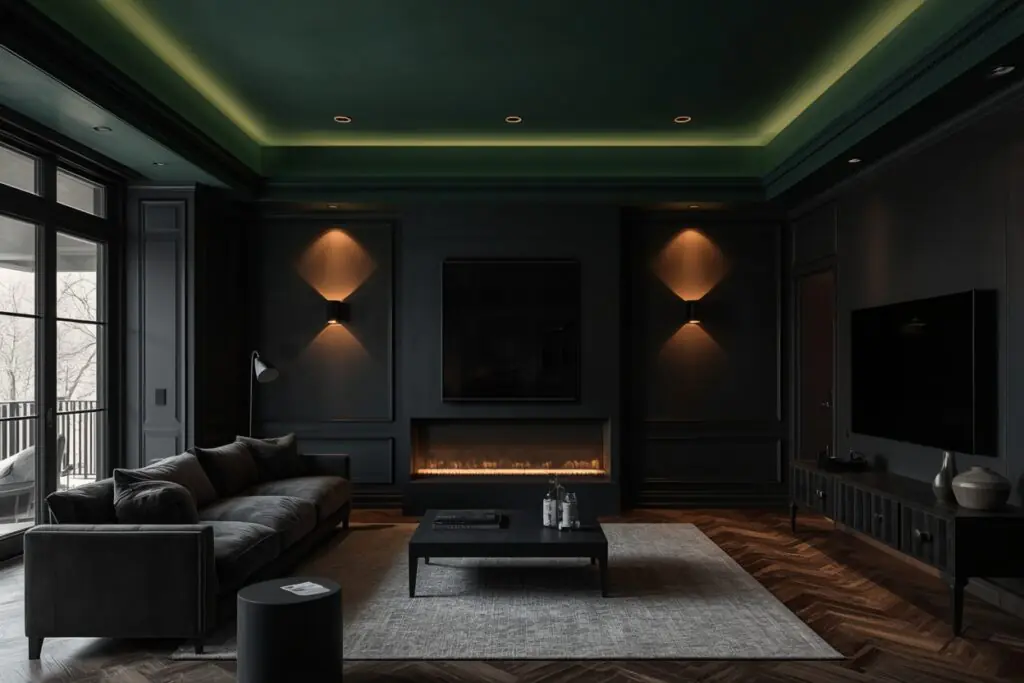
If you want to understand the dark living room aesthetic in 2026 at its most adventurous, look up. The painted ceiling — specifically a deep forest green, inky teal, or even midnight blue — is the move that separates people who are genuinely committed to the aesthetic from those just dipping a toe.
A dark ceiling does something extraordinary: it lowers the perceived height of a room (in a cosy, intentional way, not a claustrophobic way) and makes the space feel genuinely enclosed and intimate. With the right lighting — recessed warm LEDs or uplighting from floor lamps — it’s transformative.
Designer Sophie Robinson, who’s been a vocal advocate for maximalist dark interiors, has called the dark ceiling ‘the single most impactful thing you can do to a room.’ I’m inclined to agree.
Idea #13: Antique Mirror & Brass Accents — Glamour in the Dark
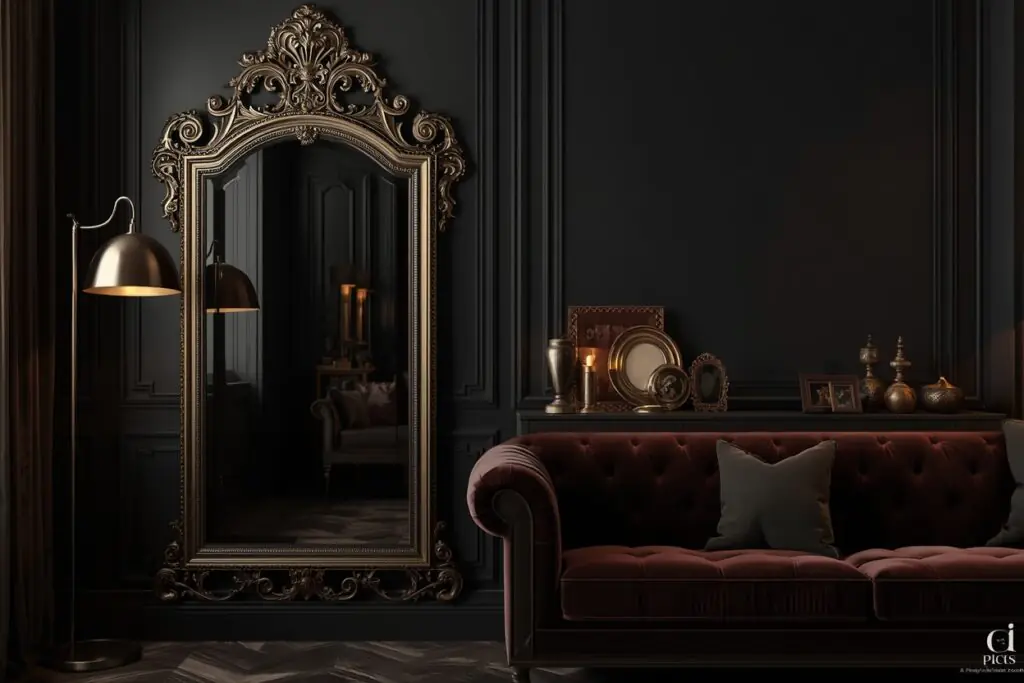
Antique or foxed mirrors in dark rooms are genuinely stunning — the aged, slightly mottled quality of the glass catches light differently than a regular mirror, creating this beautiful, mysterious depth. A large antique mirror above a fireplace or sideboard in a dark room looks like it belongs in a Victorian library (in the best possible way).
Pair with brass accents — lamp bases, picture frames, cabinet hardware, decorative objects — for a look that reads as collected and timeless rather than trendy. Dark rooms with brass accents are one of the defining looks of the dark aesthetic in 2026.
Idea #14: Candlelight & Sconce Arrangements — The Atmosphere Layer
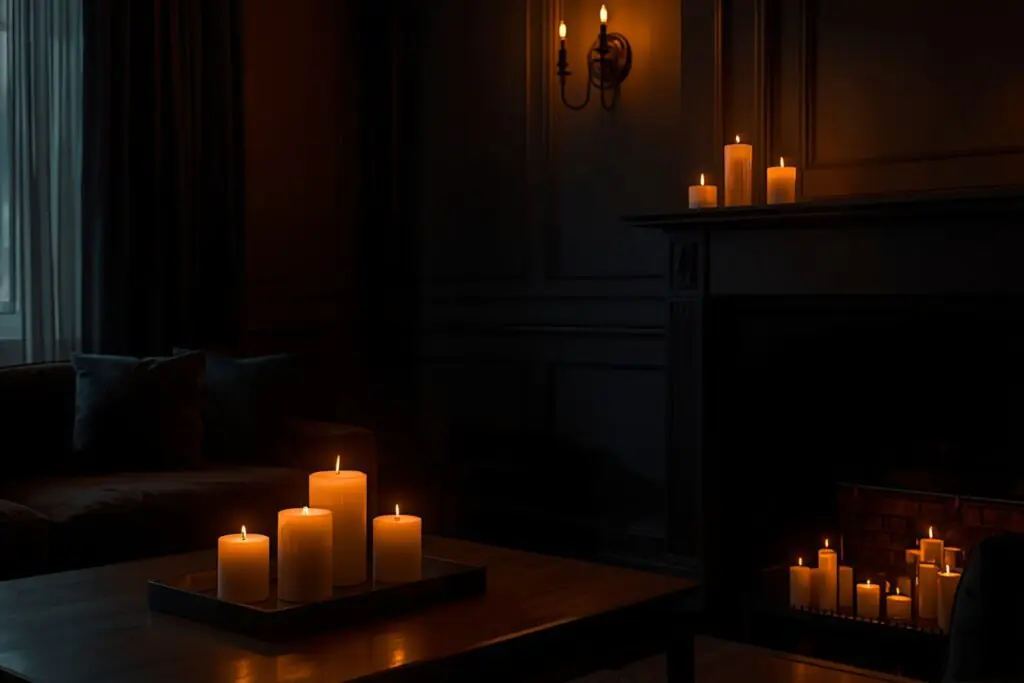
Real candles (or very good quality LED candles) are underrated as a design element in dark rooms. A dark room with ten candles lit — scattered across shelves, coffee tables, fireplaces — feels completely magical. It’s the oldest form of atmospheric lighting there is, and it works exactly as well as it ever did.
Wall sconces are the architectural version of this idea — fixed light sources that feel embedded in the room rather than added to it. In 2026, the trending dark aesthetic sconce is a narrow articulated arm in matte black with a small Edison globe. Paired with a dimmer, they let you control the mood of the whole room from a single switch.
Idea #15: Moody Arches & Architectural Niches — The 2026 Statement
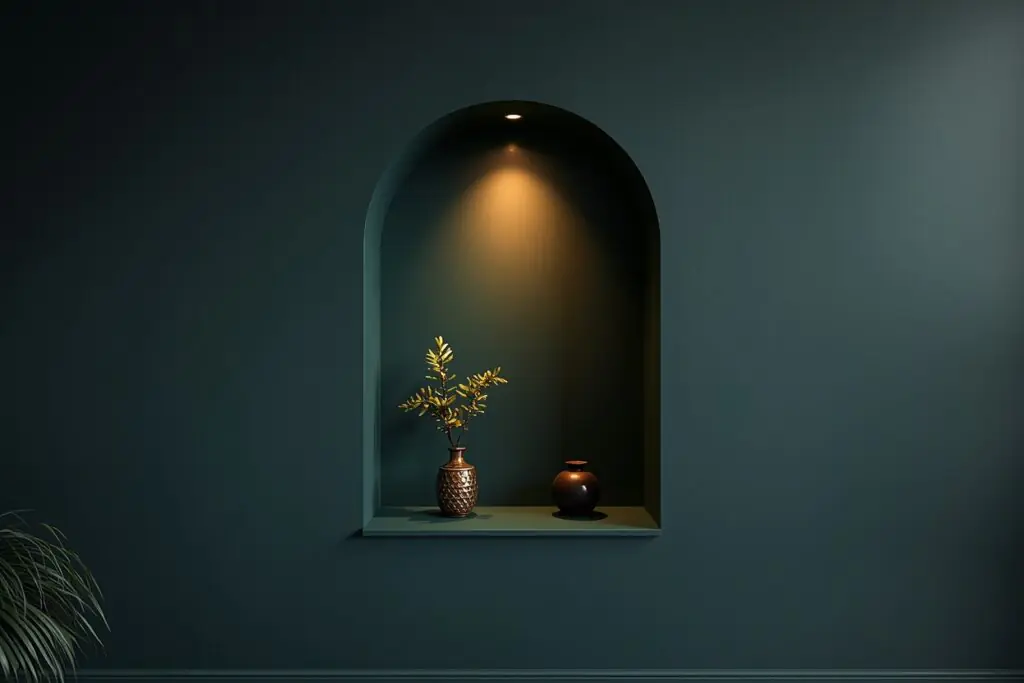
This is the 2026 dark aesthetic idea that’s pushing into high-end interior design territory: built-in arched niches painted in a dark accent colour or lined with dark stone-effect tiles. If you’ve got any kind of alcove, recess, or shelving niche, this is your opportunity.
Paint the inside of a niche in a deep, contrasting colour (dark teal, deep burgundy, matte black) and add a small shelf with a few curated objects and a tiny LED spotlight above. The result looks like an intentional, architectural design decision — because it is. It takes a weekend and costs almost nothing if you’re painting, but the visual impact is enormous.
Arched doorways painted in deep accent colours are appearing all over 2026 interior design — a simple way to create architectural drama without structural changes.
What Interior Designers Are Actually Saying About Dark Aesthetics in 2026
“The number one thing my clients ask me for in 2026 is permission — permission to go darker than they’ve been told is safe. Every single week, someone shows me a dark room from Pinterest or Instagram and says ‘I want this but I’m scared.’ My answer is always the same: the only thing scarier than a bold room is spending years in one that doesn’t feel like you.” — Interior design perspective shared widely in 2025 designer community forums
Comparison Table: Professional vs DIY Costs for Dark Living Room Ideas
Here’s a realistic breakdown of what each idea actually costs, whether you hire someone or do it yourself:
| Dark Aesthetic Element | Why It Works | Professional Cost (GBP) | DIY Cost (GBP) |
| Obsidian & Slate Walls | Moody, cave-like sanctuary | $800–$2,500 (paint + feature wall) | $40–$120 (peel & stick panels) |
| Velvet Sofa in Midnight Blue | Luxurious, tactile focal point | $1,200–$4,000 (designer) | $350–$900 (budget brands) |
| Warm Edison/Amber Lighting | Golden warmth in dark space | $200–$500 (smart bulbs + fixtures) | $30–$80 (clip lights + dimmers) |
| Dark Wood Floating Shelves | Earthy warmth + storage | $300–$800 (custom install) | $60–$150 (IKEA hack) |
| Oversized Dark Botanical Art | Moody nature meets drama | $500–$3,000 (original art) | $20–$80 (print + frame DIY) |
| Smoked Glass Coffee Table | Reflective depth, sleek look | $600–$2,000 (designer) | $150–$400 (mass market) |
| Black Metal Floor Lamp | Industrial-chic accent | $200–$700 | $50–$150 |
| Deep Jewel-Tone Throw Pillows | Layered rich contrast | $80–$250 per pillow | $15–$50 (TJ Maxx/Amazon) |
| Gallery Wall with Dark Frames | Curated collector energy | $1,000–$5,000+ (full setup) | $100–$300 (DIY prints + thrift) |
| Live Edge/Dark Wood Coffee Table | Organic anchor piece | $800–$3,000 | $200–$600 (secondhand) |
Interactive Poll: Which Dark Living Room Aesthetic Are You Trying in 2026?
(Embed your site’s poll widget here — suggested options below:)
- Option A: Obsidian walls + velvet sofa (The Full Commitment)
- Option B: Jewel-tone accent wall + dark wood furniture (The Gateway)
- Option C: Dark ceiling + warm lighting only (The Subtle Dark)
- Option D: Dark gallery wall + brass accents (The Curated Collector)
- Option E: Full moody maximalist — all of the above
Share your vote in the comments below or tag us on Instagram with your dark living room transformation using #DarkAesthetic2026.
People Also Ask: Your Dark Living Room Questions Answered
What dark living room aesthetic colors are trending in 2026?
The dominant colours for 2026 dark living rooms are: near-black with blue or green undertones (Farrow & Ball Railings, Benjamin Moore Onyx), deep forest green, midnight navy, charcoal with warm undertones, and rich burgundy or plum. Pure black without undertones is rarely used as it can look flat — it’s always a dark tone with depth.
Does a dark living room make a small room feel smaller?
Not necessarily — and this is one of the biggest myths about dark rooms. When done correctly (with the right layered lighting, reflective surfaces, and avoiding clutter), a dark room can actually feel more spacious than a light one because it removes the visual noise of walls and architectural imperfections. The key is lighting.
Is dark living room aesthetic suitable for rental properties?
Absolutely. The majority of the ideas in this guide — textiles, lighting, artwork, furniture — don’t require any permanent changes. Even if you can’t paint walls, layering dark textiles, dark furniture, and warm amber lighting against any wall colour creates a dramatically moodier atmosphere. Peel-and-stick dark wall panels and removable wallpaper are also great rental-friendly options.
What colours complement a dark living room aesthetic?
The 2026 dark living room palette pairs beautifully with: deep jewel tones (emerald, sapphire, amethyst), warm metals (brass, aged bronze, copper), natural wood tones (walnut, dark oak), and rich neutrals (caramel, rust, terracotta). Avoid cool greys, stark white, and pastel tones — they fight the dark aesthetic rather than complementing it.
How do I make a dark room feel warm rather than cold?
It’s all about the lighting temperature. Use 2700K or below for all bulbs, layer multiple light sources, and use warm-toned textiles (velvet, boucle, chunky knit). Brass and bronze metallic accents also add warmth. Avoid cool white bulbs, chrome or silver finishes, and a single overhead light source.
Common Mistakes That Kill the Dark Living Room Aesthetic
I’ve made most of these. Learn from my pain.
- Using cool-white bulbs. This is the single most common mistake. Cool white bulbs (4000K+) make dark walls look grey, flat, and depressing. Switch every single bulb to 2700K warm white immediately.
- Choosing a paint that’s ‘almost dark enough.’ Test pots on the actual wall. What looks dark in a paint shop almost always needs to go one shade darker once it’s on a full wall in your specific light conditions.
- Skipping the trim. Painting walls dark but keeping bright white trim looks unfinished. Either paint the trim in the same dark tone or a slightly lighter version of it. The whole room needs to commit.
- Only one light source. A single overhead light in a dark room is a nightmare. You need a minimum of four light sources at different heights and positions.
- Choosing furniture that’s too light. Light-coloured furniture in a dark room doesn’t pop — it just looks like it hasn’t been replaced yet. Go for mid-to-dark tones with the occasional warm metallic accent.
- Neglecting plants. A dark room with no living elements can feel a bit oppressive. Even one or two trailing or structural plants add life and contrast.
Timeline: How the Dark Aesthetic Evolved 2020–2026
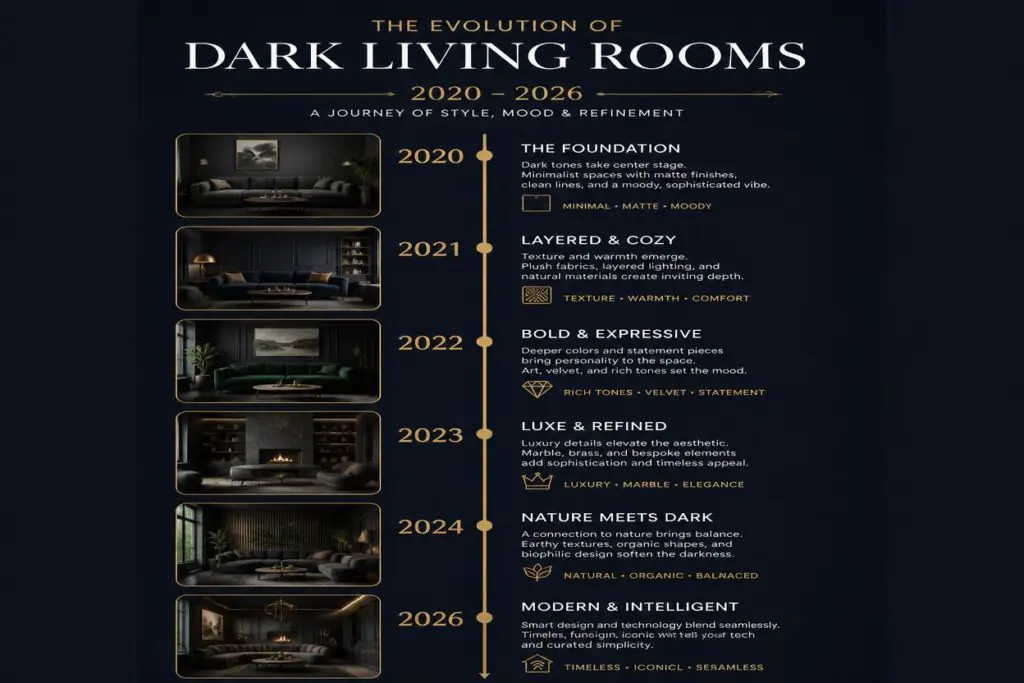
| 2020 | Dark academia and Gothic Revival aesthetics begin trending on Tumblr and early TikTok. Mostly bedroom-focused. |
| 2021 | Living rooms enter the dark aesthetic. Moody navy blues and forest greens appear on interior design Instagram. |
| 2022 | Pinterest reports 180% increase in ‘dark interior’ searches. The ‘dopamine decor’ counter-movement also peaks. |
| 2023 | Luxury brands adopt dark interiors in campaigns. Dark velvet and jewel tones become mainstream furniture retail options. |
| 2024 | The ‘quiet dark’ trend emerges — subtle dark rooms with considered lighting rather than full maximalist drama. |
| 2025 | Dark living room aesthetic searches hit 340% above 2022 levels. Mainstream paint brands release dedicated ‘dark room’ collections. |
| 2026 | Full integration: dark aesthetics appear in mainstream home design shows, lifestyle brand campaigns, and furniture retail lookbooks globally. |
Seasonal Comparison: Spring vs Summer Dark Living Room Looks
| Element | Spring Dark Aesthetic | Summer Dark Aesthetic 2026 |
| Colour Palette | Deep forest green, moody plum, dark sage | Midnight navy, deep coral contrast, obsidian black |
| Textiles | Lighter velvet, linen mix throws | Full velvet, heavy bouclé, layered rugs |
| Lighting | More natural light integration | Heavier reliance on layered warm artificial |
| Plants | Trailing spring greenery | Dramatic structural plants (fiddle leaf, palm) |
| Metals | Aged bronze, warm brass | Black steel, dark brass, oxidised copper |
| Mood | Awakening, lighter drama | Full cocooning, maximum drama |
💾 Save this guide before your next home décor shop — your dark living room era starts now.
Useful External Resources
Farrow & Ball Colour Guide: farrow-ball.com/colour-advice
Houzz Dark Interior Design Gallery: houzz.com/dark-living-rooms
Pinterest Dark Aesthetic Board: pinterest.com — Dark Living Room 2026
The Dark Room Is Waiting for You
Here’s what I know after three years of living in a dark room and talking to hundreds of people who’ve made the switch: the fear is always worse than the reality.
The dark living room aesthetic isn’t about making a statement to impress guests. It’s about creating a space that genuinely feels like you — one that has atmosphere, character, and intention. A room you actually want to spend time in, not just one that photographs well for people who don’t visit.
Start with one thing. Paint a single wall. Swap a lamp. Get a dark throw. See how it feels. I promise you, if you’re drawn to this aesthetic, you’ll know the moment you’re sitting in it at 9 PM with a lamp on and the room actually feels like somewhere.
That’s the dark living room aesthetic in 2026. Not a trend. A decision.Have you made the switch to a dark living room aesthetic? Share your experience in the comments, or tag us with your transformation photos. We read every single one
You May Also Like These Posts
→ Budget Kitchen Makeover 2026
→ 4th of July Front Porch Decor Ideas
→ Summer Home Décor Ideas 2026