
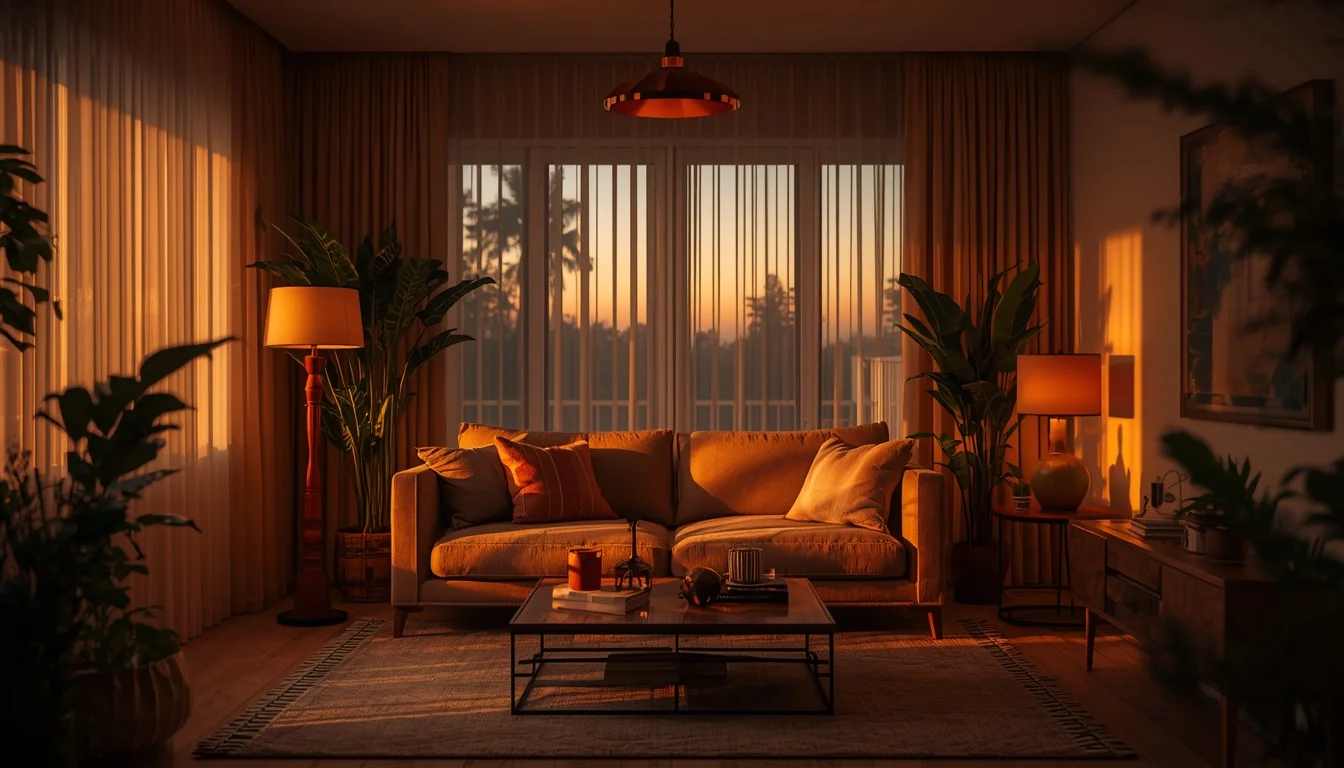
1. Layer Your Lighting Instead of Relying on One Fixture
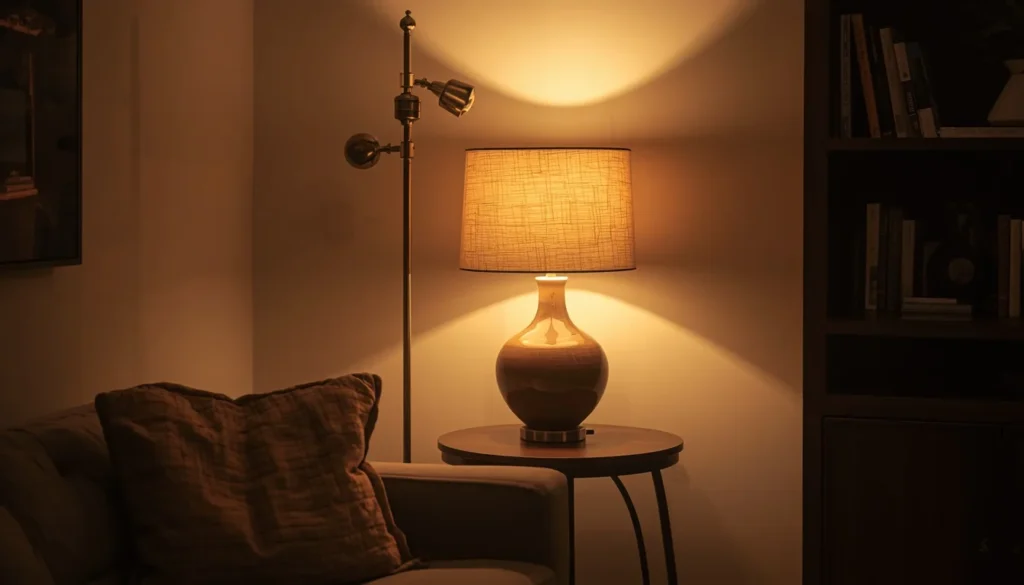
Layering means combining ambient (overall), task (functional), and accent (decorative) light sources in the same room, rather than depending on a single ceiling fixture to do everything.
It works because our eyes read depth and warmth from contrast — a room lit from three or four points feels three-dimensional and lived-in, while one bright source overhead flattens everything and throws harsh shadows under noses and chins. Tip: aim for at least three light sources per seating area — a floor lamp, a table lamp, and one accent light — before you even think about the overhead fixture.
2. Put Every Fixture on a Dimmer
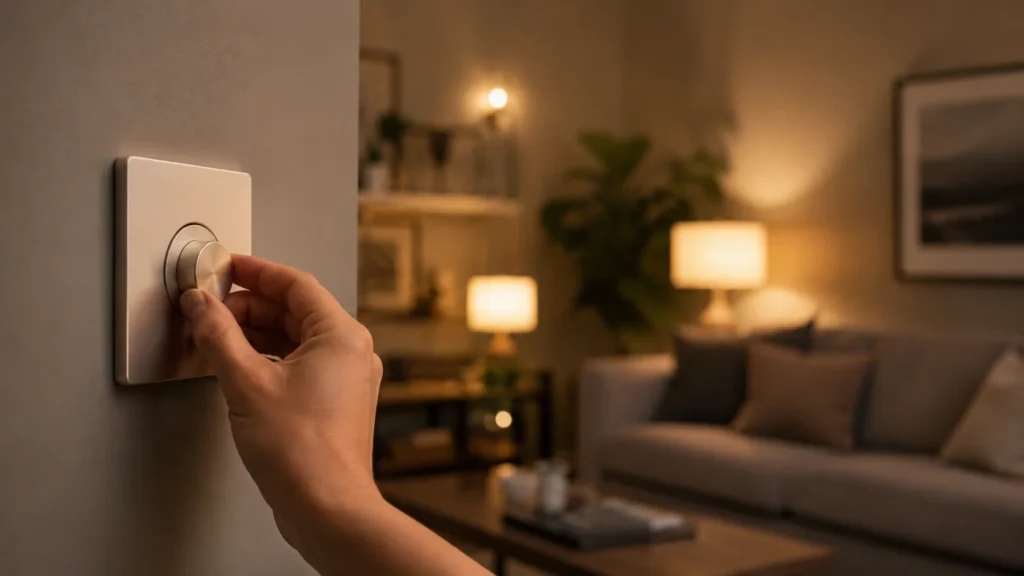
A dimmer switch is one of the cheapest upgrades that changes how a room feels more than almost anything else you could buy.
Full brightness is for cleaning and finding a dropped earring; movie night, dinner, or a lazy Sunday afternoon all call for something softer. Tip: a basic dimmer switch runs $15–$40 at any hardware store, though for pendant or recessed lighting with LED bulbs, confirm the bulbs are dimmable first — not all LEDs are, and mismatched ones will flicker or buzz.
3. Add a Floor Lamp Behind Your Reading Chair
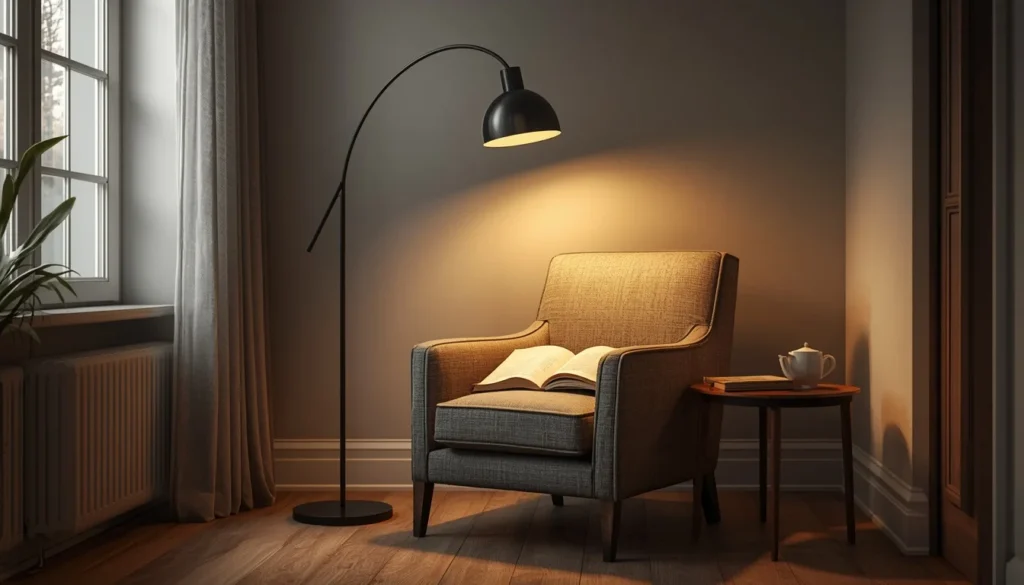
A floor lamp placed just behind and to the side of an armchair gives you focused light without needing a side table.
I’ve noticed most people place floor lamps for looks rather than function, then wonder why they still can’t read comfortably. The lamp’s light source should sit roughly at or just above shoulder height when you’re seated. Tip: for reading, look for lamps rated around 800–1100 lumens with a warm 2700K–3000K bulb; anything bluer tends to feel clinical in a relaxed space.
4. Use Wall Sconces to Free Up Table Space
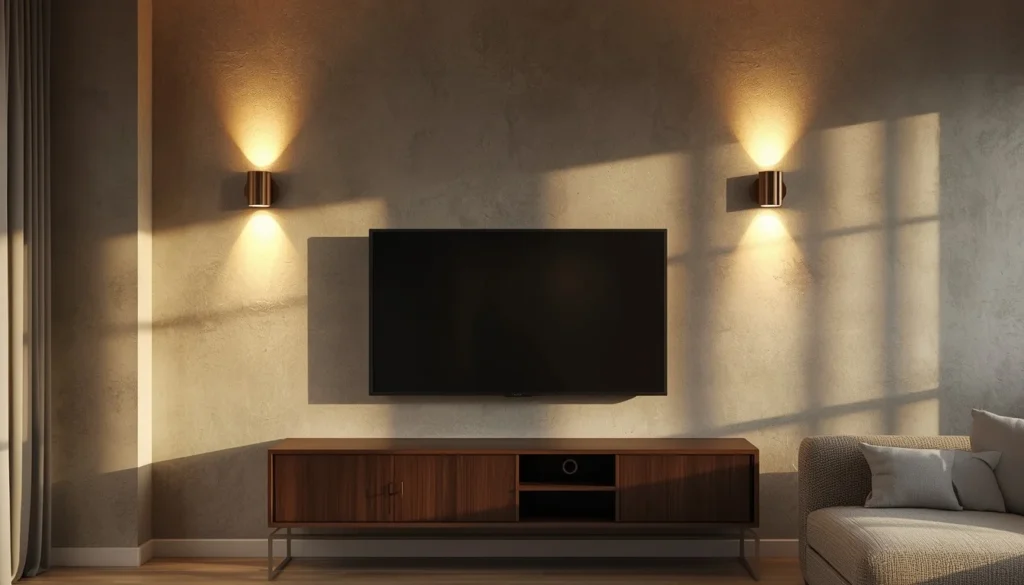
Sconces mounted at eye level on either side of a sofa or media console do the visual job of table lamps without eating up surface space.
They’re particularly useful in smaller living rooms where every side table matters for coffee cups and remotes. Tip: mount sconces roughly 60–66 inches from the floor to the center of the fixture — anything lower reads awkward, anything higher loses the intimate effect. Plug-in sconces with a cord cover are a solid rental-friendly option if you can’t run new wiring.
5. Uplight a Corner with a Torchiere or Tree Lamp
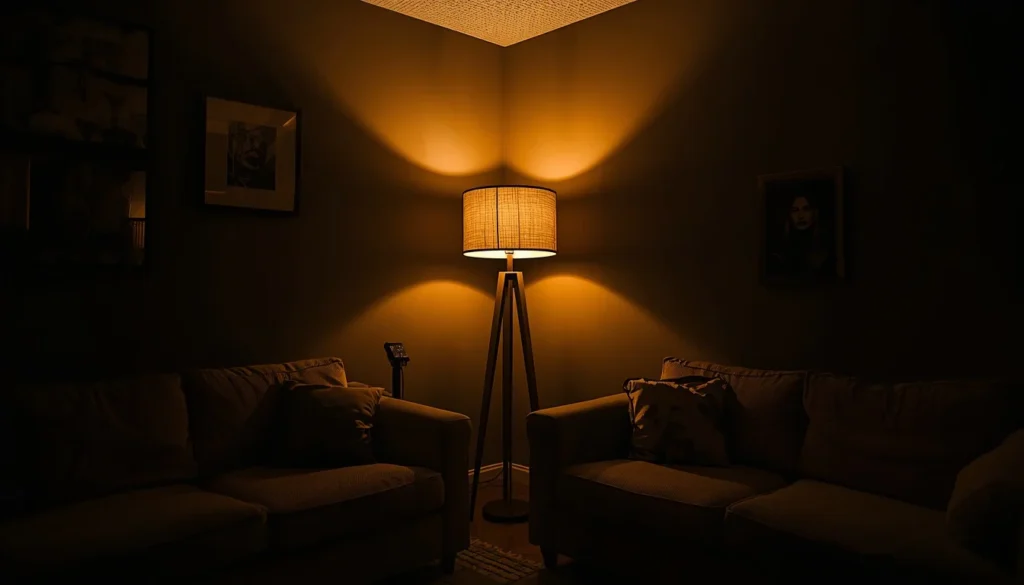
Pointing light upward toward the ceiling using a torchiere-style floor lamp bounces soft, diffused light back down into the room.
This trick is a favorite for rooms with low ceilings or awkward dark corners, because bounced light reads as ambient rather than direct, so it doesn’t compete with your other fixtures. Tip: keep the shade or bulb at least a foot from the ceiling to avoid a visible hot spot or, worse, scorch marks on plaster over time.
6. Highlight Artwork or Shelving with Picture Lights
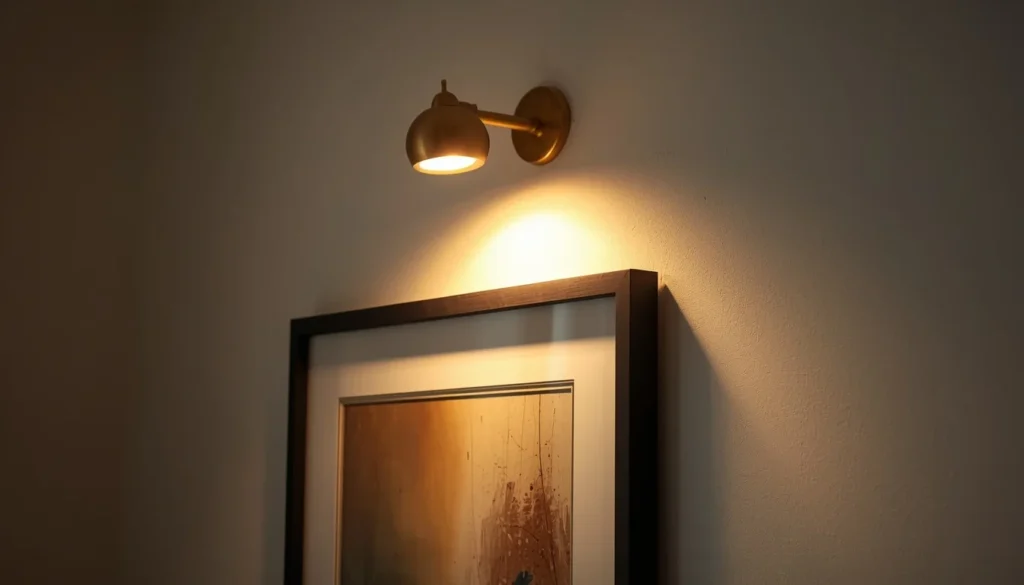
A slim picture light mounted above a framed print, or a small directional spotlight aimed at a bookshelf, turns a flat wall into a focal point.
It works because it draws the eye somewhere specific instead of letting light spread evenly and go unnoticed. Tip: battery-operated picture lights are widely available now and are ideal if you’re renting, since there’s no wiring or drilling involved beyond a couple of small screws.
7. Choose a Statement Pendant Instead of a Flush Mount
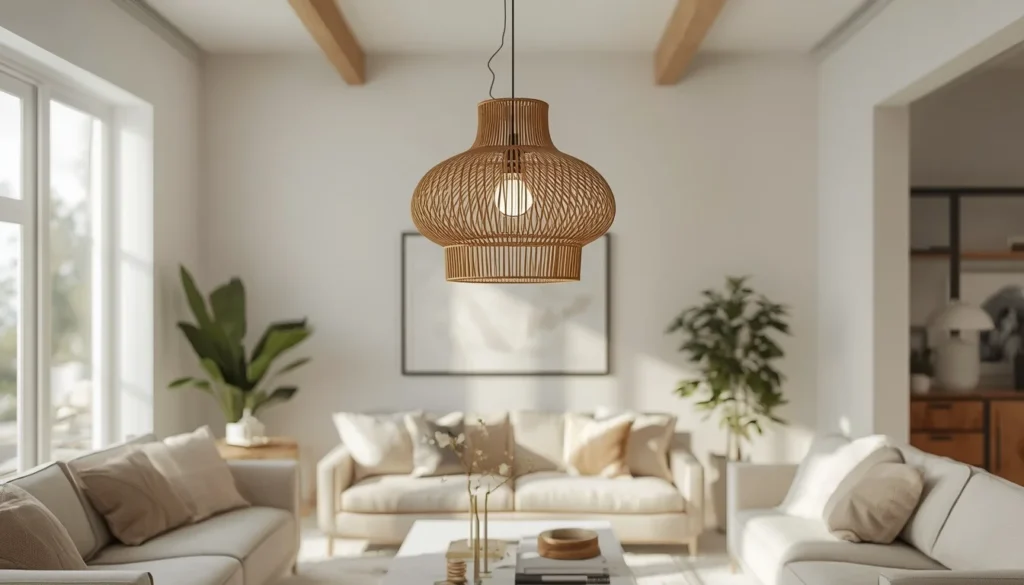
Swapping a builder-grade flush ceiling light for a pendant with some presence — rattan, glass, or a sculptural metal shape — instantly makes a room feel designed rather than default.
The trade-off is worth mentioning honestly: pendants hang lower, so in rooms under 8-foot ceilings you’ll want to measure clearance carefully so it doesn’t interfere with tall guests or ceiling fans. Tip: hang a pendant so its bottom edge sits about 7 feet from the floor in an open living area, higher if it’s directly over a walkway.
8. Tuck LED Strip Lights Behind the TV or Media Unit
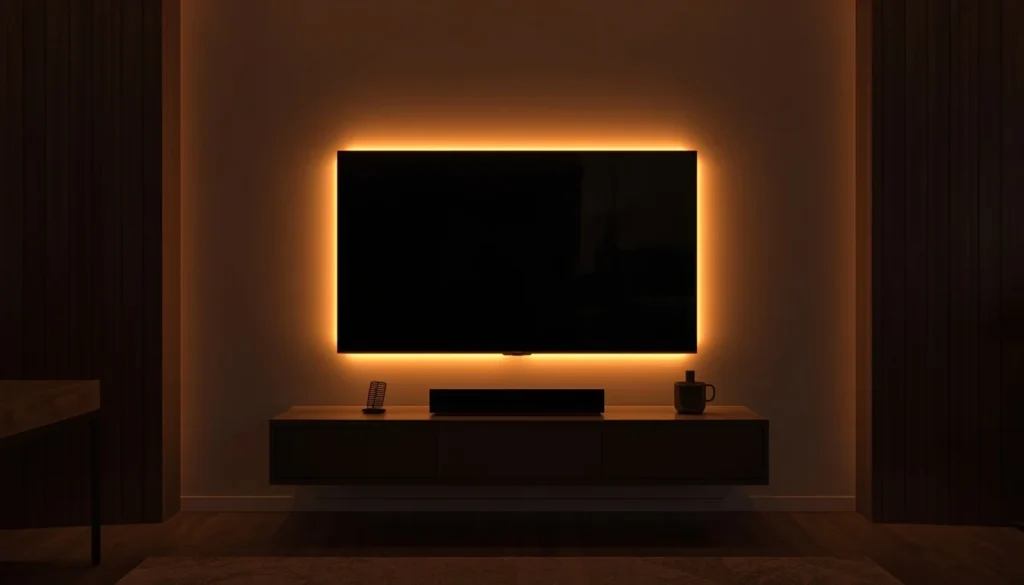
A warm-white LED strip run behind a television or along the back of a floating media console creates a soft glow (called bias lighting) that reduces eye strain during evening viewing and gives the whole wall a floating, modern look.
Tip: stick to 2700K–3000K strips, not the cool white or RGB kind, unless you specifically want a gaming-room vibe — cooler tones can make a living room feel sterile rather than relaxed.
9. Mix Warm and Cool Bulbs Deliberately, Not by Accident
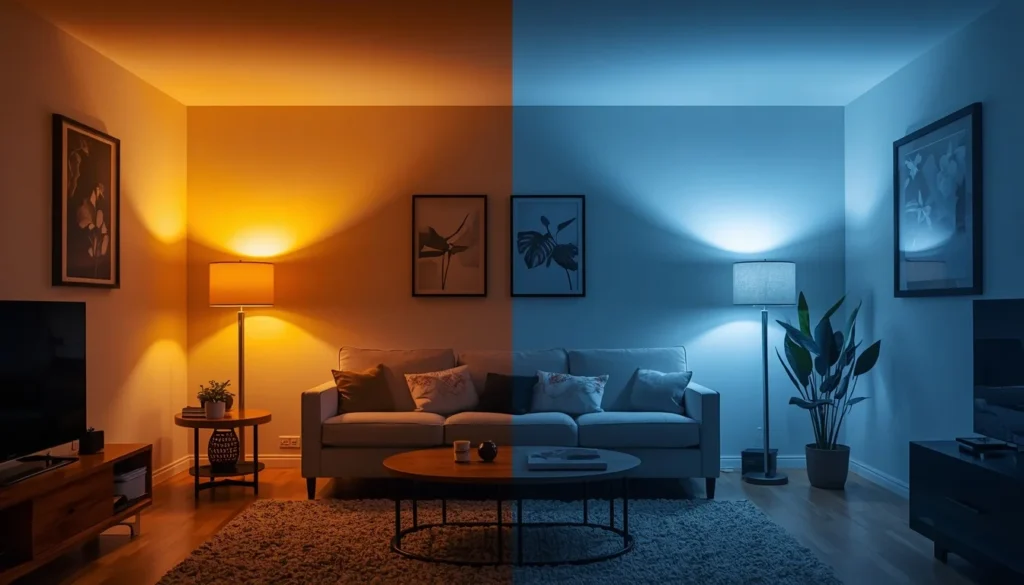
Most living rooms end up with a mismatched mix of bulb temperatures simply because whatever was on sale went in the cart, and it shows the moment you turn everything on at once.
Stick to one consistent range — generally 2700K to 3000K for living spaces — across every lamp and fixture in the room. Tip: if you already own mismatched bulbs, replacing them is usually cheaper than replacing fixtures, and it’s the fastest fix on this whole list.
10. Bring in a Multi-Head Track or Adjustable Ceiling Spotlight
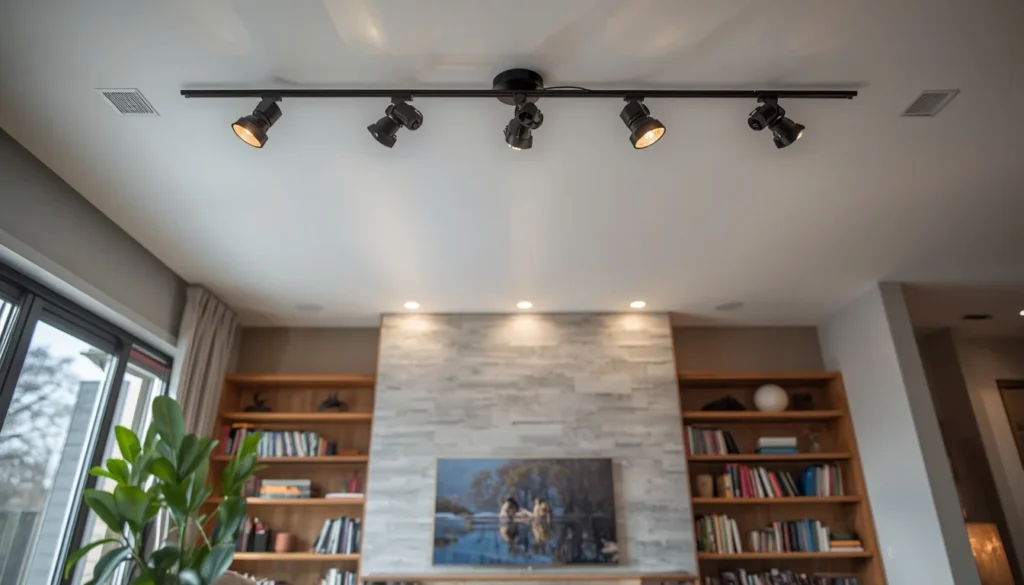
For rooms with vaulted or high ceilings where a pendant won’t sit right, an adjustable track fixture with two or three heads lets you point light exactly where you need it — over a reading chair one week, onto a new piece of art the next.
This is one of the more flexible options I recommend for open-plan living rooms because it adapts as you rearrange furniture, which regular fixed downlights simply can’t do. Tip: budget $80–$200 for a decent track fixture with adjustable heads, more if you’re going with a designer brand.
11. Add a Low, Wide Table Lamp Behind the Sofa
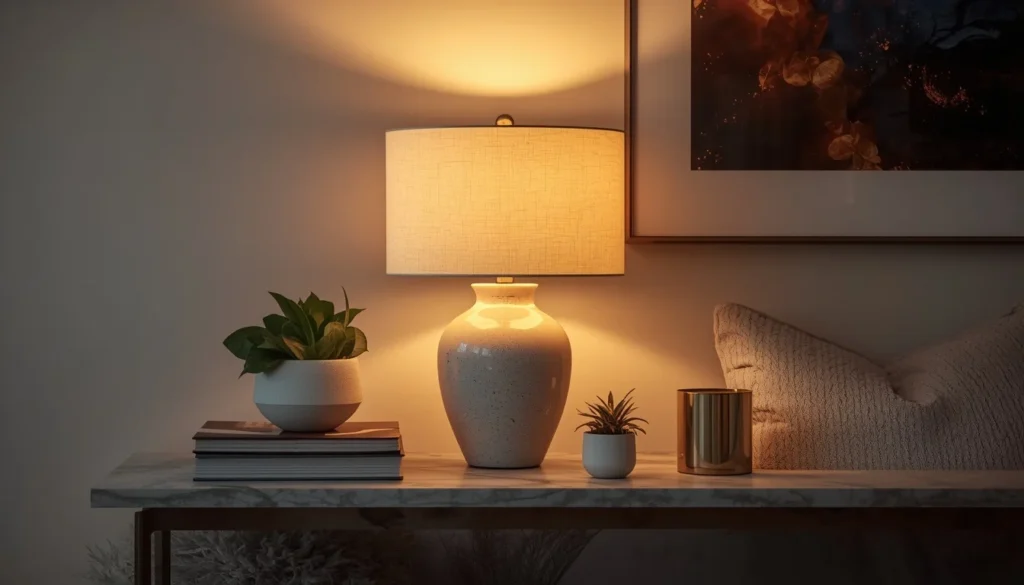
A squat, wide-shaded lamp placed on a console table behind a sofa fills the awkward dead zone that a lot of living rooms have between the back of the couch and the wall.
It also solves a practical problem: it lights the room from a lower angle than most overhead options, which is softer on the eyes during evening conversation or when guests are seated facing each other. Tip: choose a shade wide enough to diffuse light downward and outward rather than a narrow one that throws a tight cone straight up.
12. Use Smart Bulbs or Plugs to Control Scenes, Not Just On/Off
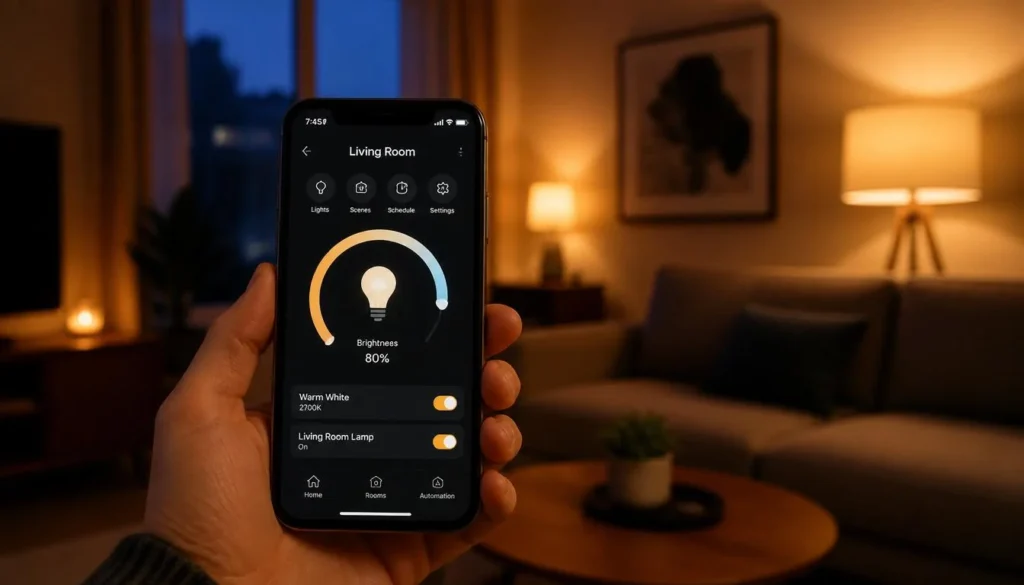
A handful of smart bulbs or a smart plug on your lamps lets you set actual “scenes” — dim and warm for movie night, brighter and neutral for hosting — without walking around flipping switches.
I’ll be honest about the trade-off here: smart bulbs cost more upfront (typically $10–$25 each) and rely on Wi-Fi, so they’re not for everyone, but for a room you actually spend evenings in, the convenience tends to pay off within a few months. Tip: start with just the lamps in your main seating area rather than replacing every bulb in the house at once — it’s a cheaper way to test whether you’ll actually use the feature.
A Few Small-Space and Rental Notes
If you’re working with a small living room, prioritize wall sconces and picture lights over floor lamps — they free up walking space without sacrificing the layered effect. Renters should lean on plug-in sconces, battery picture lights, and smart plugs rather than anything requiring an electrician, since none of it needs permission from a landlord.
For anyone with pets or young kids in the mix, skip lamps with long dangling cords or unstable narrow bases — a lamp that tips over is worse than a room lit unevenly. [INTERNAL LINK: pet-friendly home decor tips]
Getting the Balance Right Room by Room
A living room used mostly for evening relaxing can lean warmer and dimmer overall, while one that doubles as a home office during the day benefits from at least one brighter, more neutral task light you can switch to when you need to actually get work done. The mistake I see most often isn’t choosing the wrong fixtures — it’s choosing good fixtures and then never varying how they’re used depending on the time of day or the activity happening in the room.
FAQ Section
Q: What is the best type of lighting for a living room? A: There isn’t one single best type — the most functional living room lighting ideas combine ambient, task, and accent sources so the room adjusts to different activities rather than relying on one overhead fixture for everything.
Q: How many lamps should a living room have? A: Most rooms benefit from at least two to three separate light sources per seating area — typically a floor lamp, a table lamp, and one accent or wall light — in addition to any overhead fixture.
Q: What color temperature is best for living room lighting? A: Warm white, generally in the 2700K to 3000K range, tends to feel the most relaxed and cohesive for living rooms, while cooler tones above 4000K can read as clinical in a space meant for lounging.
Q: Are smart bulbs worth it for a living room? A: They can be, especially if you want scene-based control like dimming for movie nights without rewiring anything — though the higher upfront cost and Wi-Fi dependency mean they’re worth testing in one lamp before committing to the whole room.
You May Also Like These Posts
→ Summer Home Décor Ideas 2026