
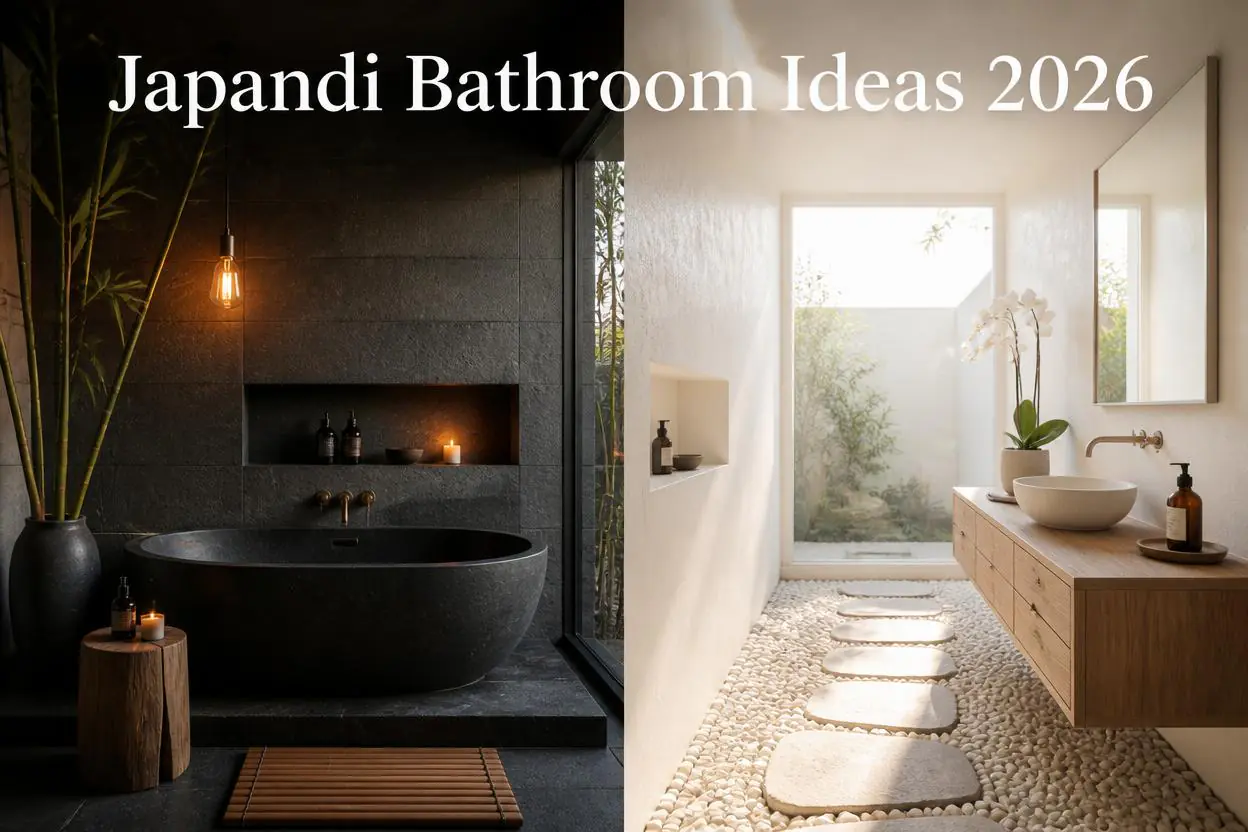
Wait — You’re Still Doing Your Bathroom Wrong in 2026?
Here’s a stat that genuinely surprised me: over 68% of homeowners who renovate their bathroom say they regret at least one design choice within two years. I was one of them. White subway tiles, chrome fixtures, a generic floating shelf from a big-box store. It looked fine on day one. By year two, it felt cold, sterile, and weirdly dated — like a hospital bathroom that had lost its budget.
Then a friend sent me a photo of her newly done bathroom. No Instagram filter, just a phone snap. I literally stopped scrolling. Warm plaster walls, a timber vanity, a single bamboo stem in a stone vase, and this unbelievable calm that came through the screen. She’d gone full Japandi — and I’ve been obsessed ever since.
Japandi bathroom ideas 2026 are having a massive moment right now, and not just because they look incredible on Pinterest. These designs genuinely change how you feel in the space — calmer, more grounded, more present. And they’re far more achievable than you’d think.
I’ve spent the last eight months going deep on this — talking to interior designers, visiting showrooms, sourcing materials, and yes, doing a partial renovation myself. Here are the 15 ideas that are actually trending in 2026, with real costs, honest advice, and image prompts for every single one.
What Exactly Is Japandi Style? (And Why It Hits Different in a Bathroom)
Japandi is the design love child of Japanese minimalism and Scandinavian hygge. Japan brings the wabi-sabi philosophy — finding beauty in imperfection and impermanence. Scandinavia brings warmth, function, and that cozy ‘everything has its place’ energy. Together they create spaces that feel intentional without feeling cold.
In a bathroom, this combination is practically magic. You’re stripping away the clutter, the chaos, the ten different shampoo bottles fighting for counter space — and replacing all of it with natural materials, muted palettes, and purposeful objects.
The 2026 update: this year’s japandi bathroom ideas are leaning harder into texture and biomimicry — designs that borrow from forests, riverbeds, and stone formations. Less Instagram-flat, more genuinely tactile. Think rough plaster next to smooth timber, warm stone next to cool glass.
Let’s get into the actual ideas.
Idea 1: Wabi-Sabi Plaster Walls — The Trend That Started Everything
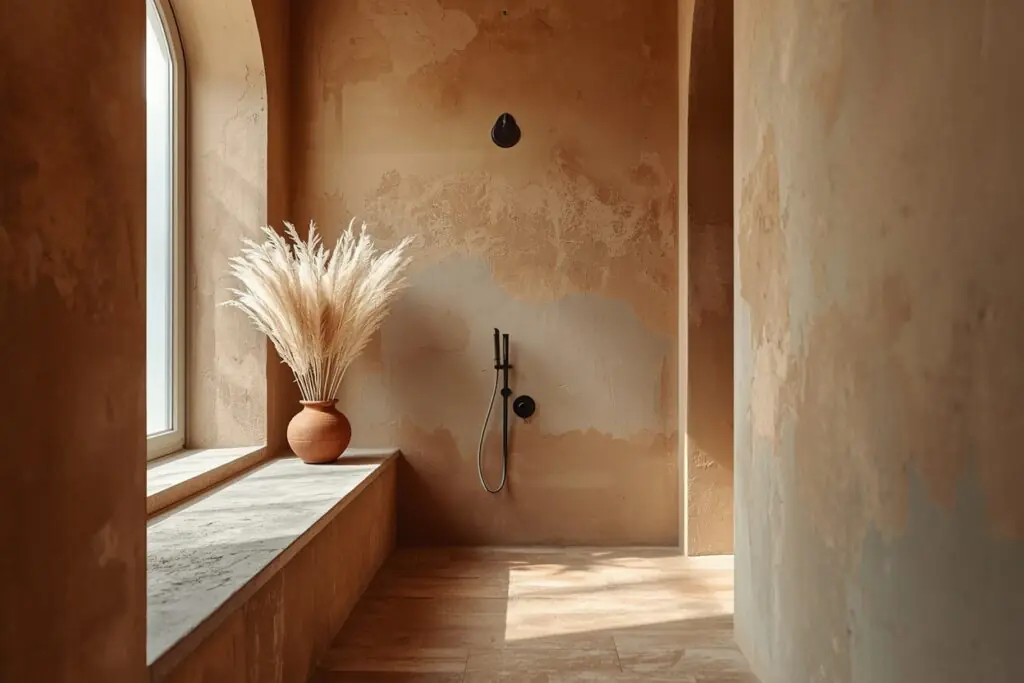
If you’ve seen a bathroom lately that made you stop and think ‘what is that wall?’ — it was probably hand-applied plaster. This is the single biggest Japandi bathroom trend going into 2026, and I completely understand why.
Plaster walls aren’t smooth and perfect. They have this organic variation, this almost living texture that changes as the light moves through the day. It’s the opposite of polished tiles, and that’s precisely the point. Wabi-sabi is about embracing the imperfect, and a plaster wall does that better than any other surface.
How to get this look:
- Use Venetian plaster, microcement, or a lime-wash finish
- Go for warm sand, greige, terracotta, or dusty blush tones — avoid pure white
- Apply in two to three layers with a wide Japanese trowel for visible texture
- Seal with a matte topcoat to make it bathroom-appropriate (moisture resistance is key)
I went the DIY microcement route in my own bathroom and spent about $180 on materials. It took a weekend and a few YouTube tutorials. Mistakes? Yes. I applied the first layer too thick and got some cracking. But once sealed, it actually added character.
Pro tip: Don’t stress over perfection. The whole philosophy of wabi-sabi is that the variation IS the beauty. A slightly uneven application will look more authentic than a machine-smooth one.
Idea 2: Natural Stone Flooring with Warm Heated Undertones
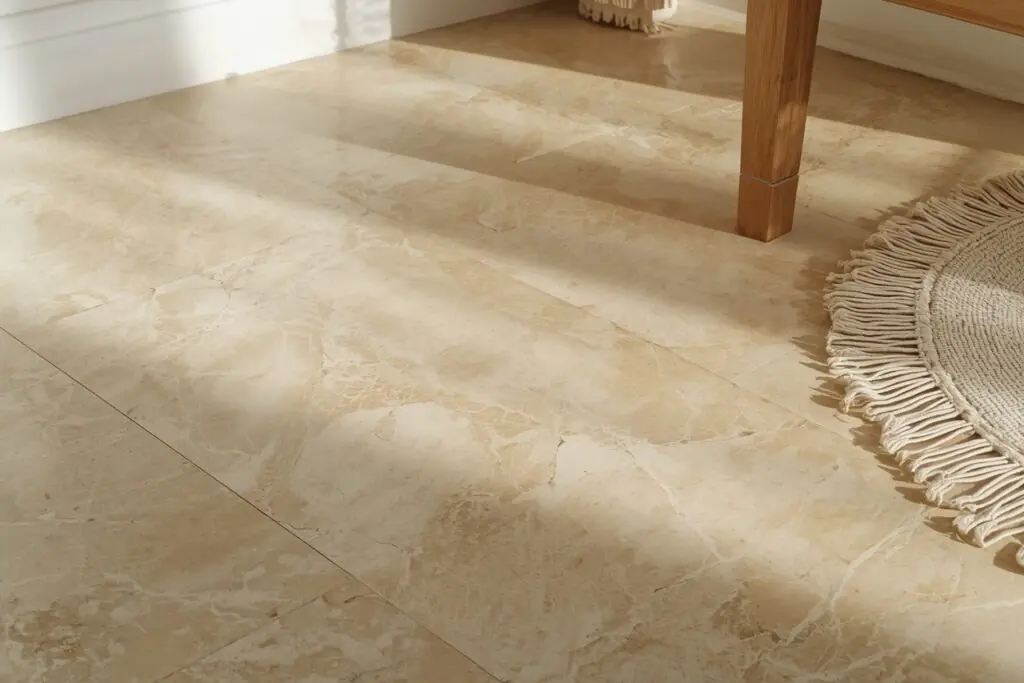
Nothing grounds a japandi bathroom like genuine stone underfoot. Not stone-effect porcelain (though that has its place), but actual travertine, limestone, or honed marble with all its natural variation.
The 2026 version of this trend pairs the stone with in-floor radiant heating — a detail that feels incredibly luxurious but is more accessible than ever. There’s something almost meditative about stepping onto warm stone on a cold morning. It changes your whole relationship with the space.
Best stone choices for japandi bathrooms:
- Travertine: warm ivory with natural pits and veining — very wabi-sabi
- Honed limestone: matte finish, subtle texture, works with any japandi palette
- Slate: darker, more dramatic — pairs beautifully with timber vanities
- Pebble mosaic tiles: for shower floors specifically (more on this in Idea 5)
The main mistake people make with stone floors is sealing them wrong or not at all. In a bathroom, you need an impregnating sealer applied before grouting AND annually after. Skip this step and you’ll have permanent water stains within months.
Idea 3: Floating Timber Vanity with Integrated Sink
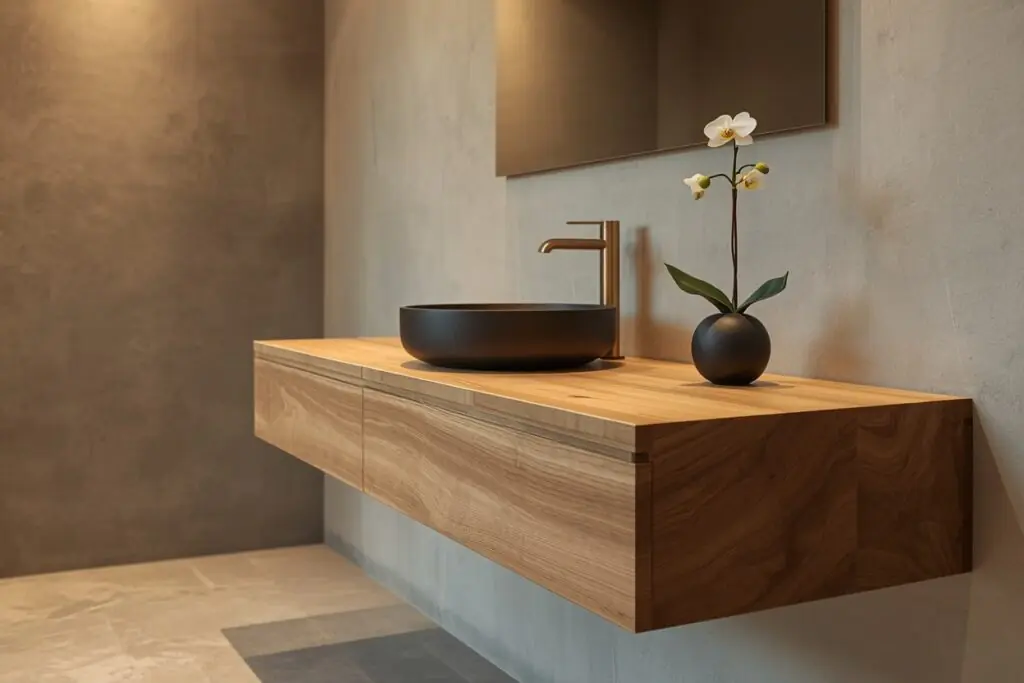
The floating vanity is probably the most recognisable piece of japandi furniture, and in 2026 designers are refining it. We’re moving away from the super-sleek lacquered versions toward more tactile, grain-forward timber — white oak, teak, and even reclaimed cedar are having a huge moment.
What makes it work in a japandi bathroom specifically is the gap between the vanity and the floor. That negative space creates a visual breathing room that instantly makes the bathroom feel larger and more intentional. Pair it with an integrated ceramic sink — no visible hardware, clean lines — and you’ve got something genuinely beautiful.
What to look for when buying or building:
- Solid hardwood over plywood veneers — it handles humidity far better long-term
- Oil or lacquer finishes specifically designed for wet areas
- Concealed soft-close drawers — very Scandinavian, very japandi
- Wall-mount plumbing brackets rated for at least 150kg
I made the mistake of buying a ‘solid oak’ vanity that was actually oak-veneered MDF. Within 18 months, the bottom corners had started swelling. Lesson learned: always ask for the material spec sheet before purchasing.
Idea 4: Deep Japanese Soaking Tub (Ofuro-Inspired) — The Statement Piece
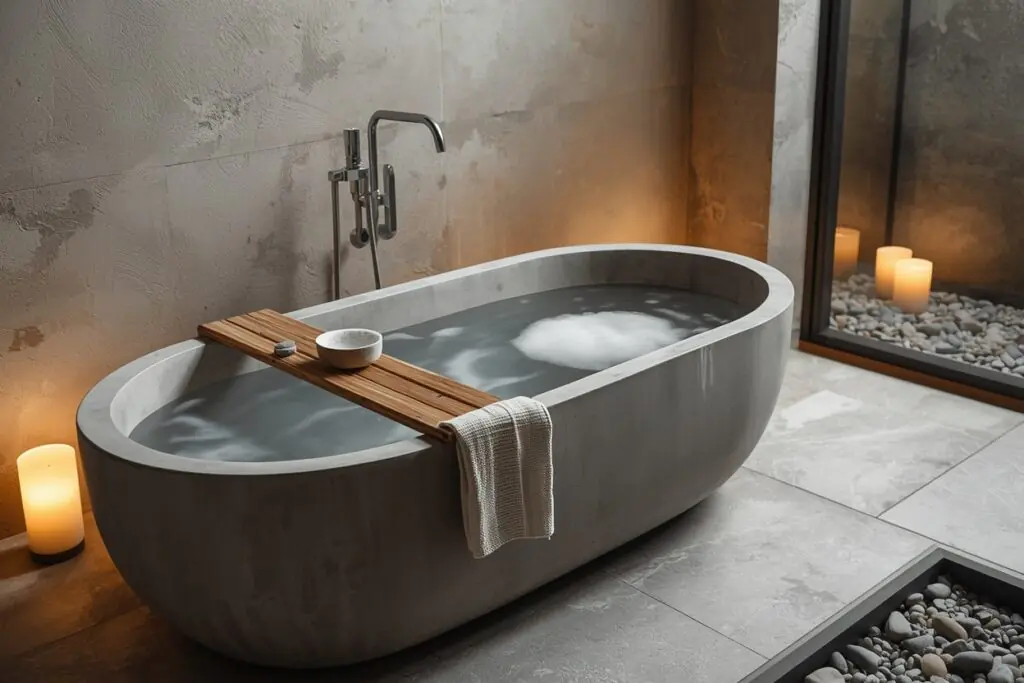
This is the piece that turns a bathroom into a ritual space. The Japanese ofuro tub is deeper than a Western bath — you soak sitting upright rather than lying flat — and the experience is genuinely transformative. In 2026, the ofuro-inspired soaking tub is the centrepiece of the most talked-about japandi bathroom designs.
You don’t need a Japanese import to get this look. Plenty of Western manufacturers now make deep soaking tubs in stone resin, concrete composite, and even cedar that achieve the same effect. The key specs to look for: at least 50cm internal depth, smooth interior finish, and a minimalist exterior form with no fussy details.
Styling the soaking tub:
- A simple bamboo or timber bath tray across the top (phone-free zone — this is a ritual, not a scroll)
- One or two smooth river stones or a small ceramic cup
- No elaborate bath bombs or glitter — just clean water and maybe a few drops of hinoki cypress essential oil
- Position near a window if possible — natural light while soaking is a game changer
Idea 5: Pebble Stone Shower Floor — Effortless Texture
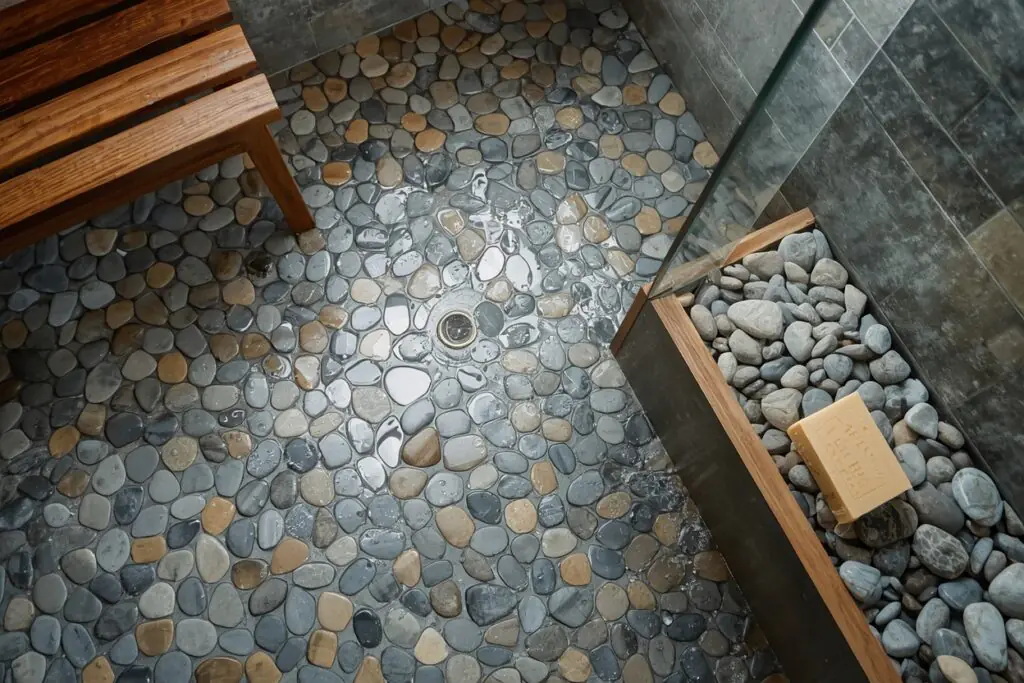
When I first put in a pebble shower floor I thought it was going to be purely aesthetic. What I didn’t expect was the daily foot massage. Walking barefoot on those smooth river stones every morning is legitimately one of the nicest sensory experiences in my routine.
Pebble mosaic tiles are available as pre-mounted sheets that make installation much easier than laying individual stones. The grout lines are smaller than you’d think, and because the natural stone variation hides marks and water spots better than polished surfaces, they’re actually quite low maintenance once properly sealed.
Installation tips:
- Use unsanded grout with a sealer pre-mixed in
- Seal the stones themselves before and after grouting
- Make sure the shower floor has at least a 2% gradient toward the drain
- Pair with a teak or bamboo shower mat for dry days
Idea 6: Bamboo & Timber Accent Shelving — Function Meets Philosophy
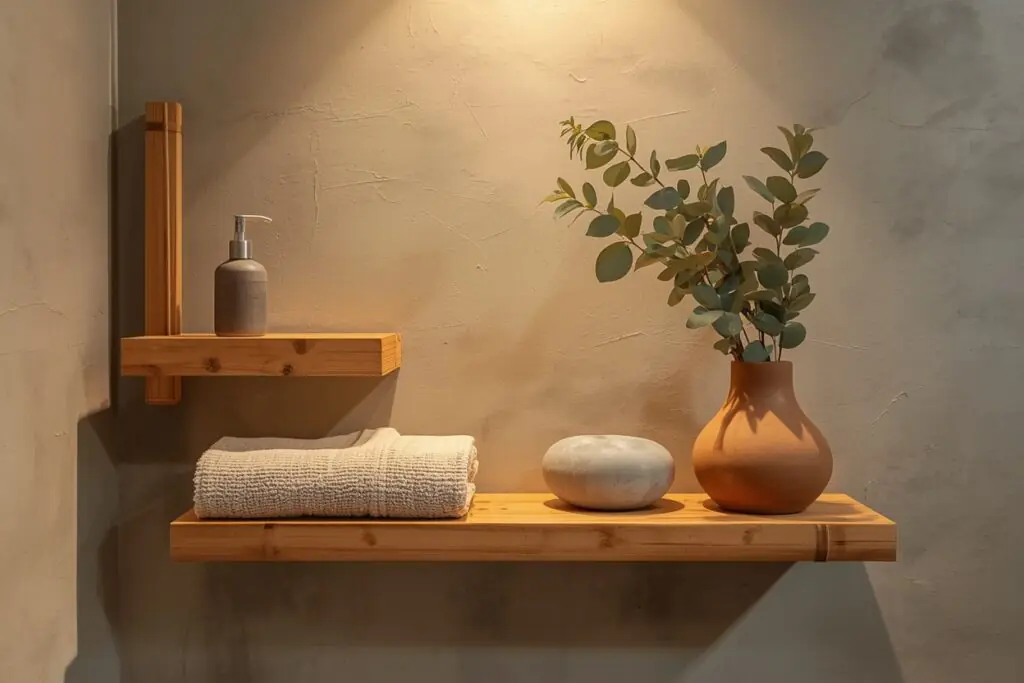
In a japandi bathroom, every surface that’s visible is curated. Not decorated — curated. There’s a meaningful difference. Bamboo shelving gives you the structure to do this well: the warm tone of the bamboo contrasts beautifully with plaster or stone walls, and the organic material reinforces the whole natural-materials philosophy.
The Scandinavian side of japandi adds the function: these shelves need to actually work. Think about what genuinely needs to be within reach — hand soap, a towel, maybe one small plant — and design around that. Everything else goes in a drawer or under the vanity.
What to put on japandi shelves (and what to definitely leave off):
- DO: one ceramic dispenser, a folded linen towel, a single plant or stone
- DO: one beautiful object — a small sculpture, a smooth piece of driftwood
- DON’T: collections of products, multicolour bottles, plastic anything
- DON’T: more than three items per shelf — negative space is part of the design
Idea 7: Neutral Greige Stone Tiles Floor to Ceiling — The Full Commitment
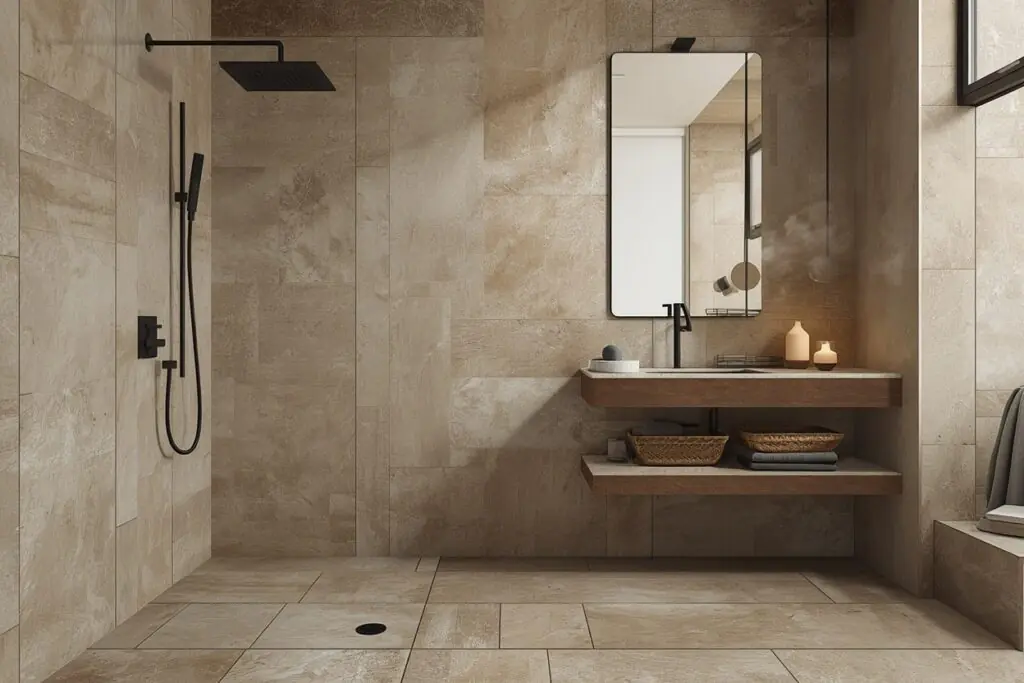
If you want to make your bathroom look twice the size without knocking down a single wall, wrap it in large format stone tiles from floor to ceiling with the thinnest grout lines you can achieve. This is one of the most powerful design moves in japandi bathrooms right now.
The key is tone and texture, not pattern. You want tiles that read as ‘stone’ — with natural variation, subtle veining, a matte finish — not tiles that announce themselves as tiles. Large format (90x90cm or 120x60cm) with 2-3mm grout lines creates an almost seamless surface that feels deeply luxurious.
Colour palette to aim for:
- Greige (grey-beige): the most versatile — works warm or cool
- Mushroom: slightly darker, more dramatic
- Warm white with fossil detail: lighter, brighter, very wabi-sabi
- Deep charcoal: more dramatic, pairs with timber and brass
Idea 8: Indoor Biophilic Plant Wall — Where Japandi Meets the Forest
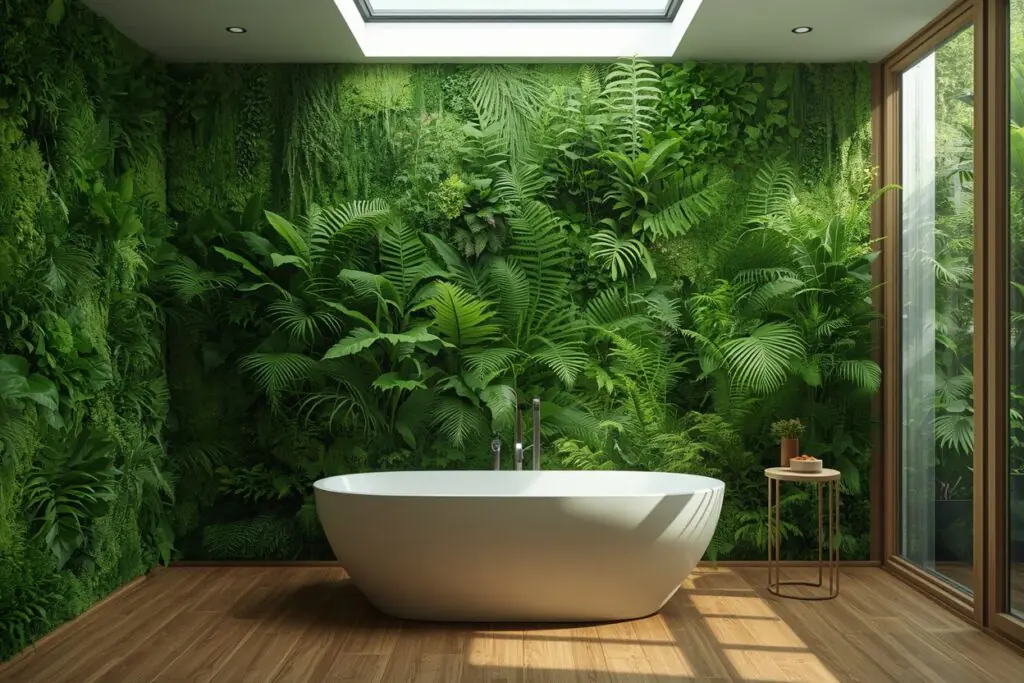
Biophilic design — the practice of bringing nature’s patterns and materials into interior spaces — is one of the most research-backed wellness trends in architecture right now. In a japandi bathroom, a plant wall takes that philosophy and makes it viscerally beautiful.
You have two routes here: a living plant wall with a drip irrigation system (more maintenance, more drama), or a preserved moss panel (zero maintenance, almost as beautiful). For most people, preserved moss is the smarter call — it holds its colour and texture for years without any watering, soil, or lighting requirements.
Getting the biophilic bathroom right:
- Use preserved moss panels from reputable suppliers — Boskke, Benetti, or similar
- Pair with a humidity-loving plant or two in ceramic pots (snake plant, peace lily, bird of paradise)
- Ensure adequate ventilation — run an extraction fan during and after showers
- The green against warm plaster or timber creates a colour palette that feels genuinely forest-like
Idea 9: Warm Edison & Recessed Ambient Lighting — Mood Over Brightness
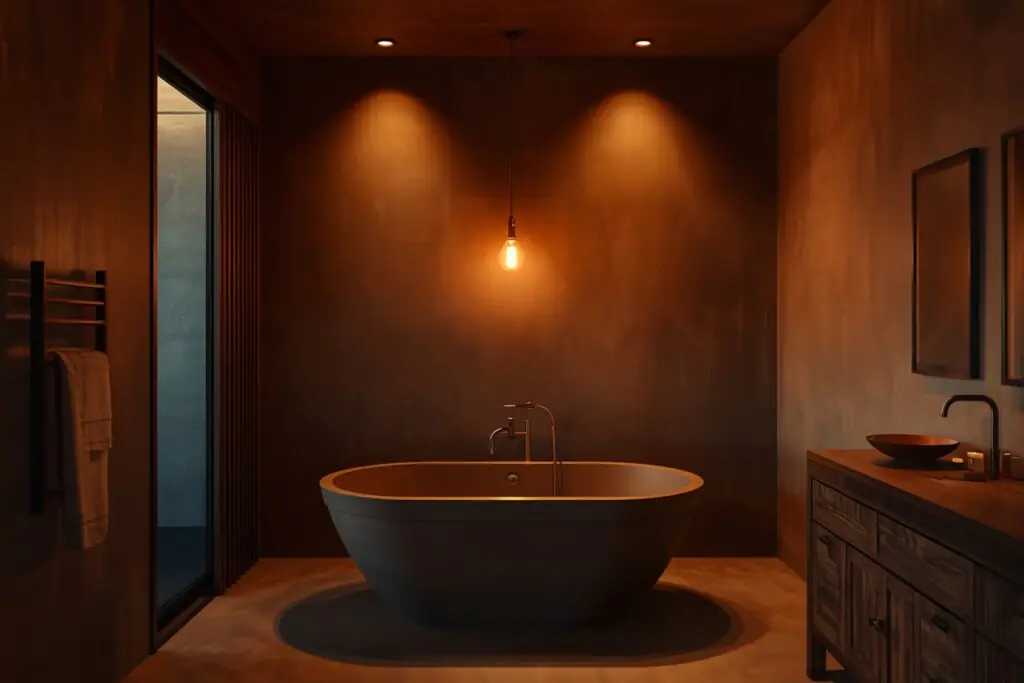
This is the element that most people get wrong — and it’s cheaper to fix than almost anything else. The standard bathroom has cool, harsh overhead lighting that makes everyone look slightly unwell. Japandi bathrooms do the opposite: warm, layered, intentional light that transforms the space after dark.
The 2700K rule: colour temperature matters enormously. Anything above 3000K starts feeling clinical. Japandi bathrooms live at 2700K — warm white, close to candlelight, soft and flattering.
Layered lighting approach:
- Recessed downlights on a dimmer for general use — positioned to avoid harsh shadows on the face
- A single pendant or exposed Edison bulb near the tub for atmosphere
- Low LED strips behind the vanity mirror for task lighting that doesn’t glare
- One or two candles for the full ritual — not decoration, actual use
I added dimmers to my existing bathroom lights without replacing the fixtures. Total cost: $40 and about an hour. The transformation was disproportionate to the effort.
Idea 10: Woven Linen & Handmade Ceramic Accessories — Curate, Don’t Collect
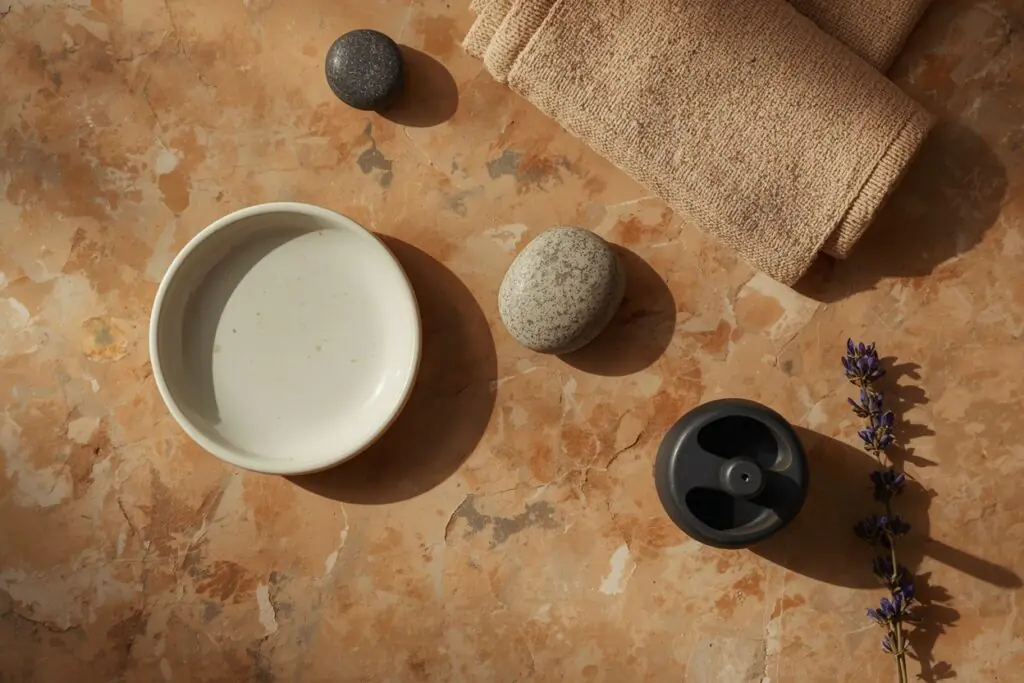
You could do every other idea on this list perfectly and still ruin it with the wrong accessories. A plastic soap dispenser, a metallic loofah, a novelty toothbrush holder — any single one of those will break the spell.
Japandi accessorising is actually a purchasing restraint exercise. You buy less, and you buy better. One handmade ceramic soap dish from an Etsy artisan or a local pottery market costs $25-$40 and looks a thousand times better than a $5 plastic one. Linen towels instead of microfibre. A wooden toothbrush. A smooth stone as a tray.
The japandi accessory checklist:
- Soap dish: handmade ceramic, matte finish, visible imperfections welcome
- Towels: linen or organic cotton in oatmeal, sand, sage, or stone grey
- Mirror: frameless, or with a simple solid timber or blackened steel frame
- Storage: lidded ceramic or timber boxes — no plastic bins in sight
- One decorative object: a stone, a small branch, a single dried flower — just one
Idea 11: Matte Black Fixtures with Organic Curves — The Anti-Chrome Movement
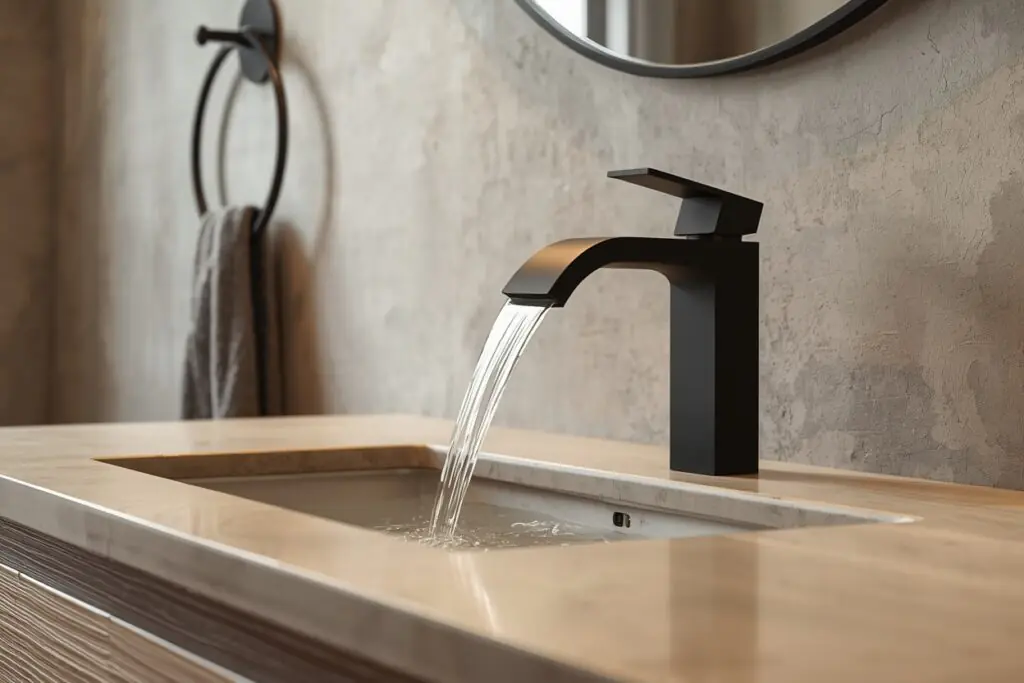
Chrome fixtures have dominated bathrooms for decades, and in 2026 the japandi movement is firmly pushing back. Matte black is the new standard — but it’s not the sharp-edged, industrial matte black of five years ago. The 2026 version is softer, with organic curves that feel more hand-formed than machine-made.
Look for taps, showerheads, and towel rails where the silhouette has a slight arc or organic quality — waterfall spouts, gently curved handles, round bases rather than square. The matte finish eliminates water spot drama and pairs beautifully with both warm timber and cool stone.
Brands doing this well in 2026:
- Vola (Danish, expensive but extraordinary)
- Fantini (Italian, beautifully organic forms)
- Meir (Australian, more accessible price point)
- Local plumbing showrooms often carry smaller Japanese-inspired ranges worth exploring
Idea 12: Fluted Glass Shower Screen — Texture Without Clutter
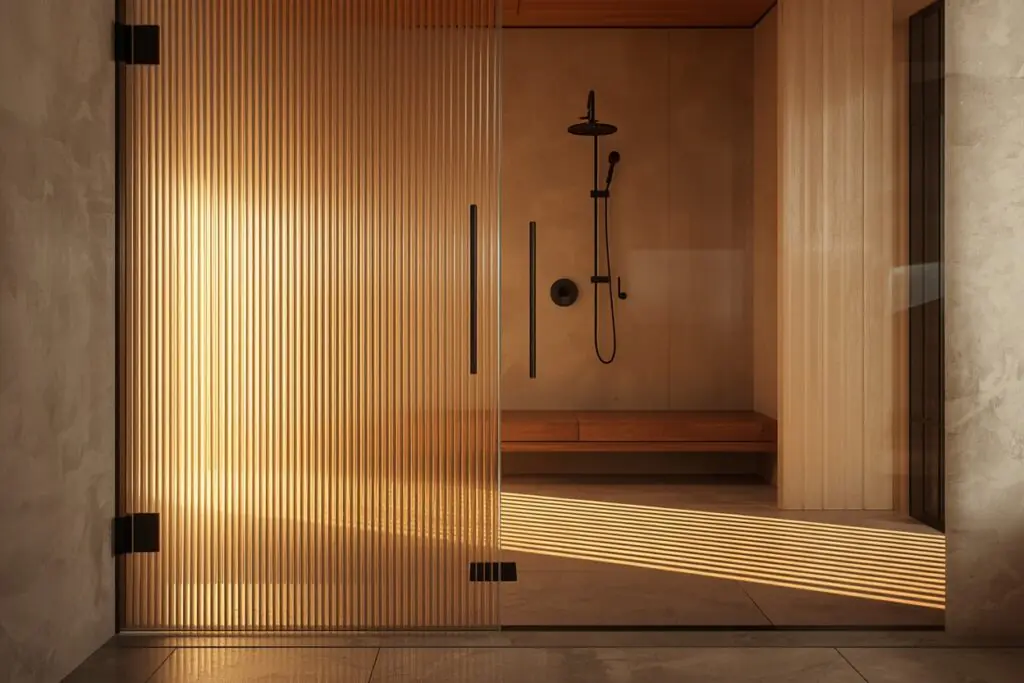
Fluted glass is arguably the biggest single material trend in japandi bathrooms right now. That ribbed, reeded texture does something almost magical with light — it diffuses and refracts it in a way that makes the whole bathroom feel warmer and more dynamic, even with fixed overhead lighting.
Beyond the aesthetic, fluted glass gives you privacy without a solid wall, maintains the sense of space, and requires less cleaning than clear glass (the texture hides water spots better). It’s one of those ideas where the practical and the beautiful overlap perfectly.
Specification notes:
- Specify low-iron (extra-clear) glass for the warmest, least blue-green tint
- 10mm thickness minimum for a quality feel — 8mm flexes slightly
- Frameless or minimal hardware only — a matte black pivot hinge is the standard choice
- The reeded pattern should run vertically for the most elegant look
Idea 13: Exposed Concrete Accent Wall — The Urban Japandi
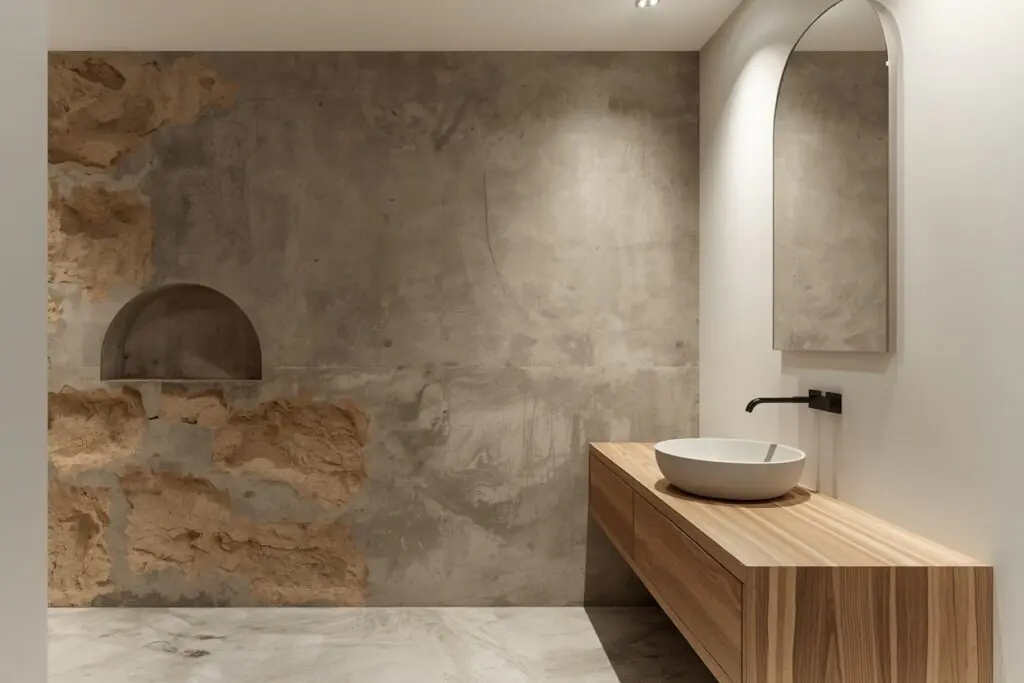
For those working with an apartment or urban space where natural materials feel slightly at odds with the architecture, a concrete accent wall is the japandi solution. Raw concrete embodies wabi-sabi perfectly — it shows the marks of its making, the variations in the pour, the passage of time.
Genuine board-formed concrete is incredible but expensive and structurally complex. The more practical approach is microcement or a high-quality concrete-effect plaster applied over your existing wall. Many products now achieve an almost indistinguishable result at a fraction of the cost and disruption.
Making concrete work in a bathroom:
- Always seal with a penetrating sealer plus a topcoat — concrete without protection stains permanently
- Pair with warm timber elements to prevent the space feeling cold
- One concrete wall only — more than one tips from ‘japandi’ into ‘car park’
- Warm lighting (2700K) is non-negotiable with concrete — cool light makes it feel harsh
Idea 14: Freestanding Sculptural Bathtub — Art You Bathe In
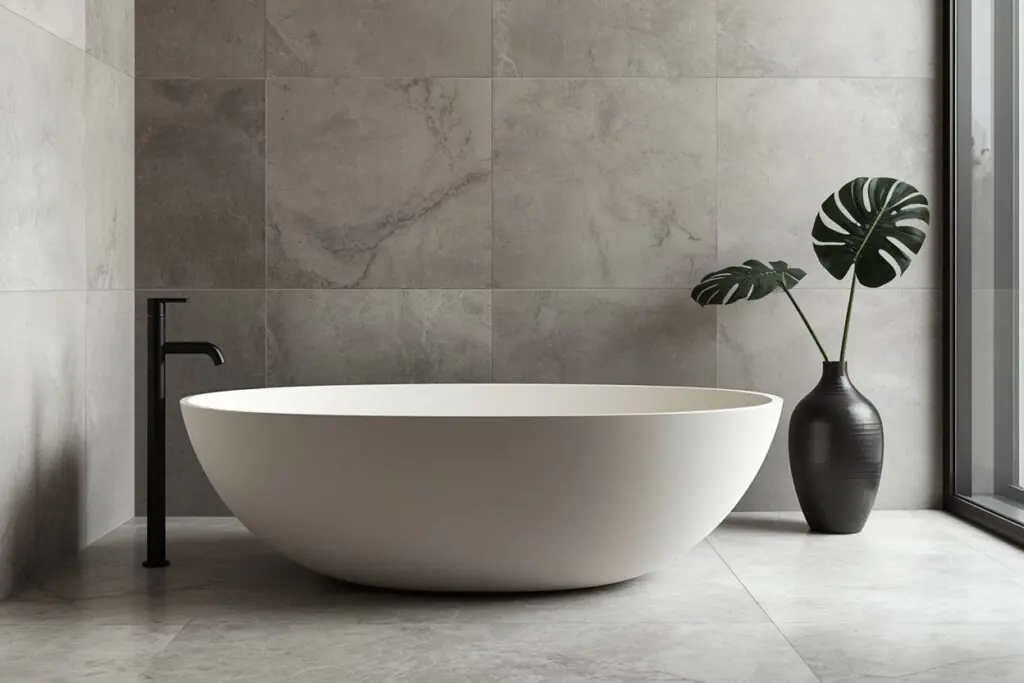
Not the ofuro (that’s Idea 4) — this is the Western-format freestanding bath reimagined through a japandi lens. The shape is what matters here: we’re past the clawfoot Victorian revival and firmly into organic, almost sculptural forms that look like they were shaped by water over millennia.
Stone resin is the material of the moment — it feels warm to the touch, retains heat beautifully, and has a matte finish that never shows water marks. Look for bathtubs where the silhouette doesn’t have a single straight line. Oval, tear-drop, asymmetric — anything that references nature rather than geometry.
Idea 15: Moss Panel or Preserved Botanicals Wall — Bathroom Meets Forest
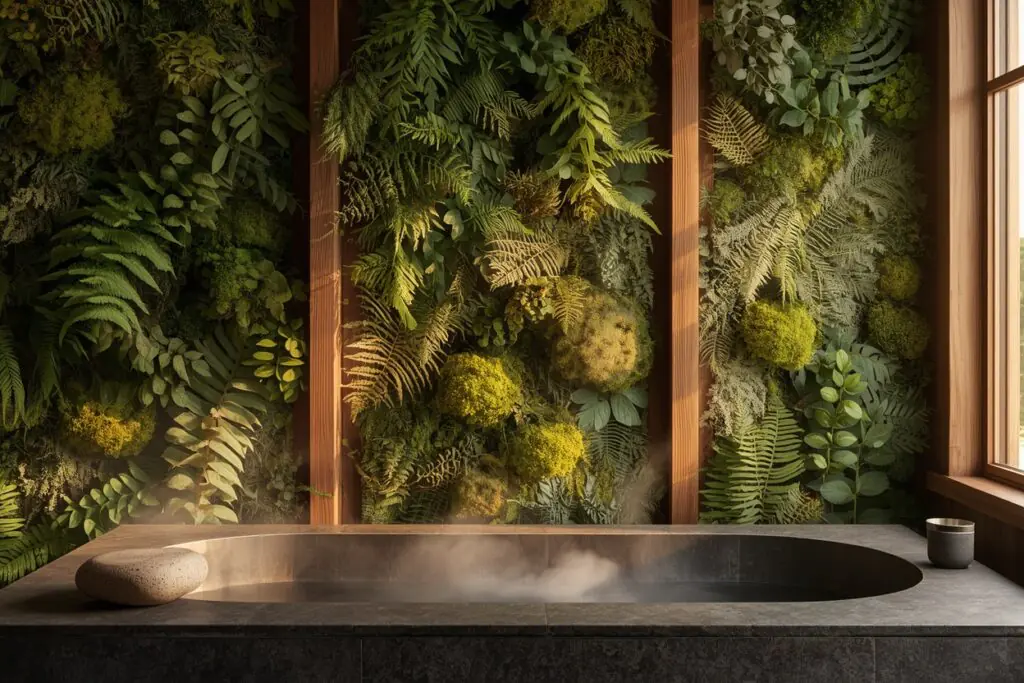
This is the one idea that consistently stops people in their tracks when they see it in person. A full preserved moss panel on one bathroom wall is unlike anything else in interior design right now. It’s not just visual — there’s something almost primal about being surrounded by green while you bathe.
Preserved moss requires zero maintenance, zero watering, no special lighting. The preservation process keeps the colour and texture indefinitely — most quality panels maintain their appearance for five to ten years without any attention. In a high-humidity bathroom, ensure good ventilation and the panel stays beautiful.
Making it work practically:
- Commission from a specialist rather than DIY — quality of preservation varies enormously
- Choose a mix of flat moss, cushion moss, and fern for texture variation
- Frame it in reclaimed timber for the full japandi effect
- Position it on a wall that won’t receive direct shower splash
Comparison Table: Pro Cost vs DIY Cost for All 15 Ideas
Real talk — here’s what each idea actually costs if you hire professionals versus doing it yourself:
| Idea | Salon/Pro Cost | DIY Cost | Difficulty |
| Wabi-sabi Plaster Walls | $800–$2,000 | $120–$300 | Medium |
| Natural Stone Flooring | $1,500–$4,000 | $400–$900 | Hard |
| Timber Floating Vanity | $1,200–$3,500 | $300–$700 | Medium |
| Soaking Tub Setup | $2,000–$6,000 | $600–$1,500 | Hard |
| Pebble Shower Floor | $600–$1,200 | $80–$200 | Easy |
| Bamboo Accent Shelving | $400–$900 | $60–$150 | Easy |
| Neutral Stone Tiles | $900–$2,500 | $200–$500 | Medium |
| Indoor Plant Wall | $500–$1,500 | $80–$250 | Easy |
| Warm LED Lighting | $300–$800 | $50–$150 | Easy |
| Linen + Ceramic Accessories | $200–$600 | $40–$120 | Easy |
Note: Costs are approximate 2026 figures and will vary significantly by region, bathroom size, and material quality. Always get three quotes from local contractors.
Common Mistakes People Make With Japandi Bathrooms
After seeing dozens of attempts — some gorgeous, some that missed the mark — here’s what I’d tell every person planning a japandi bathroom:
Mistake 1: Using too many materials.
Japandi is about restraint. Pick two or three core materials (one stone, one timber, one plaster or tile) and stay disciplined. The temptation to add more ‘interest’ almost always backfires.
Mistake 2: Going too cool or too grey.
Classic grey Scandi minimalism is different from japandi. Japandi needs warmth — in the timber, in the stone tones, in the lighting. A fully grey, cool bathroom is missing the Japanese soul of the style.
Mistake 3: Neglecting scent and texture.
Japandi is a full sensory experience, not just a visual style. A diffuser with hinoki or cedar oil, textured linen towels, a pebble floor underfoot — these details are what make the space feel genuinely different, not just look it.
Mistake 4: Overcrowding the accessories.
One beautiful object is design. Ten beautiful objects is clutter. The hardest skill in japandi is editing — removing things rather than adding them.
Mistake 5: Cheap fixtures with expensive surroundings.
If you invest in beautiful plaster walls and stone floors, a $30 chrome tap from a discount store will undermine everything. Save money somewhere else — fewer accessories, DIY some elements — but get the fixtures right.
People Also Ask: Japandi Bathroom Questions Answered
What colours are trending in japandi bathrooms for 2026?
The dominant palette is warm neutrals — greige, sand, warm white, mushroom, and sage. These are supplemented by natural timber tones (honey oak, dark teak) and single dark accent elements (matte black fixtures, deep charcoal stone). Avoid pure cool greys or stark white without warm undertones.
Is japandi style expensive?
It can be, but it doesn’t have to be. The philosophy of ‘less but better’ actually helps — you’re buying fewer things, just higher quality ones. A japandi bathroom done thoughtfully on a $3,000-$5,000 budget is absolutely achievable if you DIY the right elements and prioritise where you spend.
What’s the difference between japandi and minimalist design?
Minimalism strips things away purely for function and visual simplicity. Japandi keeps things minimal but adds warmth, natural materials, and the wabi-sabi acceptance of imperfection. A minimalist bathroom can feel clinical; a japandi bathroom should feel like a spa.
What plants work in a japandi bathroom?
The best japandi bathroom plants: snake plant (virtually indestructible), peace lily (loves humidity), pothos (trailing, sculptural), bird of paradise (dramatic), and Japanese forest grass. Preserved moss panels need zero maintenance and zero light — a perfect option.
What are the latest japandi bathroom ideas trending in 2026?
The biggest trends entering 2026 are wabi-sabi plaster walls, fluted glass shower screens, preserved moss panels, ofuro-inspired soaking tubs, and tactile stone tile floor-to-ceiling wraps. The move is toward more texture and biomimicry — surfaces that feel as interesting as they look.
Spring 2026 vs Summer 2026: Japandi Bathroom Colour Shift
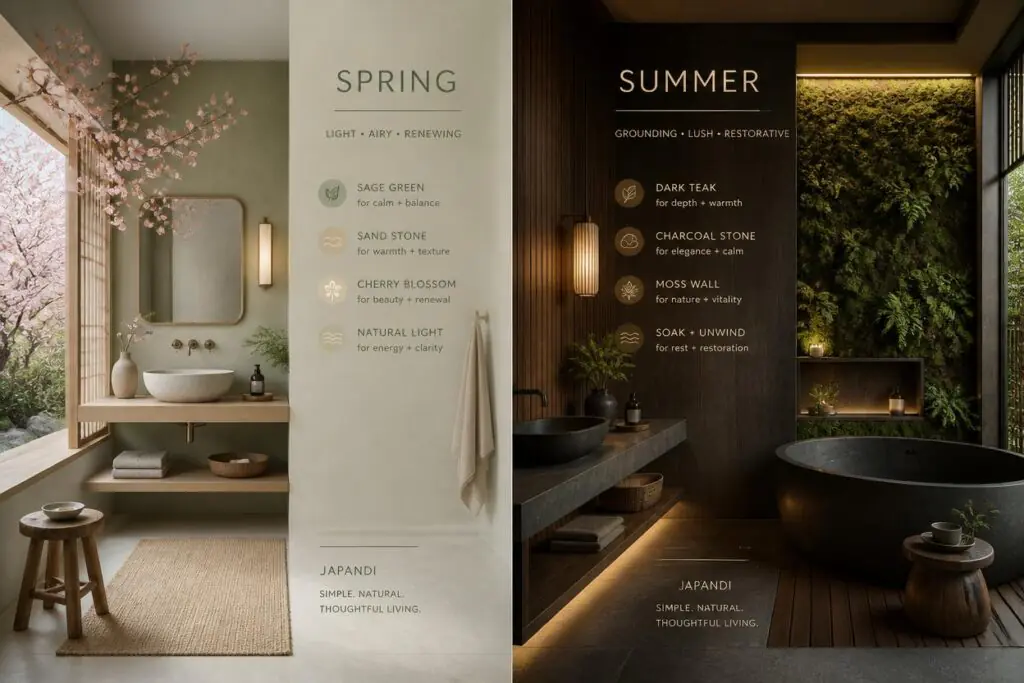
SPRING JAPANDI (March–May 2026):
• Soft sage green + warm sand + bleached timber
• Cherry blossom blush accent (one towel, one object)
• Light and air — open windows, soft cotton, woven rushes
SUMMER JAPANDI (June–August 2026):
• Deep forest green + dark teak + volcanic charcoal stone
• Oceanic blue-grey as a secondary tone • Richer, more dramatic — heavier textures, deeper baths
Final Thoughts — Start With One Wall, Not a Full Renovation
The biggest barrier people have with japandi bathroom ideas in 2026 isn’t budget or skill — it’s not knowing where to start. They look at a finished space and see the sum of fifteen decisions, and it feels overwhelming.
My honest recommendation: start with just one element. Change your accessories to ceramic and linen. Paint one wall with a warm wash. Replace your lighting with warm dimmers. Any single change you make in the japandi direction will immediately make the space feel different — calmer, more intentional, more like somewhere you actually want to be.
Then, as budget and time allow, you layer. New tiles in the shower. A floating timber vanity. Eventually, maybe, the soaking tub that makes every morning feel like a retreat.
The whole philosophy of japandi is that the journey matters as much as the destination. You’re not racing toward a finished look — you’re building a space that evolves with you.
Save this guide before your next trip to the showroom. You’ll thank yourself.
You May Also Like These Posts
→ Budget Kitchen Makeover 2026
→ 4th of July Front Porch Decor Ideas
→ Summer Home Décor Ideas 2026
→ Dorm Room Decorating Ideas for Guys