
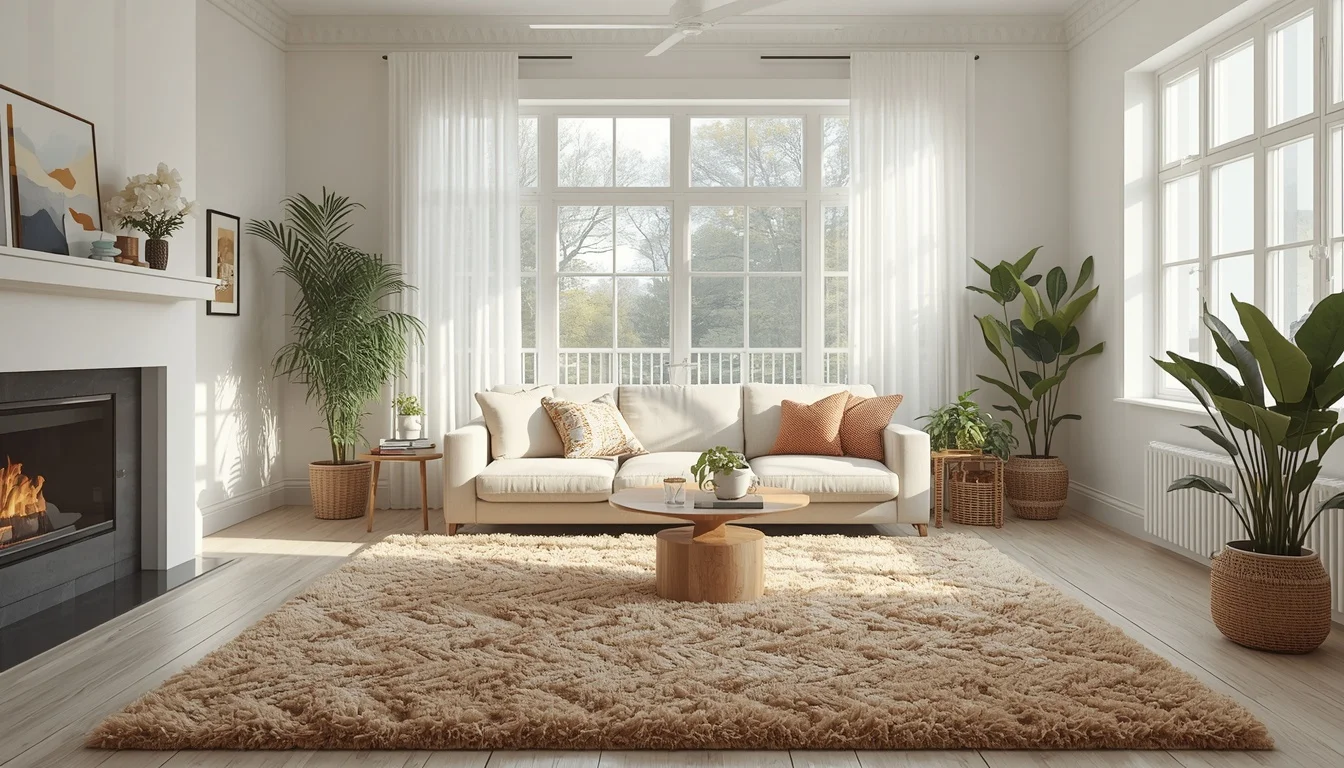
My Living Room Looked Fine… Until I Saw the Photos
Living room carpet ideas weren’t even on my radar until a friend visited and casually said, “Oh, is this carpet from your old apartment?” It wasn’t. It was only two years old. That one comment sent me down a rabbit hole of rug shopping, return boxes, and a few genuinely embarrassing purchases I’d rather not talk about (okay, fine, I’ll talk about them — that’s basically what this whole article is about).
If you’re standing in your living room right now, looking at the floor and wondering why the room just doesn’t feel finished, you’re probably one carpet decision away from fixing it. I’ve been through the trial and error so you don’t have to repeat my mistakes.
This guide covers 15 living room carpet ideas for 2026, based on stuff I’ve actually tried, tested, or watched friends and family go through. There’s a comparison table near the end to help you decide between styles, plus the most common mistakes people make (myself included).
Why Your Living Room Carpet Choice Matters More Than You Think
A carpet or rug isn’t just “floor decoration.” It affects how warm a room feels, how loud it sounds, how safe it is for kids and pets, and even how big or small the space looks.
When I swapped a thin, flat rug for a thicker wool one in my living room, the room felt noticeably quieter. I hadn’t even thought about sound until it changed. That’s the kind of thing that doesn’t show up in a photo but makes a huge difference day to day.
Here’s a quick breakdown before we get into the 15 ideas:
- Comfort: Thicker, softer rugs make a room feel more relaxed and lived-in.
- Acoustics: Rugs absorb sound, which matters a lot in rooms with hard floors and high ceilings.
- Visual size: Light rugs can make small rooms feel bigger; rugs that are too small make any room feel disconnected.
- Maintenance: Material choice affects how much work you’re signing up for long-term.
- Style anchor: The rug often sets the tone (and color palette) for the whole room.
15 Living Room Carpet Ideas for 2026 (Tried, Tested, and Real)
Below are 15 living room carpet ideas, each with the kind of practical detail you’d get from a friend who’s actually lived with these choices — not just how they look in a showroom.
1. Soft Neutral Wool Rug Under a Glass Coffee Table
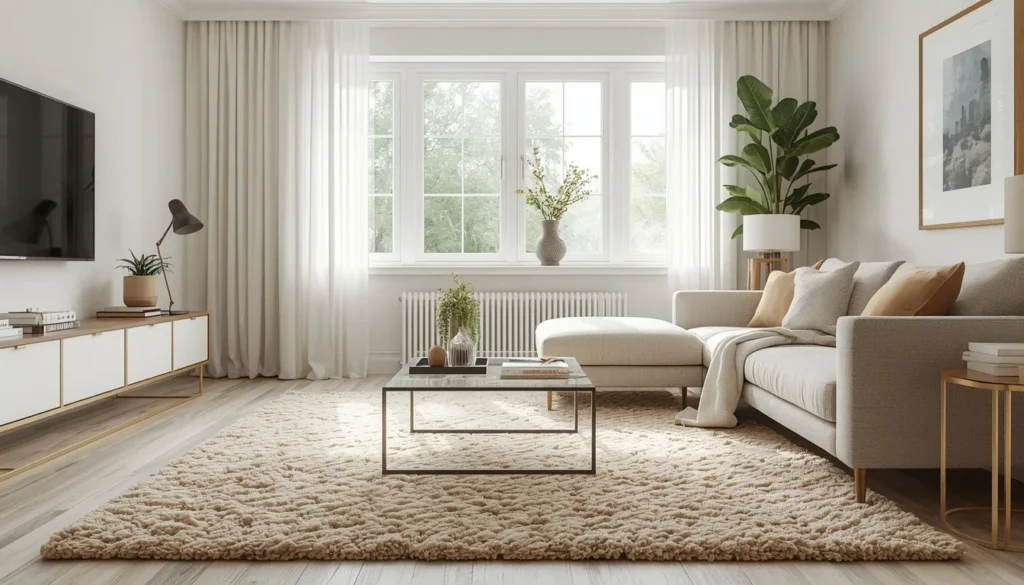
When I redid my own living room a couple of years ago, the very first thing I changed was the rug, and I went with a thick, soft wool rug in a warm oatmeal tone.
The difference was almost embarrassing. The room instantly felt warmer, quieter (literally — it absorbed sound), and more put together, even though I hadn’t touched the walls or furniture yet.
Wool holds up surprisingly well under a glass coffee table because it doesn’t show scuff marks the way some synthetic fibers do. If you’ve got a glass-top table, this combo lets the rug texture really stand out instead of competing with a busy table design.
Quick tip: Go up at least one size bigger than you think you need. A rug that’s too small under a coffee table setup will make the whole seating area feel disconnected.
2. Bold Geometric Pattern Rug for a Minimalist Room
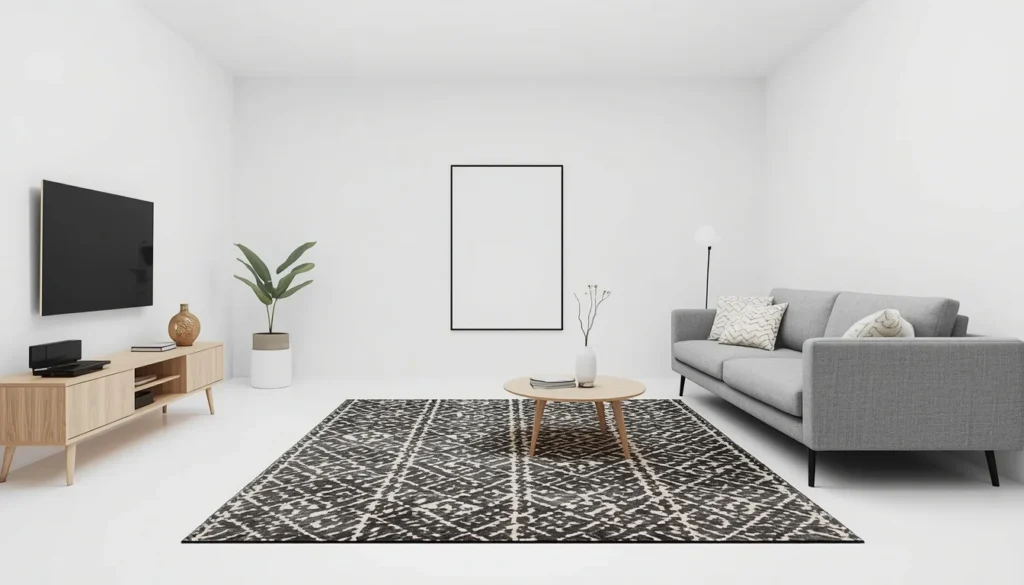
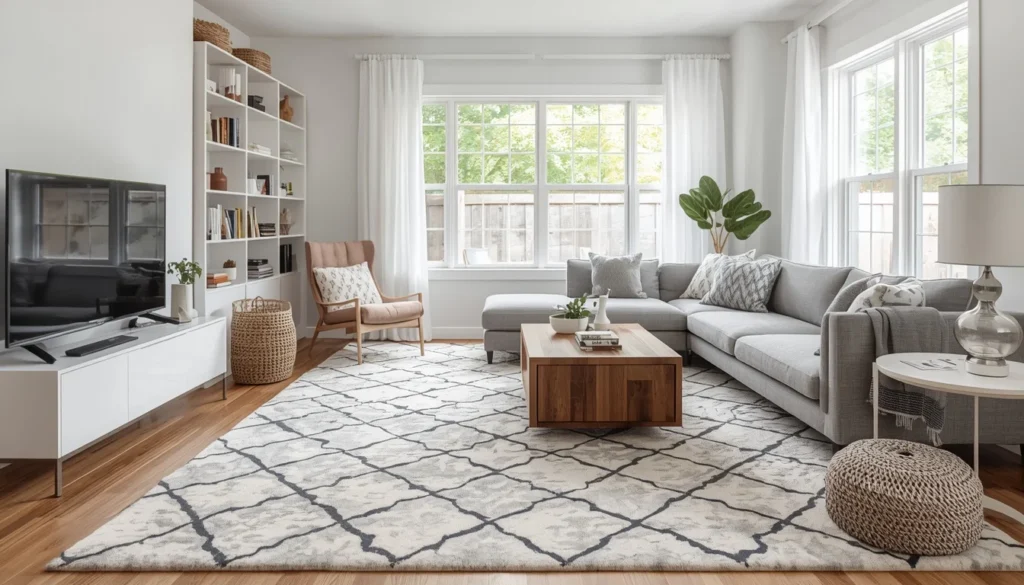
If your living room walls and furniture are mostly plain — think white walls, gray sofa, simple shelves — a geometric patterned rug can be the one thing that brings the whole room to life.
I tried this in a friend’s apartment that felt a bit too ‘showroom’ and lifeless. We added a black-and-cream geometric rug, and suddenly the space had personality without needing a single new piece of furniture.
The trick is restraint. One bold rug is a statement. One bold rug plus busy curtains plus patterned cushions plus a gallery wall is just visual noise.
Quick tip: Pick one dominant color from the rug and repeat it in just one or two small accessories, like a vase or a throw blanket, to tie the room together.
3. Layered Rugs for Extra Texture and Depth
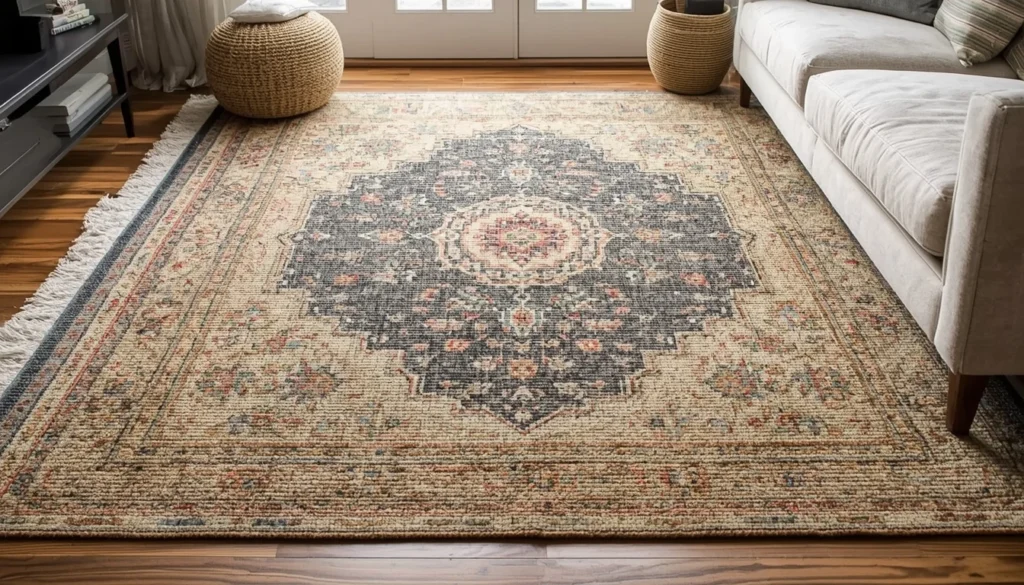
This is one of those trends I was skeptical about until I actually tried it. Layering a smaller patterned rug on top of a larger jute or sisal rug adds depth that a single rug just can’t match.
I used a natural jute rug as the base (covering most of the floor) and layered a smaller vintage-style Persian rug on top, slightly off-center near the sofa. It gave the room a collected-over-time feel, like it wasn’t all bought in one trip to the store.
It also solves a practical problem: jute and sisal can feel rough underfoot, but layering a softer rug on top in the main walking area fixes that completely.
Quick tip: Keep the bottom rug simple and neutral. The top rug is where you add color, pattern, or texture — don’t let both rugs compete for attention.
4. Berber-Style Carpet for High-Traffic Family Rooms
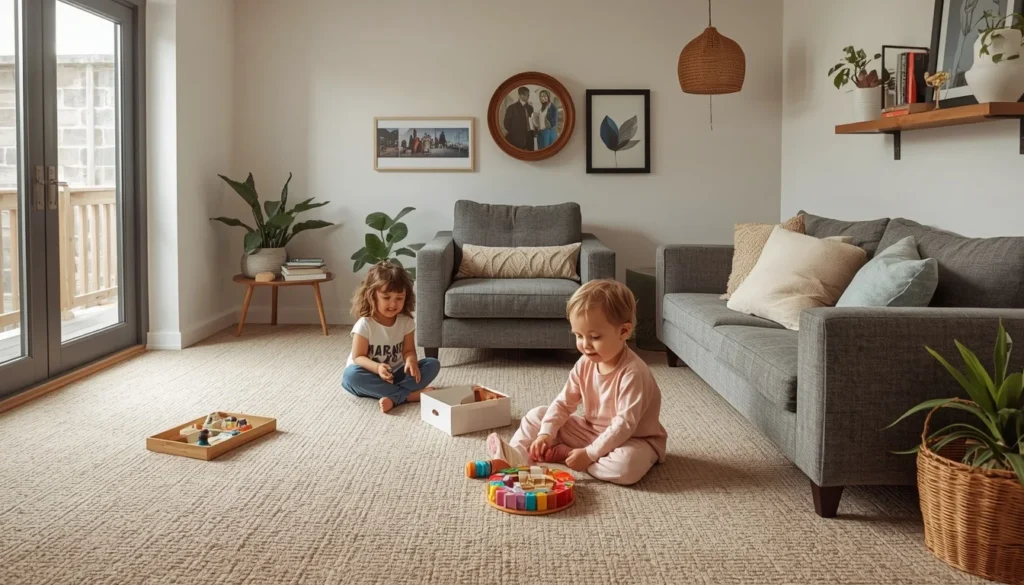
If you’ve got kids, dogs, or both running through your living room daily, a Berber-style carpet (the kind with a looped, textured weave) is genuinely a lifesaver.
We installed wall-to-wall Berber in our old family room, and after three years of muddy paws and dropped snacks, it still looked decent after a deep clean. Compare that to the plush carpet in our bedroom, which started looking worn within a year.
The looped texture hides crumbs and pet hair surprisingly well between vacuum sessions, which sounds minor but makes a real difference day to day.
Quick tip: Choose a mid-tone color, not pure white and not very dark. Mid-tones hide both light dust and dark stains far better than either extreme.
5. Jute and Sisal Rugs for a Natural, Earthy Look
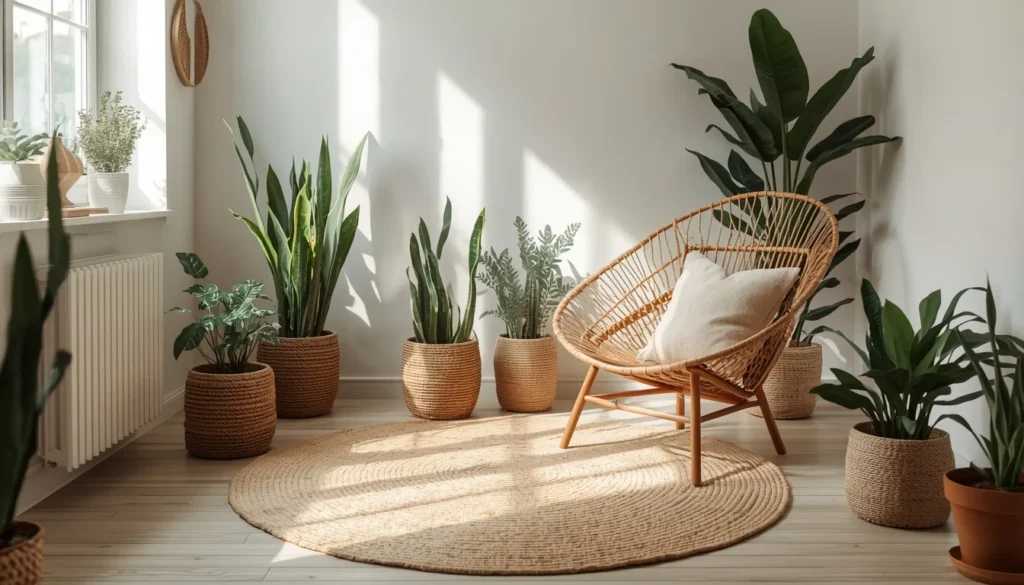
There’s been a real shift toward natural materials in home decor, and rugs are no exception. Jute and sisal rugs bring an earthy, almost beachy texture that pairs beautifully with wood furniture and green plants.
I added a round jute rug under a small reading nook with a rattan chair, and it instantly felt like a little retreat corner rather than just leftover space.
One thing worth knowing: these fibers can feel a bit scratchy at first. Walking on them barefoot takes some getting used to, especially compared to wool or synthetic options.
Quick tip: If the texture feels too rough, add a small soft mat or sheepskin where people sit or stand most, like in front of an armchair.
6. Vintage-Inspired Persian or Oriental Rugs
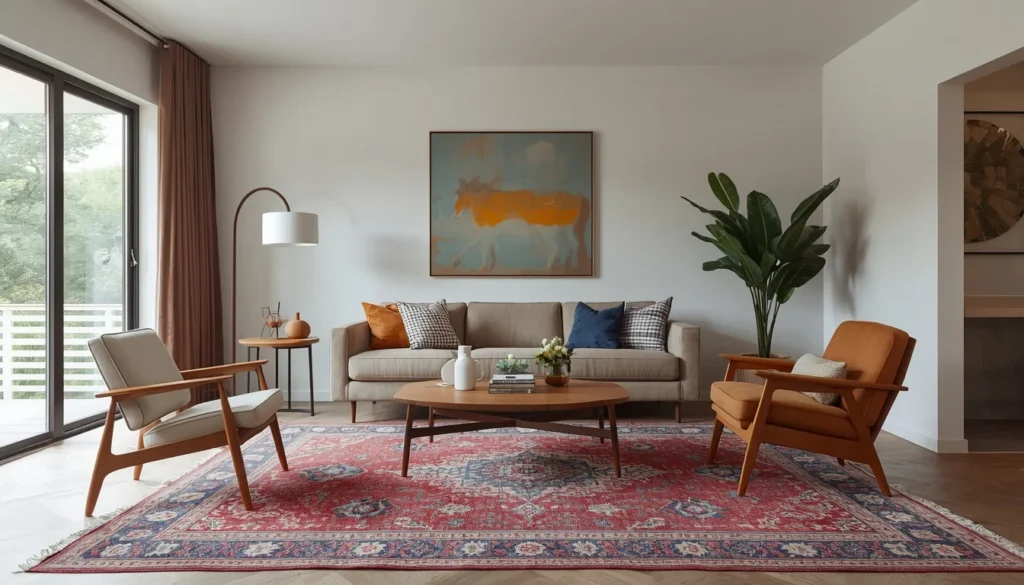
Vintage-style rugs with rich reds, blues, and intricate patterns have been making a strong comeback, and they work in surprisingly modern spaces, not just traditional ones.
I put a vintage-inspired Persian rug in a room with mid-century modern furniture, and the contrast actually worked. The rug added warmth and history to what was otherwise a pretty cool, minimal space.
These rugs are forgiving with stains and wear because the busy pattern hides imperfections far better than a plain rug ever could.
Quick tip: You don’t need an expensive antique. Many affordable machine-made rugs now replicate the vintage look convincingly, especially from brands found on Wayfair or Rugs USA.
7. Two-Tone or Color-Block Carpet Designs
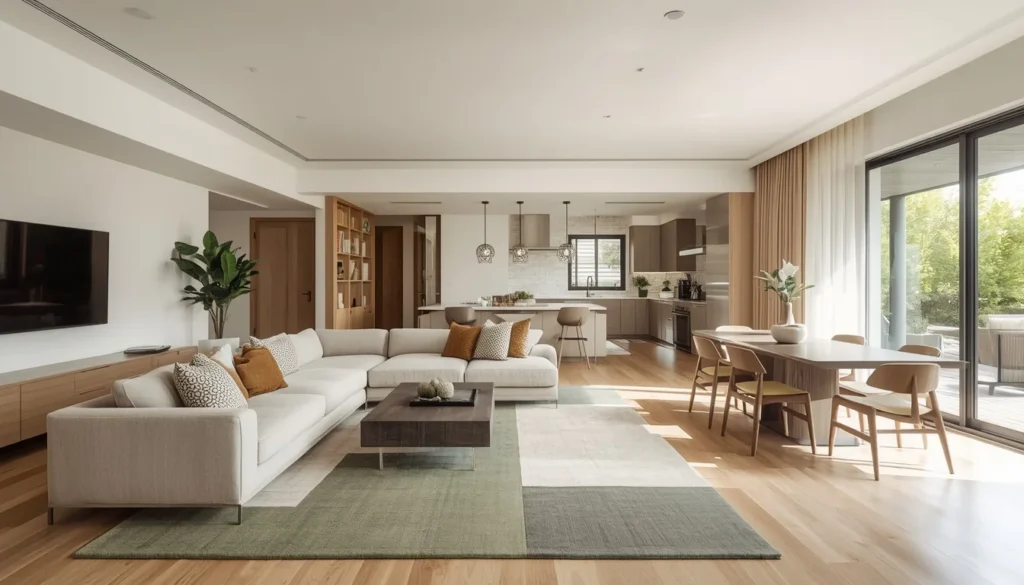
Color-block carpets, where two or three solid colors meet in clean shapes, are a trend I started seeing a lot in 2026 design boards on Pinterest.
A friend tried this in her apartment using a custom rug with a soft sage green half and a cream half, split diagonally. It worked as a subtle way to visually divide an open-plan living and dining area without putting up any walls.
It’s a bolder choice, so it works best in rooms with otherwise simple furniture.
Quick tip: If buying custom isn’t in your budget, look for ready-made color-block rugs from brands like Ruggable, which also happen to be machine-washable.
8. Plush Shag Rugs for Cozy Reading Corners
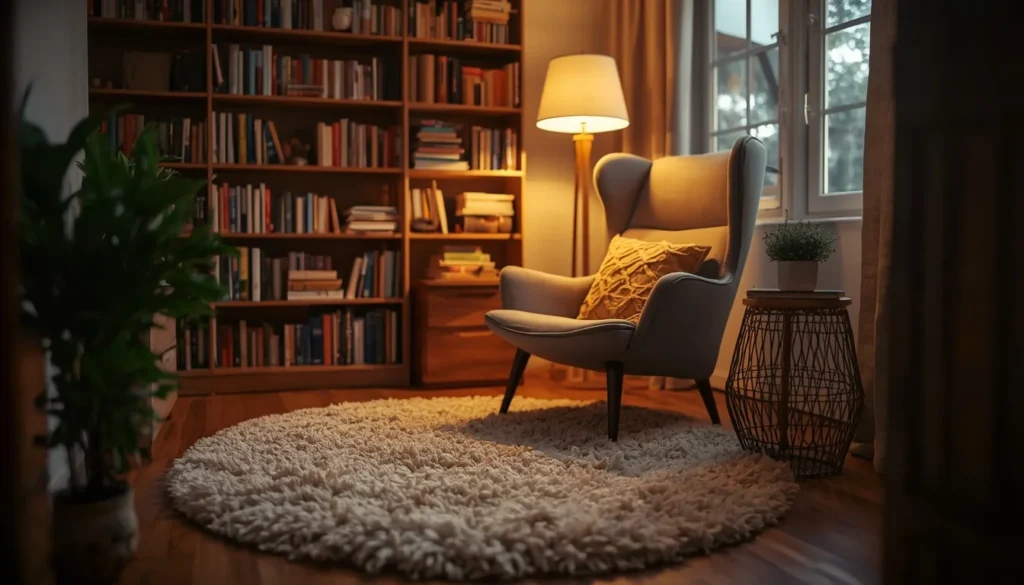
There’s nothing quite like sinking your feet into a thick shag rug after a long day. I added one of these in front of my bookshelf, paired with a floor lamp and a small armchair, and it became my favorite spot in the house almost overnight.
The downside is real, though: shag rugs are harder to vacuum, and they’re not great in high-traffic zones because the long fibers flatten and tangle over time.
For a dedicated cozy corner rather than a main walkway, they’re honestly hard to beat.
Quick tip: Keep shag rugs in smaller, defined zones (like a reading nook), not as the main rug under your whole seating arrangement.
9. Striped Runner Rugs for Narrow or Long Living Rooms
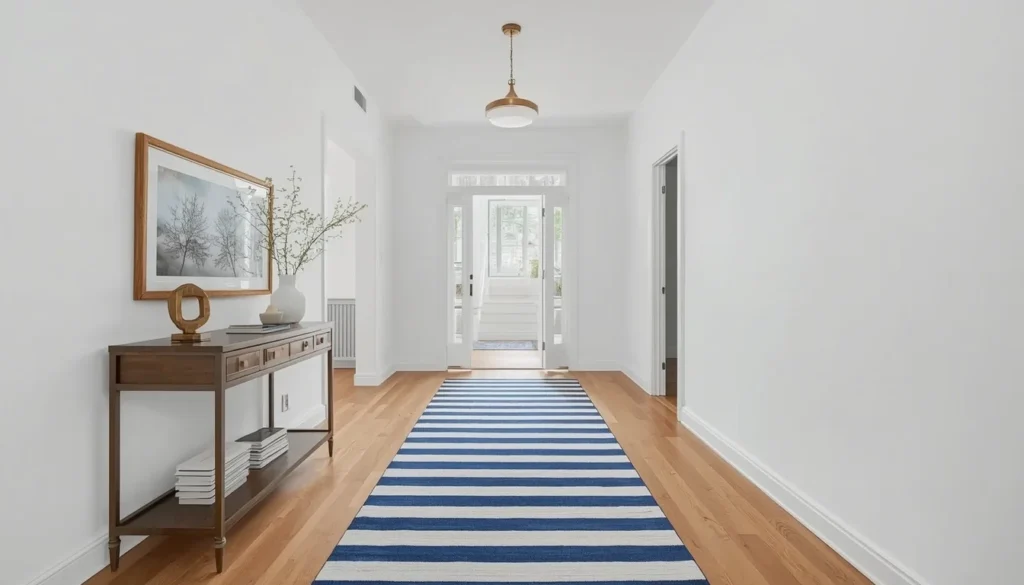
If your living room is long and a bit awkward in shape (mine definitely is), a striped runner rug placed along the length of the room can actually help balance the proportions.
I used a navy and white striped runner along one side of a narrow living room, near a console table, and it visually widened the space by drawing the eye horizontally instead of down the long axis.
This is a small, affordable change but it had a noticeable effect on how the room felt to walk through.
Quick tip: Stick to horizontal stripes if your room is long and narrow, and avoid vertical stripes which can make a narrow room feel even more cramped.
10. Textured Solid-Color Carpets (No Pattern Needed)
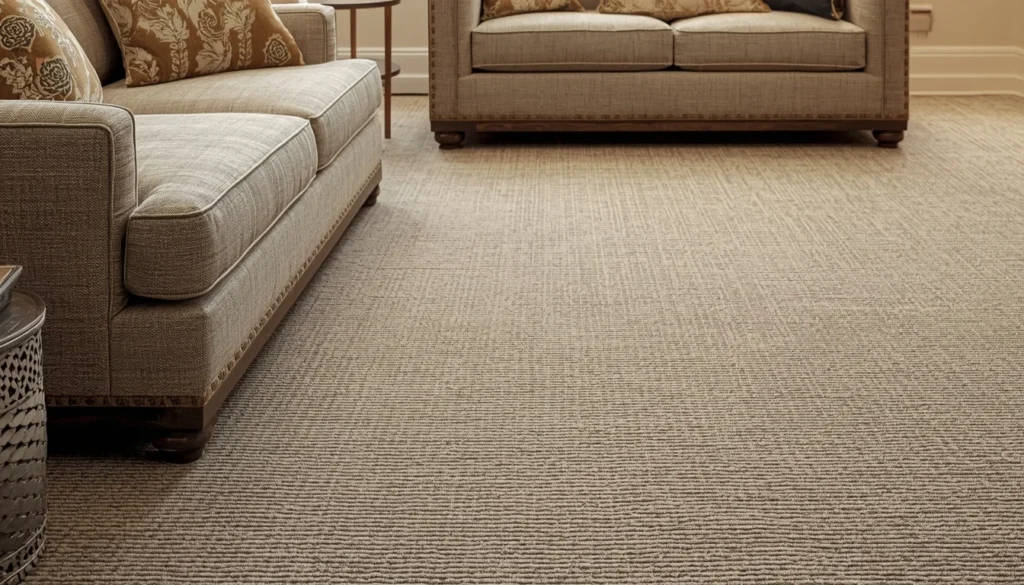
Sometimes the best rug is the one you barely notice — a textured, solid-color carpet that adds depth through weave and pile height rather than pattern.
I switched from a flat-weave plain rug to a textured one in a similar shade, and even though the color was almost identical, the room felt noticeably more interesting just from the shadows and texture catching the light differently.
This is a great option if you already have busy artwork, patterned cushions, or colorful curtains and don’t want the rug fighting for attention.
Quick tip: Hold the rug sample under both natural daylight and your evening lamp light before buying — texture looks very different under each.
11. Round Rugs to Soften Boxy Furniture Layouts
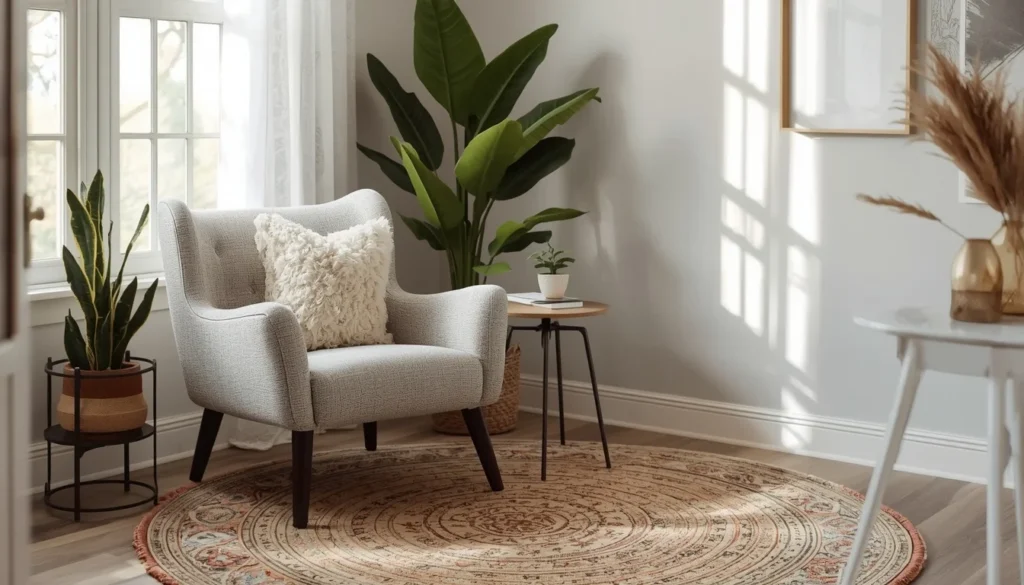
Most living rooms are full of straight lines — square sofas, rectangular coffee tables, boxy shelving. A round rug breaks up all that rigidity in a subtle way.
I tried a round rug under a small accent chair and side table grouping, and it created a kind of ‘mini zone’ within the larger room, almost like its own little island.
It also works really well in rooms with a circular conversation arrangement, like two chairs facing each other with a small table between them.
Quick tip: Round rugs work best for smaller furniture groupings, not under a large rectangular sofa setup, where the shapes will clash visually.
12. Machine-Washable Rugs for Busy Households
I’ll be honest — this idea changed my life a little. After dealing with a coffee spill disaster on a wool rug that needed professional cleaning, I switched to a machine-washable rug from Ruggable for our main living area.
It comes in two parts: a non-slip pad and a removable cover that you can literally throw in the washing machine. When my dog had an accident on it, I just unzipped the cover, washed it, and had it back down within a few hours.
The designs have also come a long way — they no longer look ‘cheap’ the way some early washable rugs did.
Quick tip: Always wash on cold and air-dry rather than tumble-dry to keep the print and fibers looking sharp for longer.
13. Statement Border Rugs for a Polished Finish
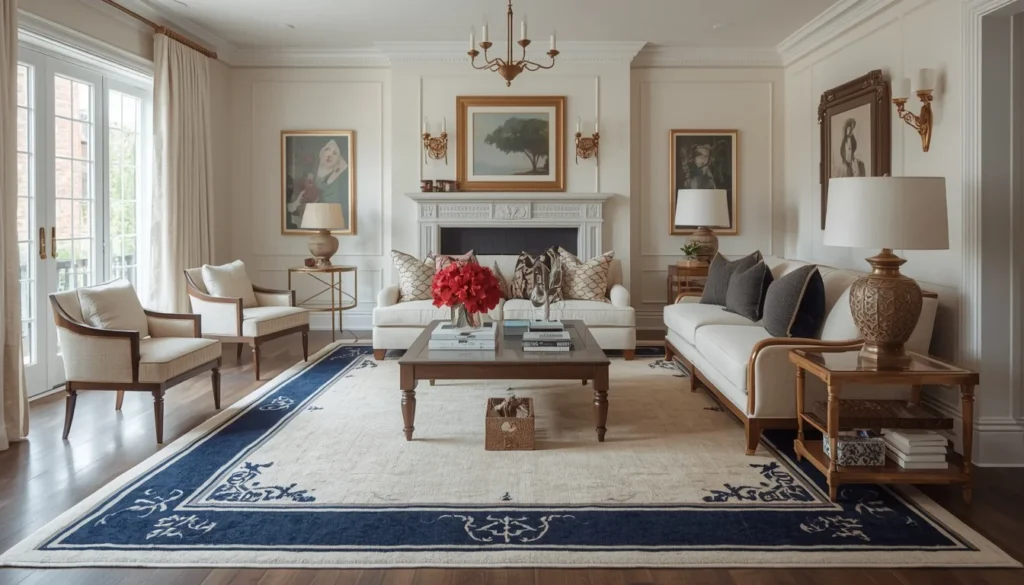
A rug with a distinct border (a different color or pattern around the edges) can give an otherwise simple room a much more ‘finished’ look, almost like a picture frame for your floor.
I added a navy-bordered cream rug to a room that felt a bit unfinished, and several people commented that the room looked ‘more expensive’ afterward — even though nothing else changed.
Border rugs work especially well in more traditional or transitional living rooms, where a plain edge-to-edge rug can sometimes look unfinished.
Quick tip: Match the border color to one of your wall accents or door frames for a subtle, cohesive look that ties the whole room together.
14. Dark Carpets for Cozy, Moody Living Rooms
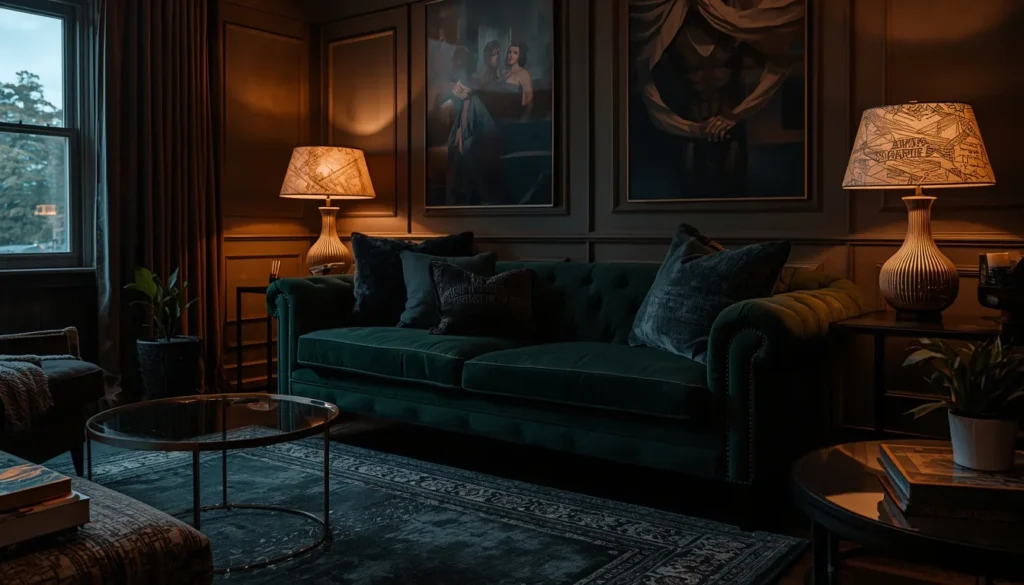
Not every living room needs to be bright and airy. If you’re going for a cozier, more ‘evening’ kind of vibe, a darker carpet — charcoal, deep green, or navy — can pull that off beautifully.
I tested this in a smaller den-style room with warm lamp lighting (not harsh overhead lights), and the dark rug actually made the room feel intimate and inviting rather than gloomy, as long as the lighting was warm.
The key word there is ‘lighting.’ Dark rugs in rooms with cold, bright overhead lights can feel a bit stark.
Quick tip: Pair dark carpets with warm-toned lamps (look for bulbs around 2700K) rather than relying on bright white overhead lighting.
15. Multi-Functional Carpet Tiles for Flexible Spaces
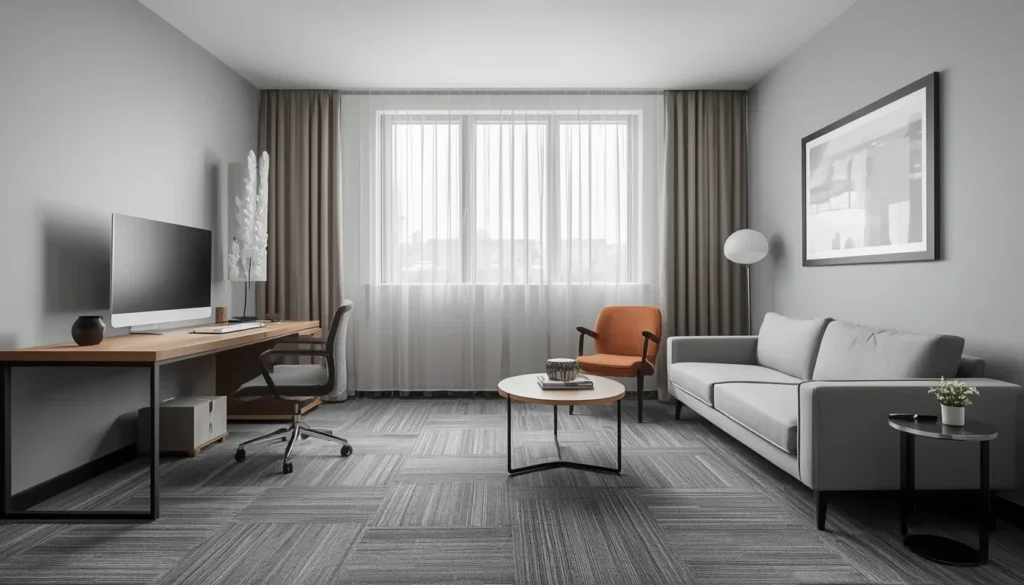
Carpet tiles aren’t just for offices anymore. For a home office that doubles as a guest room, or a living room that needs to handle a lot of foot traffic, modular carpet tiles offer something unique: you can replace individual tiles if one gets stained or worn.
A relative of mine used these in a converted garage living space, and when one section got damaged by a leak, they replaced just those four tiles instead of the entire floor.
They’re not the most glamorous option on this list, but for practicality and long-term cost savings, they’re hard to beat.
Quick tip: Buy 10-15% extra tiles from the same batch when you first purchase, so you have matching replacements if you ever need them — dye lots can vary between batches.
Comparison Table: Which Living Room Carpet Style Fits Your Home?
Since there are a lot of living room carpet ideas to choose from, here’s a side-by-side comparison to help you narrow things down based on budget, durability, and lifestyle:
| Carpet/Rug Style | Best For | Avg. Cost (per sq ft) | Durability | Maintenance |
| Plush Shag Rug | Cozy reading corners | $3 – $8 | Medium | High (regular fluffing) |
| Wool Area Rug | Long-term living rooms | $8 – $20 | Very High | Medium |
| Jute/Sisal Natural Fiber | Boho/eco homes | $2 – $6 | Medium | Medium |
| Berber Carpet | Busy families, pets | $2 – $5 | High | Low |
| Persian/Oriental Style | Statement rooms | $10 – $40+ | High | Medium |
| Geometric Patterned Rug | Modern/minimal spaces | $3 – $10 | Medium-High | Low |
| Layered Rugs (2-rug look) | Texture lovers | $3 – $12 combined | Medium | Medium |
| Synthetic/Polypropylene | Tight budgets | $1 – $4 | Medium | Low |
| Wall-to-Wall Carpet | Whole-room warmth | $3 – $11 | High | Medium-High |
As a rough guide: if you have pets or young kids, lean toward Berber, wall-to-wall carpet, or machine-washable rugs. If you’re decorating a calmer, adult-only space, wool, vintage-style, or layered rugs give you more design flexibility.
Step-by-Step: How to Actually Choose Your Living Room Carpet
Once you’ve got a style or two in mind from the list above, here’s the process I now use every time I’m choosing a rug or carpet for a room:
- Step 1 — Measure your seating area first. Measure the full width and depth of your sofa and chair arrangement, including a few inches of breathing room on each side. This number is your minimum rug size.
- Step 2 — Decide on your main color direction. Look at your walls, biggest furniture pieces, and curtains. Pick a rug that either matches that palette or adds one complementary accent color.
- Step 3 — Think about your lifestyle honestly. Pets, kids, spills, allergies — be realistic here. This is the step I skipped the first time, and it cost me a rug.
- Step 4 — Order a sample if you can. Many rug companies, including Wayfair and Ruggable, offer swatches. Hold them against your flooring and furniture before buying the full size.
- Step 5 — Add a rug pad from day one. Don’t skip this. It protects your floor, prevents slipping, and adds extra cushioning underfoot.
- Step 6 — Live with it for a week before deciding it’s “wrong.” Rugs often look different once furniture, lighting, and daily life are factored in. Give it a little time before returning anything.
Common Mistakes to Avoid With Living Room Carpets
These are mistakes I’ve personally made, or watched friends make, while picking out living room carpets:
- Buying a rug that’s too small. Measure your seating area first — at least the front legs of your sofa and chairs should sit on the rug.
- Ignoring the rug pad. A good rug pad isn’t just for grip; it adds cushioning, protects your floor, and actually extends the rug’s lifespan.
- Choosing pure white in a busy household. It looks amazing on day one and stressful by week three.
- Matching everything too perfectly. A rug that matches the sofa, curtains, and cushions exactly tends to look flat instead of styled.
- Skipping the texture test. Always touch the rug in person (or order a sample) before committing, especially for natural fibers like jute and sisal.
- Forgetting about maintenance from the start. If you have pets or kids, factor cleaning into your decision before you fall in love with a delicate fabric.
Frequently Asked Questions About Living Room Carpet Ideas
What is the best carpet color for a small living room?
Light, warm neutrals like beige, oatmeal, or soft greige work best for small living rooms. They bounce light around the room and make the floor feel like it stretches further. I learned this the hard way after putting a dark charcoal rug in my old apartment — it made the whole room feel like a basement, even with the lights on full blast.
Should a living room rug match the curtains?
Not exactly, but they should feel like they belong to the same color family. Matching everything perfectly actually looks flat and a bit like a hotel room. I usually pick one accent color from the curtains and echo it somewhere in the rug pattern, then let the rest of the rug do its own thing.
How big should a living room carpet be?
As a general rule, your rug should be big enough that at least the front legs of your sofa and chairs sit on it. A rug that’s too small floating in the middle of the room is one of the most common decorating mistakes, and honestly, I made this exact mistake for almost two years before I finally measured properly.
Is carpet or rug better for a living room in 2026?
It depends on your goals. Wall-to-wall carpet gives a cozy, seamless look and is great in colder climates, while area rugs offer more flexibility, are easier to clean or replace, and let you show off hardwood or tile underneath. A lot of homes in 2026 are going with a hybrid approach: hard flooring plus a large, high-quality area rug.
How do I keep a light-colored carpet clean with kids and pets?
Stain-resistant fibers like treated wool or solution-dyed polypropylene make a huge difference. Beyond that, a doormat at every entrance, a quick vacuum twice a week, and keeping a basic enzyme cleaner on hand for accidents will save you a lot of stress. I keep a small bottle in the hallway closet specifically for this.
Final Thoughts From Someone Who’s Replaced Way Too Many Rugs
If there’s one thing I’ve learned from going through all 15 of these living room carpet ideas in real homes, it’s that there’s no single “best” choice — only the best choice for how you actually live.
My current living room has a wool rug as the base layer and a smaller vintage-style accent rug near the reading chair. It took two failed rugs and one regrettable shag rug phase to get here, but the room finally feels like “us” instead of a showroom photo.
Start with your seating area measurements, pick a style from this list that matches your lifestyle, and don’t be afraid to live with a rug for a week or two before deciding it’s not right. Sometimes the room just needs time to settle around it — and sometimes, like my first shag rug, it really was just wrong, and that’s okay too.
You May Also Like These Posts
→ Decorating Living Room Christmas Ideas