
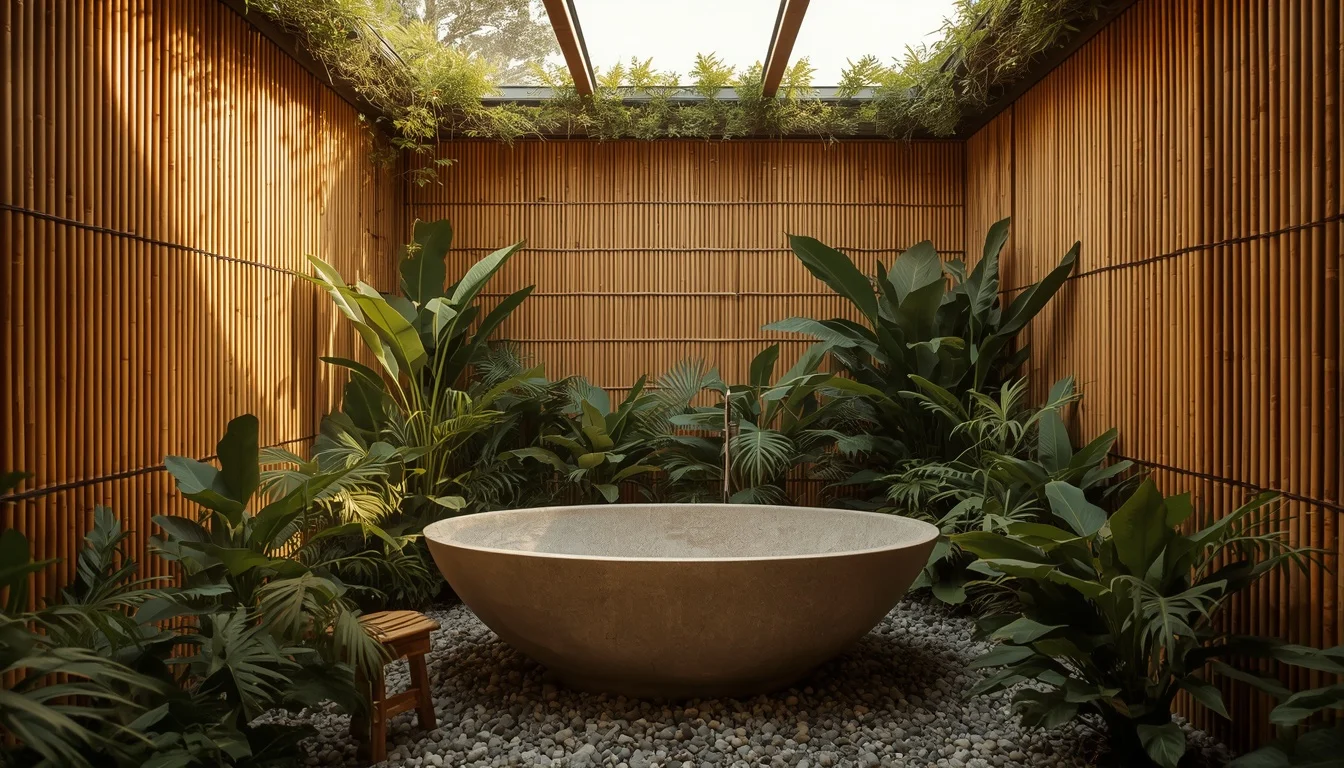
Why Your Bathroom Deserves to Feel Like a Forest
I remember standing in my old bathroom — cold white tiles, flickering fluorescent light, zero personality — and thinking: this is where I start and end every single day. It felt sterile, almost clinical. Then I visited a friend’s place in Portland who’d done something different. Stepping into her bathroom was like stepping into a greenhouse. Hanging ferns, a raw wood vanity, a smooth river-stone floor mat, and actual sunlight pouring through a frosted skylight. I stood there for probably two full minutes just breathing.
That was my introduction to biophilic bathroom design — and I’ve been obsessed ever since.
Biophilic design is the idea of weaving nature directly into your living spaces. Not just a potted plant in the corner, but genuinely integrating natural materials, textures, light, plants, water sounds, and organic forms into a room. In a bathroom — a space you use daily for self-care — this approach hits differently. It turns a routine task into something almost meditative.
In 2026, this isn’t just a niche interior design trend anymore. It’s becoming a baseline expectation for anyone who cares about wellness at home. So let’s break it all down: 15 ideas, a comparison guide, real tips, and what to actually avoid.
1. Living Plant Walls — The Biophilic Bathroom Statement Piece
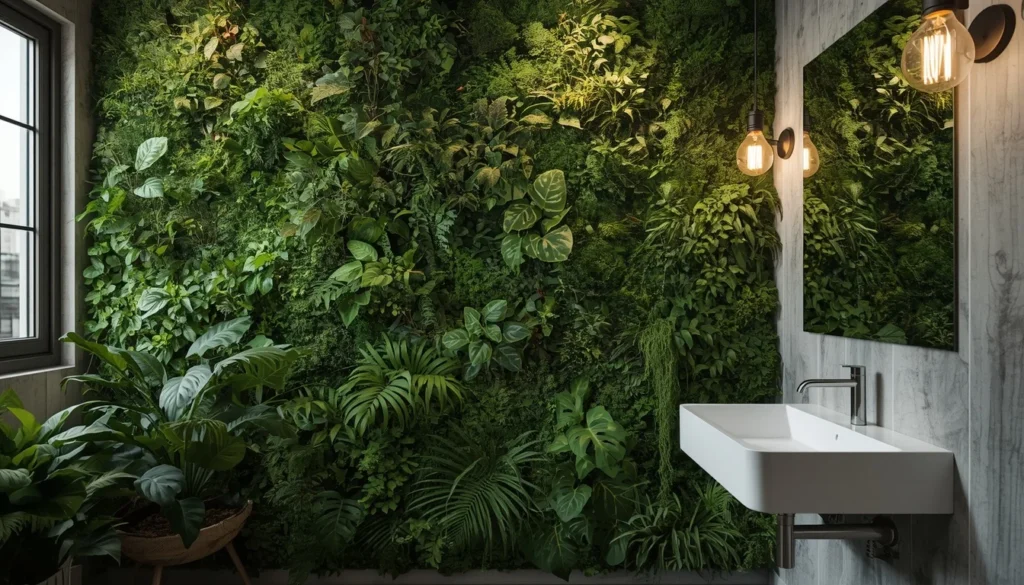
If there’s one thing that immediately screams biophilic bathroom design, it’s a living wall. Also called vertical gardens, these are panels of actual growing plants installed on your bathroom wall. Sounds high-maintenance? It can be — but it doesn’t have to be.
I made the mistake of going all-in on a custom irrigation system for my first attempt. It was gorgeous for about three weeks before a humidity imbalance wiped out half the ferns. What I learned: start with moisture-loving, low-light plants. Think pothos, peace lilies, Boston ferns, and golden pothos. These actually thrive in bathroom humidity.
For a budget-friendly version, try a modular pocket system like a Woolly Pocket planter mounted on waterproof backing. You can build a 4×4 section for under $200 and swap plants easily.
- Best plants: Pothos, Boston fern, peace lily, philodendron, moss
- Avoid: Succulents and cacti (they hate humidity)
- Tip: Install a grow light strip behind a valance if your bathroom has no window
2. Natural Stone Surfaces — Timeless, Tactile, and Biophilic
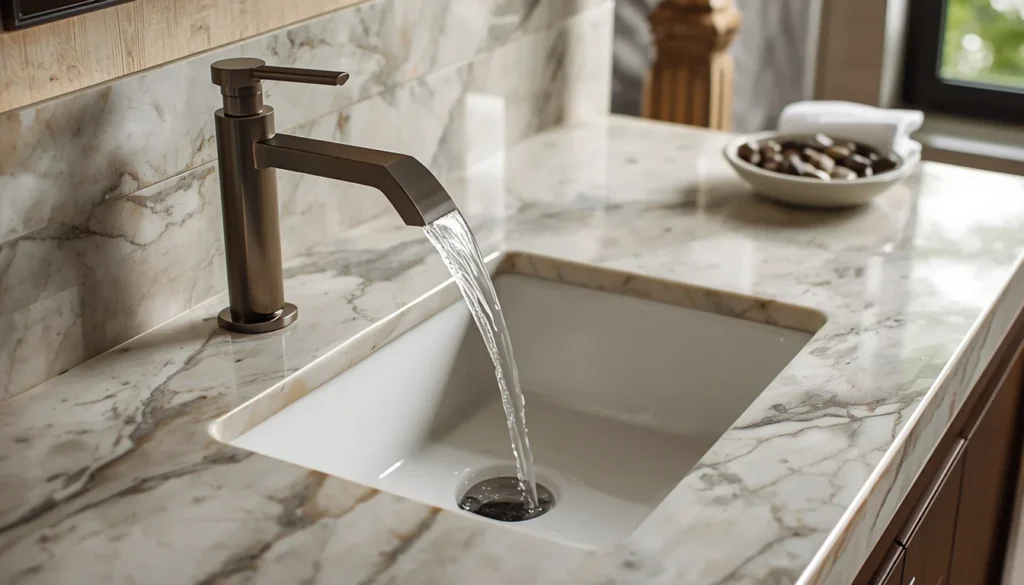
There’s something genuinely grounding about touching real stone. Marble, travertine, slate, quartzite — these materials carry the fingerprints of the earth. In a biophilic bathroom, stone surfaces do double duty: they look incredible and they connect you to something natural every time you run your hands across them.
I went with honed travertine for a bathroom remodel last year. Honed means matte, not polished — it’s warmer, less slippery, and honestly feels more organic. The tiny natural holes in travertine (called vugs) can collect soap scum over time, so I seal mine twice a year with an impregnating sealer like Miracle Sealants 511.
If solid stone is out of budget, large-format porcelain tiles that convincingly mimic stone (brands like Marazzi and Ceramica Rondine do this incredibly well) are a solid middle ground.
- Splurge option: Marble, quartzite, or onyx slabs
- Mid-range: Travertine or slate tiles
- Budget: High-resolution stone-look porcelain
3. Wood Accents That Won’t Warp or Rot in a Bathroom
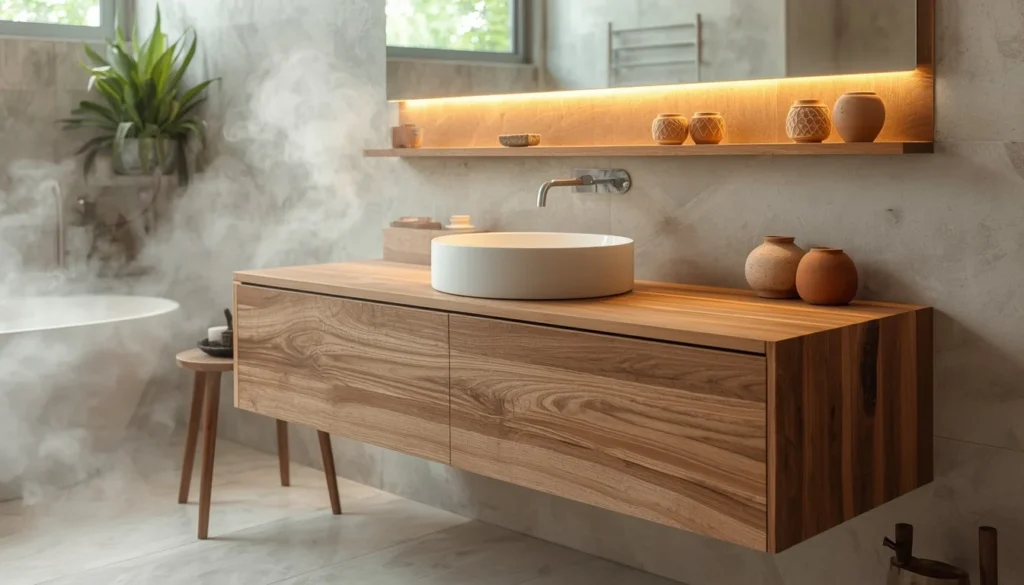
Wood in a bathroom sounds like a nightmare — and it will be, if you pick the wrong species. I learned this the hard way with a pine shelf that started warping after six months of steam exposure. The fix? Go for naturally water-resistant woods from the start.
Teak is the gold standard. It’s dense, oil-rich, and used on actual boat decks — a bathroom is nothing to it. Ipe and cedar are strong runners-up. For a more affordable route, look for solid teak furniture pieces (IKEA’s Rågrund collection is a classic), or bamboo, which is technically a grass but performs like hardwood in moisture.
Always apply a penetrating wood oil (I use Osmo Polyx-Oil) rather than a surface finish — it lets the wood breathe and doesn’t peel.
- Best woods for bathrooms: Teak, ipe, cedar, bamboo
- Seal with: Penetrating oil, not polyurethane
- Avoid: Pine, MDF, or any softwood near water
4. Maximize Natural Light — Even If You Have No Window
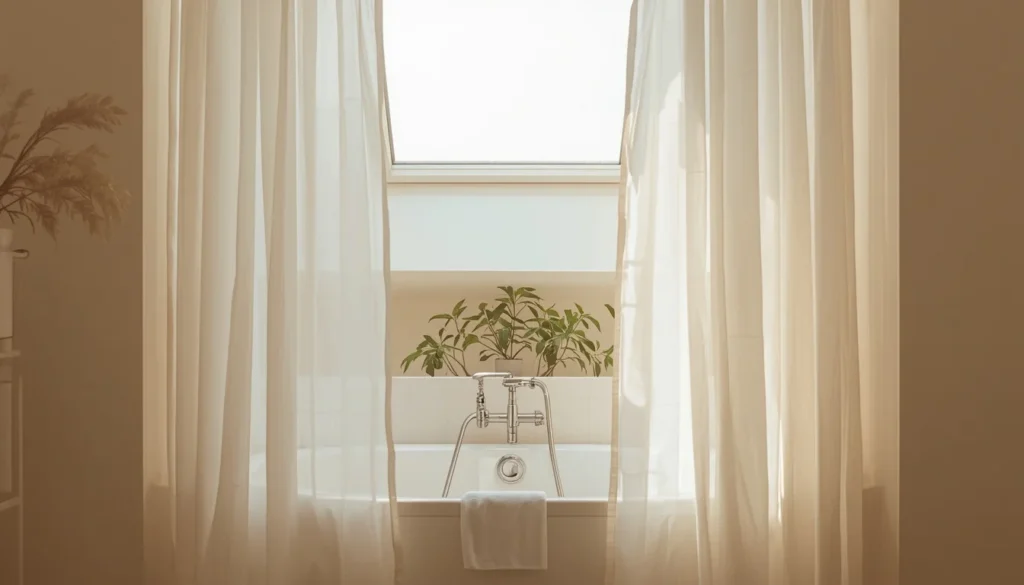
Natural light is one of the most powerful biophilic elements — and one of the most underutilized in bathrooms. Designers often treat the bathroom as an afterthought when planning window placement. But exposure to daylight, even filtered through frosted glass, genuinely shifts your mood.
If you’re remodeling and have the option, a tubular skylight (like a Solatube) can bring natural light into even an interior bathroom. They’re installed in a few hours and don’t require major structural work.
If you can’t add windows, the next best thing is circadian lighting — smart bulbs like those from Philips Hue that shift from cool (daylight-mimicking) in the morning to warm amber in the evening. Pair that with a mirror that spans the full wall to bounce whatever light you have.
- No-window fix: Tubular skylights, solar tubes, or light tunnels
- Smart lighting: Philips Hue, LIFX, or Govee for circadian light cycles
- Amplify light: Floor-to-ceiling mirrors, glossy white ceiling
5. Organic Shapes in Fixtures — Ditch the Right Angles
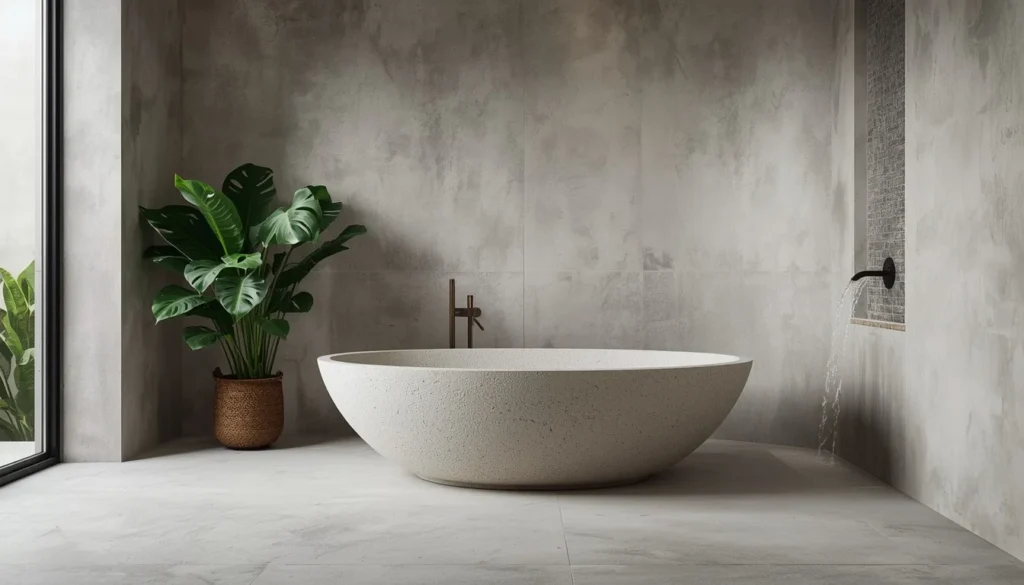
Nature doesn’t do sharp right angles. Rivers curve. Rocks erode into smooth forms. Leaves unfurl in spirals. So when a bathroom is all hard corners and rectangular fixtures, it’s subtly working against your nervous system.
One of the easiest ways to bring biophilic energy into a bathroom without touching the walls is swapping fixtures for organic forms. Oval or vessel sinks made from stone or clay, freestanding oval tubs, curved towel warmers, arched mirrors — all of these do the work of softening a space.
Brands like Kohler, Victoria + Albert, and Claybrook make beautiful organic-form tubs that are worth every penny if you’re doing a full remodel. For smaller updates, a round concrete vessel sink from Etsy artisans can run as low as $150.
6. Earthy Color Palettes — Go Beyond Beige
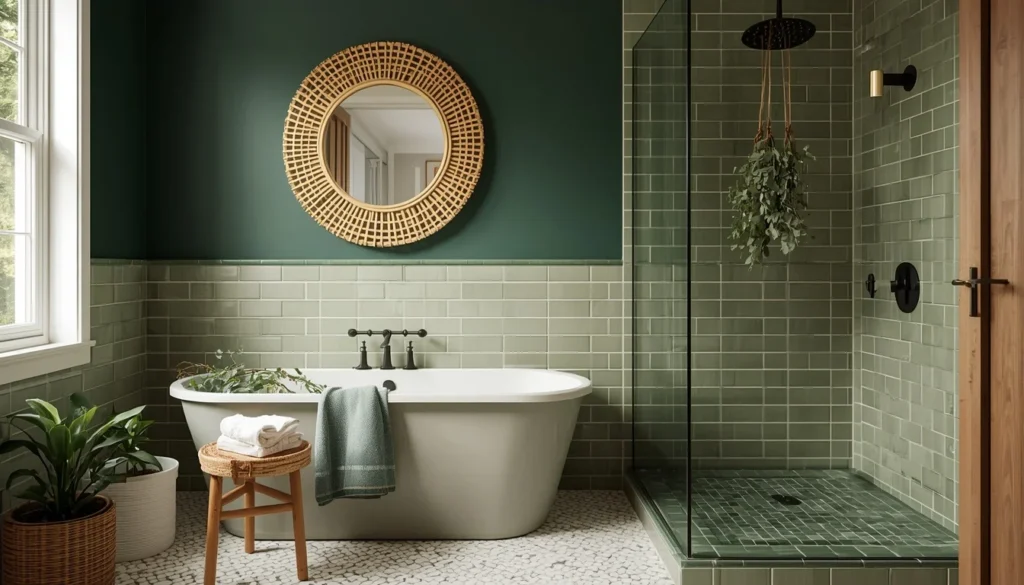
The color palette of a biophilic bathroom should feel like it was borrowed from a walk in the woods. Moss green, clay terracotta, warm sand, slate grey, deep forest green, warm umber — these are the colors that put your nervous system at ease.
I painted a bathroom in Benjamin Moore’s Newburyport Green (HC-158) and it genuinely changed how long I stayed in there. It became a place I wanted to linger rather than rush through.
A good rule of thumb: 60% neutral base (warm white, linen, pale sand), 30% earthy mid-tone (sage, terracotta, warm grey), 10% deep accent (forest green, charcoal, espresso).
- Favorite paint colors: Newburyport Green (Benjamin Moore), Muted Sage (Sherwin-Williams), Dried Thyme (Farrow & Ball)
- Tile colors: Sage green subway, terracotta hexagon, sandstone
7. Water Features — Sound as a Biophilic Element
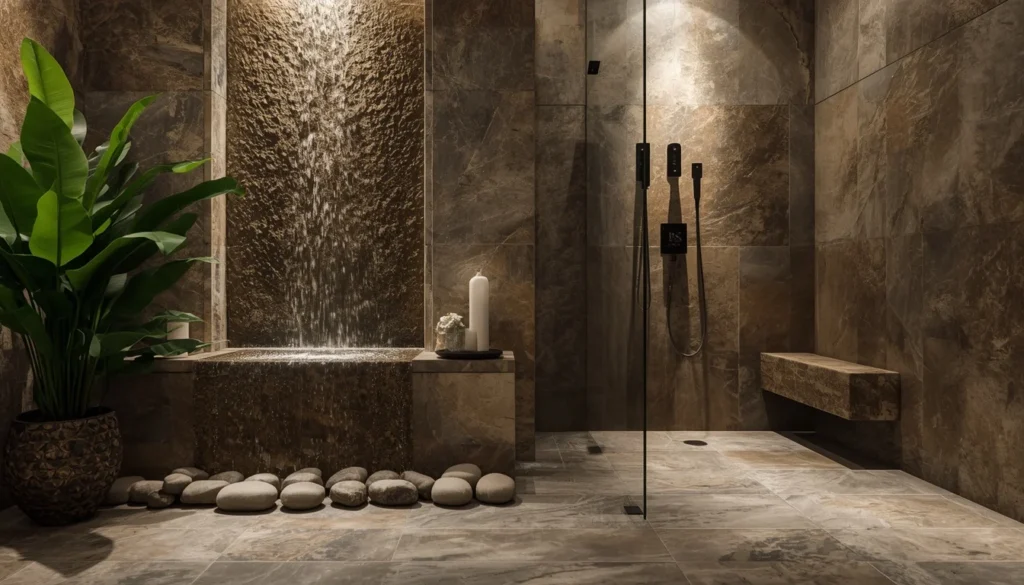
This one surprises people. The sound of water is one of the most effective stress-reduction tools in biophilic design. It’s why spas always have that trickling fountain in the background. You can bring that into your own bathroom.
A simple tabletop water fountain placed on the vanity can run on a USB connection and cost under $40. Step it up with a wall-mounted cascading panel from companies like Soothing Walls or Aqua Creations for a truly immersive experience.
If plumbing allows, even a rain shower head that creates a genuinely immersive downpour sensation engages the biophilic water element deeply.
8. Natural Fiber Textiles — Swap Synthetic for Organic
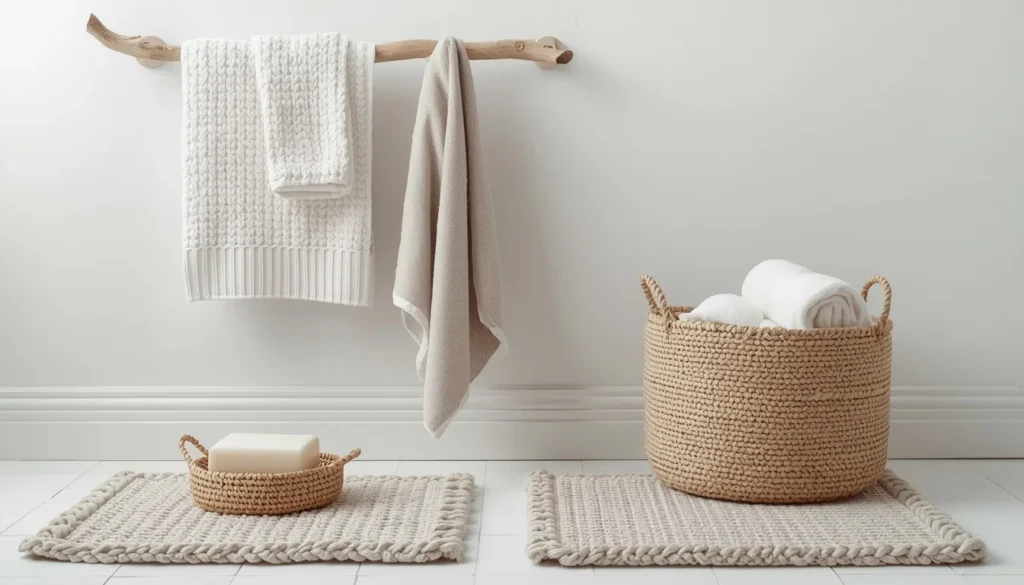
Most people don’t think about their towels and mats as biophilic design opportunities — but they absolutely are. Swapping synthetic microfiber for natural materials changes both how the room feels and how it looks.
Linen towels (brands like Kultivate Mills or Coyuchi are excellent) are highly absorbent, get softer with each wash, and have that beautiful raw, organic look. Organic cotton bath mats with a waffle weave or loop pile have a weight and texture that just feels right underfoot.
Add a woven jute or seagrass basket for storage, a bamboo toothbrush holder, and a wooden soap dish — suddenly your bathroom counter stops looking like an airport hotel.
9. Bamboo Elements — The Sustainable Biophilic Material
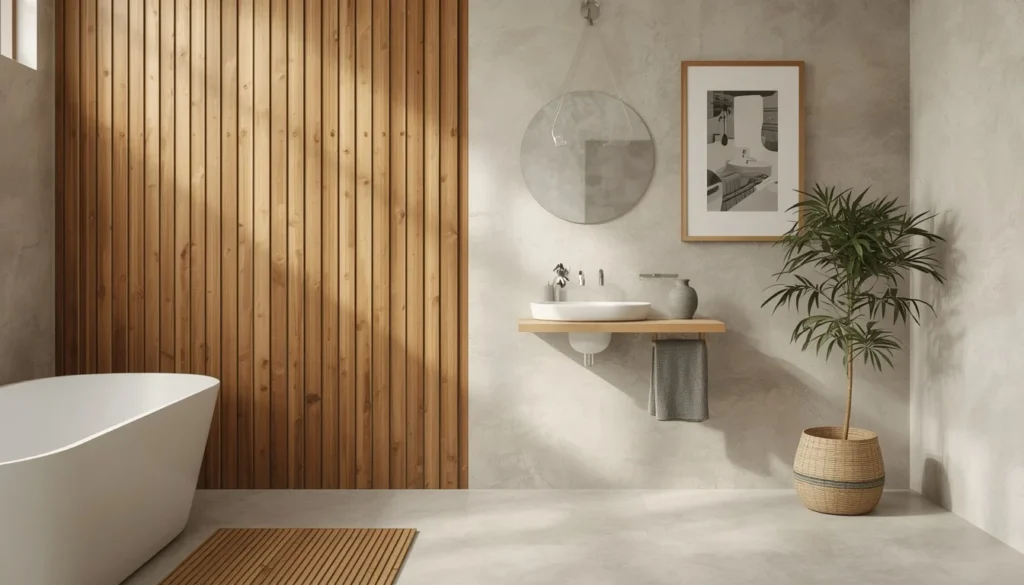
Bamboo is having its moment — and for good reason. It grows incredibly fast (some species up to 35 inches per day), it’s harder than most hardwoods, and it has a natural warmth that reads as deeply organic in a bathroom.
Bamboo works in a bathroom as: wall paneling, bath mats, shelving, mirror frames, and small accessories. For wall paneling, look for strand-woven bamboo panels, which are the densest and most moisture-resistant form. Brands like Cali Bamboo and US Floors carry good options.
One caveat: bamboo is still an organic material and needs proper sealing in high-moisture areas. I use a water-based polyurethane on bamboo paneling to protect it without changing its color significantly.
10. Pebble and River Stone Flooring — Nature Underfoot
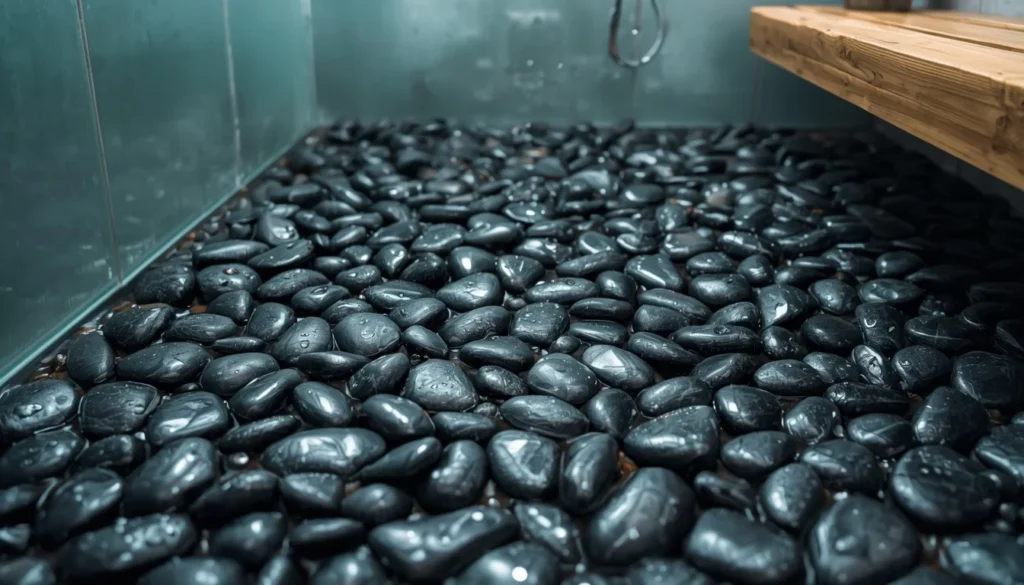
Walking barefoot on smooth river pebbles is genuinely one of life’s small luxuries. In a biophilic bathroom, pebble tile flooring in the shower enclosure recreates that experience every morning.
Pebble mosaics come pre-mounted on mesh backing, making installation reasonably DIY-friendly. They do require more grout maintenance than standard tile — use an epoxy grout (like Laticrete SpectraLOCK) which resists mold and staining much better than cement grout in wet areas.
For the anti-slip requirement, choose smaller-diameter pebbles with more grout lines (more texture = more grip) and apply a topical stone sealer every 12-18 months.
11. Botanical Art and Nature-Inspired Prints
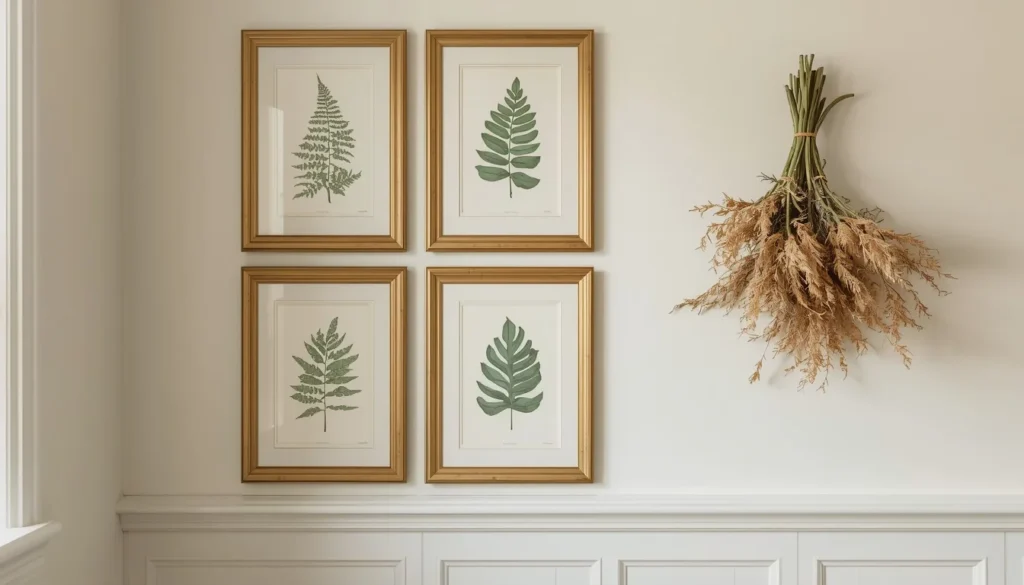
Not everyone can have a living wall — and that’s completely fine. Botanical artwork serves a similar psychological purpose by surrounding you with natural imagery that your brain responds to positively.
Vintage botanical illustrations (think the style of Ernst Haeckel) are endlessly beautiful and now in the public domain, meaning you can download, print, and frame them for almost nothing. Sites like The Biodiversity Heritage Library offer thousands of stunning botanical plates for free.
Dried botanicals — a bundle of eucalyptus in the shower, dried pampas grass in a vase, pressed fern fronds in a frame — add tactile dimension and a gentle natural scent that pairs perfectly with shower steam.
12. Scent — The Most Underrated Biophilic Element
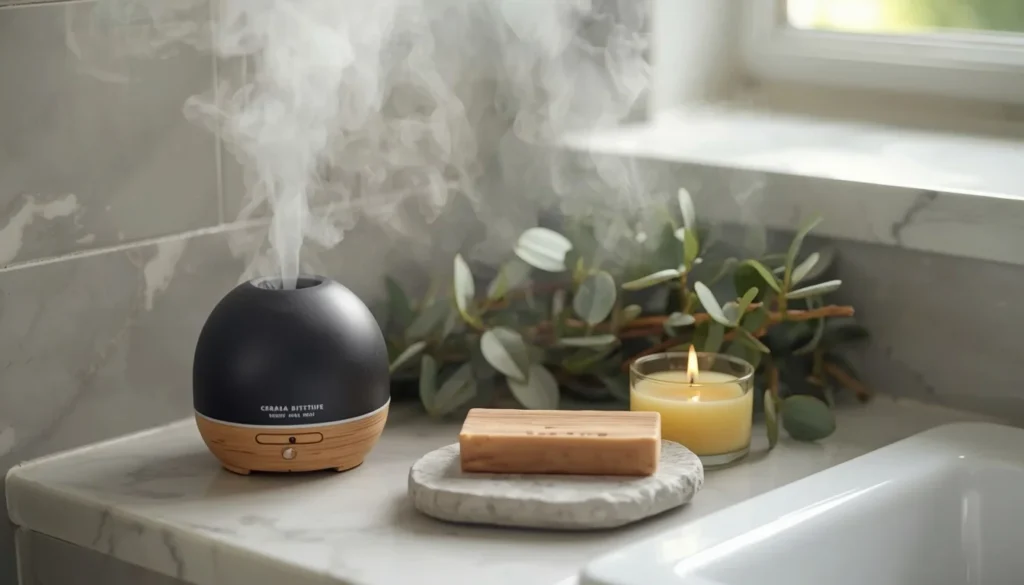
Biophilic design engages all five senses, but scent is the one most designers skip entirely. And it’s arguably the most powerful — smell has a direct line to the limbic system, the part of your brain that processes emotion and memory.
In a biophilic bathroom, skip synthetic air fresheners entirely. Instead: hang a fresh eucalyptus bundle from your shower head (the steam releases the oils beautifully), use cedar wood accessories, keep a beeswax candle with pine or forest notes, or diffuse essential oils like cedarwood, cypress, vetiver, or fir needle.
Every time I step into my bathroom now, the combination of cedar soap and eucalyptus hits before anything else. It’s a small thing, but it completely sets the tone for the morning.
13. Terracotta and Clay Tiles — Warmth That Stone-Look Porcelain Can’t Fake
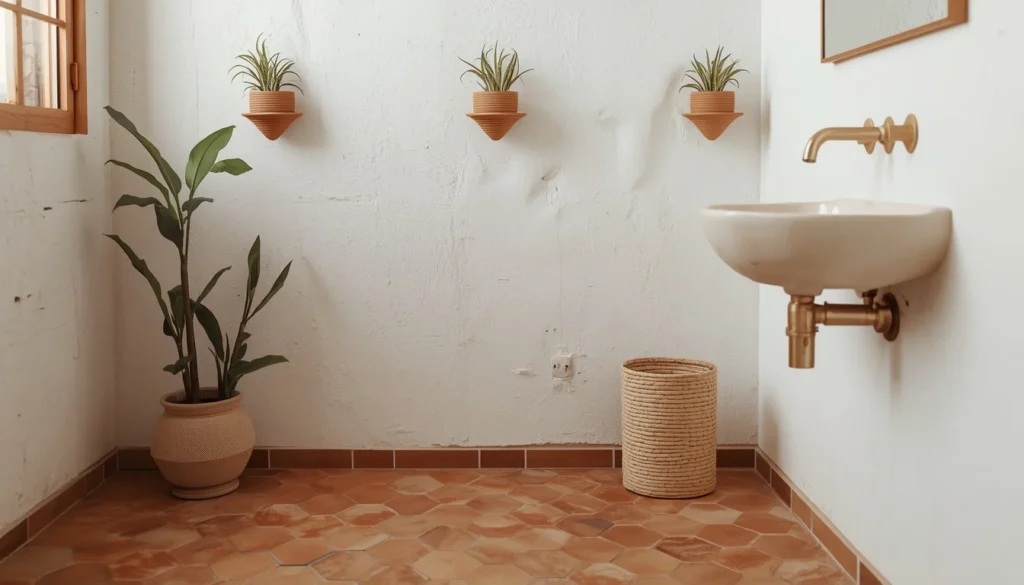
In 2025 and into 2026, terracotta tile has made a serious comeback — and it’s not going anywhere. There’s something about the warm, imperfect, handmade quality of terracotta that no factory tile can replicate.
Handmade terracotta tiles from Mexico, Spain, or Morocco have slight variations in color and surface texture from piece to piece — and that variation is exactly what makes them feel alive and organic. They work beautifully as floor tiles in a bathroom, or as an accent for a shower niche or backsplash.
One important note: unsealed terracotta is highly porous and will absorb water and stain rapidly. Always seal with a penetrating terracotta sealer before grouting, and again annually.
14. The Outdoor-Indoor Connection — When Your Bathroom Meets the Garden
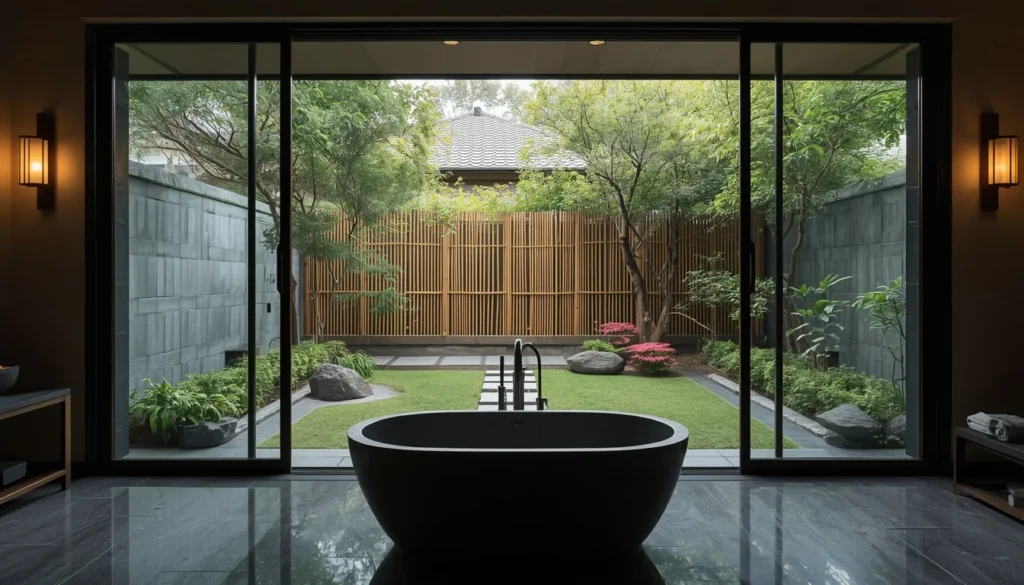
This is the pinnacle of biophilic bathroom design, and honestly, the one that made me redesign my entire home renovation plan when I first saw it in a magazine. The idea is simple: create a direct visual or physical connection between your bathroom and the outdoors.
This could be a glass wall or large window facing a private garden, a frosted floor-to-ceiling panel that silhouettes trees and branches outside, or an actual indoor-outdoor bathroom with a sliding door to a private courtyard.
Privacy is the obvious concern — and it’s solvable. Frosted glass, strategically placed bamboo screens, living fence panels, or simply careful landscaping all work. The payoff — showering in a space that feels continuous with nature — is genuinely extraordinary.
15. Biophilic Smart Home Integration — Tech That Serves Nature
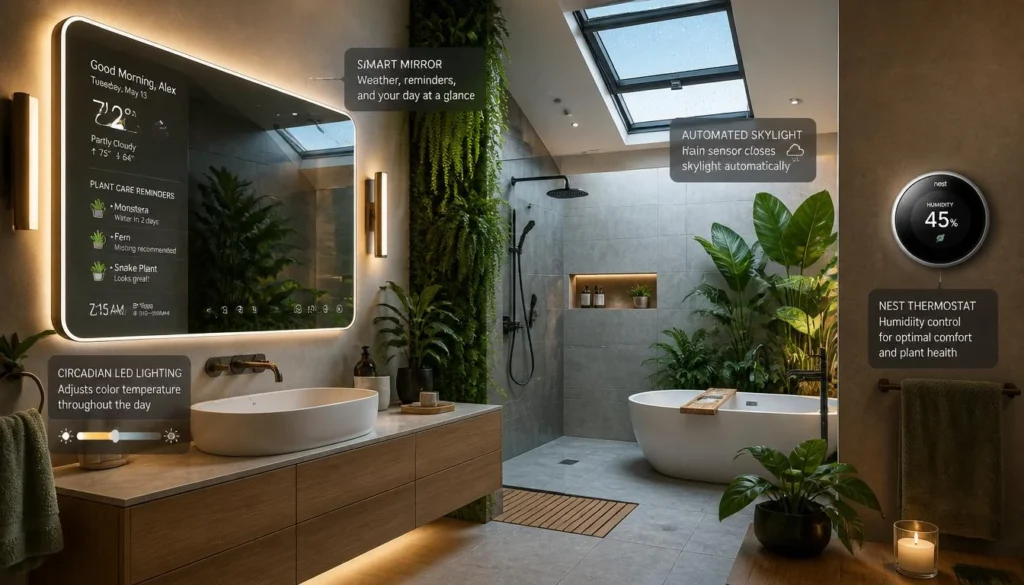
In 2026, the best biophilic bathrooms don’t fight technology — they use it to support the natural experience. Smart humidity control (a Nest or Ecobee thermostat works for this) keeps moisture at the sweet spot where your plants thrive but mold doesn’t.
Automated skylights from companies like Velux open when CO2 rises and close when rain is detected. Circadian smart lighting syncs to sunrise and sunset times. Automated irrigation for living walls can be set up with a simple Raindrip timer system.
The goal is tech that disappears into the background, keeping your biophilic elements alive and functional without you having to constantly manage them.
Biophilic Bathroom Design: Full Comparison — 15 Ideas
Here’s how the 15 ideas compare across cost, difficulty, maintenance, and impact:
| Idea | Approx. Cost | DIY-Friendly? | Maintenance | Biophilic Impact |
| Living Plant Wall | $150–$2,000+ | Moderate | Medium-High | Very High |
| Natural Stone Surfaces | $500–$5,000+ | Difficult | Medium | High |
| Wood Accents (Teak/Cedar) | $100–$3,000 | Easy-Moderate | Low-Medium | High |
| Natural Light / Skylights | $300–$2,500 | Hard (skylight) | Low | Very High |
| Organic Fixture Shapes | $50–$5,000 | Easy | Low | Medium-High |
| Earthy Color Palette | $40–$500 | Easy | Very Low | High |
| Water Sound Feature | $30–$3,000 | Easy | Low | High |
| Natural Fiber Textiles | $20–$300 | Very Easy | Very Low | Medium |
| Bamboo Elements | $50–$2,000 | Easy-Moderate | Low | High |
| Pebble Stone Flooring | $200–$1,500 | Moderate | Medium | High |
| Botanical Art / Prints | $0–$500 | Very Easy | Very Low | Medium |
| Natural Scent Elements | $10–$200 | Very Easy | Very Low | High |
| Terracotta / Clay Tiles | $300–$3,000 | Moderate | Medium | High |
| Outdoor-Indoor Connection | $1,000–$20,000+ | Very Difficult | Low | Transformative |
| Smart Biophilic Tech | $100–$5,000 | Moderate | Very Low | Supportive |
Common Mistakes to Avoid in Biophilic Bathroom Design
- Choosing plants that can’t handle humidity — succulents and cacti will die in a steam-filled bathroom. Stick to tropical species.
- Using unsealed natural materials — terracotta, unfinished stone, and raw wood will stain, warp, or harbor mold without proper sealing.
- Overdoing it — biophilic design works through restraint. A space crammed with plants, wood, stone, AND pebble floors can feel cluttered rather than calming.
- Ignoring ventilation — the most nature-inspired bathroom in the world will develop mold if there’s no proper exhaust fan. A Broan or Panasonic WhisperCeiling fan is essential.
- Synthetic versions of everything — faux plants, plastic wood-look accessories, and artificial stone undermine the whole point. Use real materials where possible, even if in smaller quantities.
- Neglecting maintenance planning — living walls, stone floors, and wood vanities all need care. Build it into your routine before you install anything.
Further Reading and Resources
For deeper exploration of biophilic design principles:
- Terrapin Bright Green: 14 Patterns of Biophilic Design (terrapinbrightgreen.com)
- Biophilic Design: The Theory, Science and Practice of Bringing Buildings to Life — by Stephen Kellert
- Architectural Digest: Nature-Inspired Bathroom Design Guide (architecturaldigest.com)
- Houzz: Biophilic Bathroom Ideabook — practical photos for every budget (houzz.com)
- Cult of Clean: Bathroom Plant Care Guide (cultofclean.com)
Final Thoughts — Your Bathroom Is Worth the Upgrade
Here’s what I know after a few years of experimenting with biophilic design across different rooms: the bathroom delivers the highest return on investment, emotionally speaking. Because you’re in there every single morning and evening, often still half-asleep or unwinding from the day. The environment you’re in during those vulnerable, transitional moments genuinely matters.
You don’t need to rip out your entire bathroom to get started. Hang a eucalyptus bundle in the shower. Buy one real linen hand towel. Place a pothos on the edge of the tub. Paint one wall sage green. Each of these changes takes less than an afternoon and costs almost nothing, but they move the needle in a real way.
Then, as budget allows, build toward the bigger elements — the stone countertop, the teak vanity, the living wall. There’s no rush. Biophilic bathroom design is a direction, not a single destination.
Start somewhere. Your morning self will thank you.
You May Also Like These Posts
→ Back Porch Ideas on a Budget
→ Decorating Living Room Christmas Ideas